



Link Spacecraft's Trials
The dedicated 'Link' spacecraft, engineered for the critical task of elevating the declining orbit of NASA's Neil Gehrels Swift Observatory, has successfully
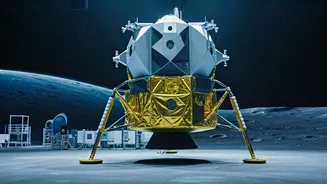
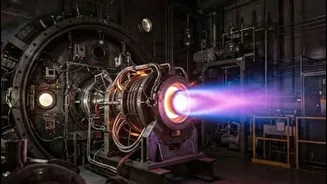
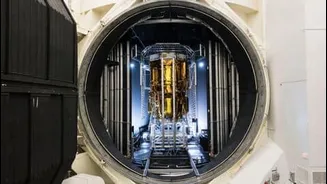
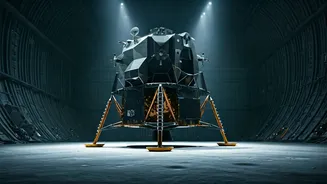
navigated a gauntlet of demanding environmental assessments. Jointly announced by NASA and its manufacturing partner Katalyst Space on May 8, these rigorous tests took place at NASA’s Goddard Space Flight Center. Key among these trials were simulations of launch-induced vibrations, replicating the intense physical stresses the spacecraft will endure aboard a Northrop Grumman Pegasus XL rocket. Furthermore, Link was subjected to the extreme conditions of a thermal vacuum chamber, a crucial step that also involved successfully deploying its sophisticated robotic arm and testing the functionality of its electric thrusters. Successfully completing this phase means the spacecraft is now back at Katalyst's facility in Colorado, undergoing final preparations before its journey to NASA’s Wallops Flight Facility. There, it will be integrated with the Pegasus rocket in early June, with the launch window opening later that month.
Urgent Mission Timeline
This mission operates under an exceptionally tight schedule, driven by the urgent need to reboost NASA's Neil Gehrels Swift Observatory, a renowned gamma-ray observatory currently in low Earth orbit. The observatory's orbit is steadily decaying due to atmospheric drag, with a reentry into Earth's atmosphere predicted as early as the end of this year. NASA secured a $30 million contract with Katalyst last September for the 'Link' mission. Interestingly, Katalyst is repurposing a spacecraft originally intended for a different demonstration mission to undertake this vital task of grappling with Swift and raising its orbital altitude. This compressed timeline has necessitated a strategic approach to risk assessment, as highlighted by Kieran Wilson, Link’s principal investigator at Katalyst. He noted, 'We’re in an unusual situation where the schedule dictates how much risk we’re willing to accept, rather than the other way around. The clock is ticking on Swift’s descent, so we have to find a balance between testing and problem-solving that gives the mission the best chance of success.'
High-Risk, High-Reward
The Swift reboost endeavor is characterized as a swift, high-risk, yet potentially high-reward mission, as articulated by John Van Eepoel, mission director for Swift at NASA Goddard. He emphasized the remarkable pace of development, noting that Katalyst achieved its current stage in a mere eight months. The utilization of NASA's facilities for Link's testing and the collaborative effort to address emergent questions have been instrumental. Adding a layer of complexity, Swift's orbit has been decaying at an accelerated rate. Initially, project officials projected that the spacecraft's orbit would dip below the 300-kilometer threshold – the point below which a reboost mission becomes unfeasible – between mid-October 2026 and January 2027. However, revised models subsequently moved this critical milestone forward to as soon as late May, placing immense pressure on the Link mission's launch window. In response, NASA implemented measures to reconfigure Swift, ceasing most scientific operations to allow for reorientation that minimizes atmospheric drag.
Operational Adaptations
To further mitigate the rapid orbital decay of the Neil Gehrels Swift Observatory, NASA took proactive steps to adjust its operational status. In April, controllers powered down the Burst Alert Telescope, the sole instrument still active at that time. This measure was intended to reduce power consumption, thereby enabling the repositioning of Swift's solar arrays into a configuration that would further minimize drag. Shawn Domagal-Goldman, director of NASA’s astrophysics division, expressed his relief in an interview on April 21, while Link's environmental tests were underway. He stated, 'I would feel really bad if we hadn’t changed the operating mode for Swift. Because of that, we have enough time for this team to get to the launch pad.' He further conveyed optimism that if Link successfully passed its environmental tests, 'I will feel really good about that team getting to the launch pad in time to boost Swift.' Nevertheless, he acknowledged the inherent risks associated with the reboost attempt, including unpredictable factors such as the precise rate of Swift's orbital decay due to atmospheric drag, famously describing it as 'a matter of the uncertainty the universe throws our way.'