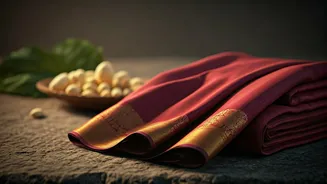






Nature's Silk Imprint
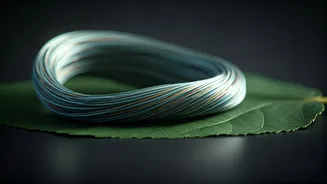
Silk, much like fine wine, carries the imprint of its origin, a concept known as 'terroir.' The fundamental components of a silk strand are fibroin, the core
substance, and sericin, a natural adhesive. The environmental conditions where the silkworm spins its cocoon profoundly influence the development and interplay of these proteins. Consider the humid atmosphere of Assam, where local silkworms produce Muga silk, naturally endowed with remarkable tensile strength and a lustrous golden shimmer, a direct adaptation to their environment. In stark contrast, the arid heat prevalent in regions like Chhattisgarh and Bhagalpur in central India fosters the production of Tussar silk. This variety, characterized by its porous structure that traps air, acts as an excellent natural insulator, providing a crisp feel during cooler months and a refreshing lightness during intense heatwaves common in places like Delhi.
The Weaver's Artistry
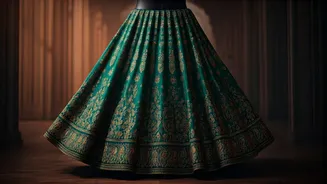
Before silk fabric can be crafted, the raw silk undergoes a boiling process to remove the sericin gum. Manufacturers focused on high volume often aggressively boil the silk, eliminating nearly all the gum. This results in fabric that drapes with a limp, fluid quality. However, traditional weavers possess a nuanced understanding of silk. They intentionally preserve a specific portion of the natural sericin. This deliberate retention is the key to achieving the characteristic crispness, a distinct stiffness akin to fine paper, and the structured volume seen in many heritage weaves. Furthermore, the weaving tension itself is critical. Machine-driven power looms exert uniform, forceful tension on the threads, producing a flat, unvarying surface. In contrast, handlooms operate with a natural human rhythm, introducing subtle imperfections. These microscopic variations woven by human hands create minuscule air pockets within the fabric, bestowing the final textile with a softer drape and an organic, forgiving texture. Thus, the tactile experience of a handwoven silk garment is a testament to its complex creation.
Caterpillar's Culinary Choices
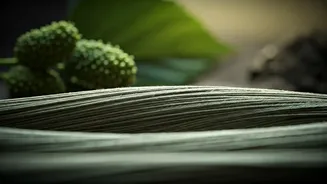
The ultimate differentiation in silk texture originates from the silkworm's diet. The most common silk, Mulberry silk, is produced by the Bombyx mori silkworm, a creature that thrives in meticulously controlled indoor environments. Its sole sustenance consists of mulberry leaves. This highly consistent diet enables the worm to spin a single, continuous, perfectly smooth, and unblemished filament, yielding fabric that possesses a liquid-glass-like smoothness. Venturing into the realm of 'Vanya' silks—including Tussar, Muga, and Eri—involves caterpillars that forage freely in open forests. Their diet is varied, encompassing oak, castor, or juniper leaves, rich in tannins and diverse nutrients. This irregular and nutrient-rich diet significantly alters the protein structure of the silk they produce. The resulting threads are shorter, thicker, and inherently irregular. It is this characteristic irregularity, often referred to as 'slub,' that imbues raw, wild silk with its desirable rich, breathable, and almost linen-like texture.
The Tangible Difference
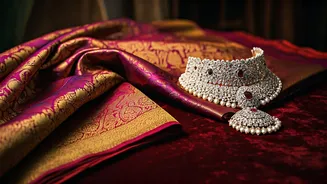
The contrast in feel between mass-produced silk shirts and treasured heritage pieces like Kanjeevarams or handwoven Tussar is palpable. While price often leads to assumptions about quality, the underlying cause is far more fundamental and biological. The distinct tactile sensations—the weight, the texture, the very character of the fabric—stem directly from geographical influences, intricate chemistry, and the life choices of the silkworms. The journey from cocoon to textile is influenced by the silkworm's environment, its dietary habits, and the skilled hands of artisans. These factors collectively contribute to the unique drape and feel of silk, making each piece a reflection of its specific origins and creation process.