







The Terafab's Grand Design
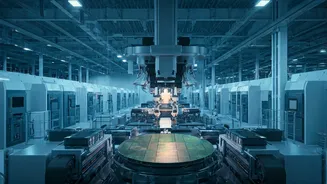
Elon Musk's ambitious plan for a state-of-the-art semiconductor manufacturing facility, dubbed Terafab, is set to become a cornerstone of his technological
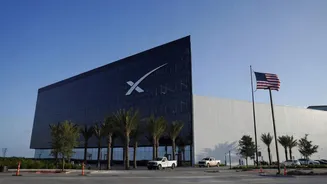
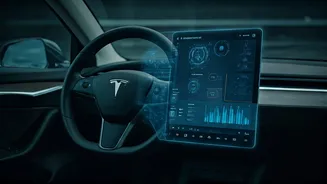
empire. This multi-phase project is designed to produce advanced artificial intelligence chips, crucial for powering innovations like Tesla's autonomous robotaxis and its humanoid Optimus robot. The facility, a joint venture involving SpaceX, xAI, and Tesla, aims to establish a vertically integrated system for chip production and advanced computing. The initial construction phase is estimated to cost $55 billion, with the potential to escalate to a colossal $119 billion if subsequent phases are realized. This endeavor signifies a significant investment in domestic semiconductor manufacturing capabilities, addressing a critical need for self-sufficiency in AI hardware.
Projected Costs and Financial Scope
The financial blueprint for Elon Musk's groundbreaking Terafab project in Texas reveals an astonishing investment scale, far exceeding initial industry predictions. While independent analysts from Morgan Stanley had previously estimated the construction cost for such a high-capacity chip factory at approximately $45 billion, recent disclosures suggest a substantially higher figure. According to information released on the Grimes County website, the initial outlay for the Terafab's construction could reach $55 billion. This figure is projected to climb to as much as $119 billion should the project proceed through its planned additional construction phases. This elevated cost projection underscores the complexity and sheer ambition of building a cutting-edge semiconductor fabrication plant capable of meeting the demanding AI chip requirements of Musk's diverse companies.
Strategic Location and Partnerships
The proposed site for this monumental chip manufacturing initiative, the Terafab, is the Gibbons Creek Reservoir, situated in a rural area of Texas. This strategic location, approximately 100 miles from Tesla's headquarters in Austin and in close proximity to College Station, home of Texas A&M University, offers potential advantages for talent acquisition and logistical support. The project has also garnered attention for its developing partnerships, notably with US chip giant Intel, indicating a collaborative approach to overcoming the technical challenges inherent in advanced semiconductor fabrication. As SpaceX prepares for what is anticipated to be a historic Initial Public Offering (IPO), further details about the Terafab project and its financing are expected to emerge from its public filings.
Navigating the Challenges Ahead
Beyond the substantial capital investment, the Terafab project faces a landscape of significant operational and talent-related challenges. Analysts have voiced concerns not only about the immense financial requirements but also about the intricate process of securing highly specialized technical expertise necessary for operating a next-generation semiconductor fabrication facility. The recruitment drive for this ambitious undertaking is already underway, with job postings revealing substantial base salaries, such as one role offering up to $240,000. The successful navigation of these hurdles, coupled with securing the necessary regulatory approvals, such as a property tax abatement being considered by County Commissioners on June 3, will be critical for the realization of Musk's vision for domestic AI chip production.