




Two Full Moons
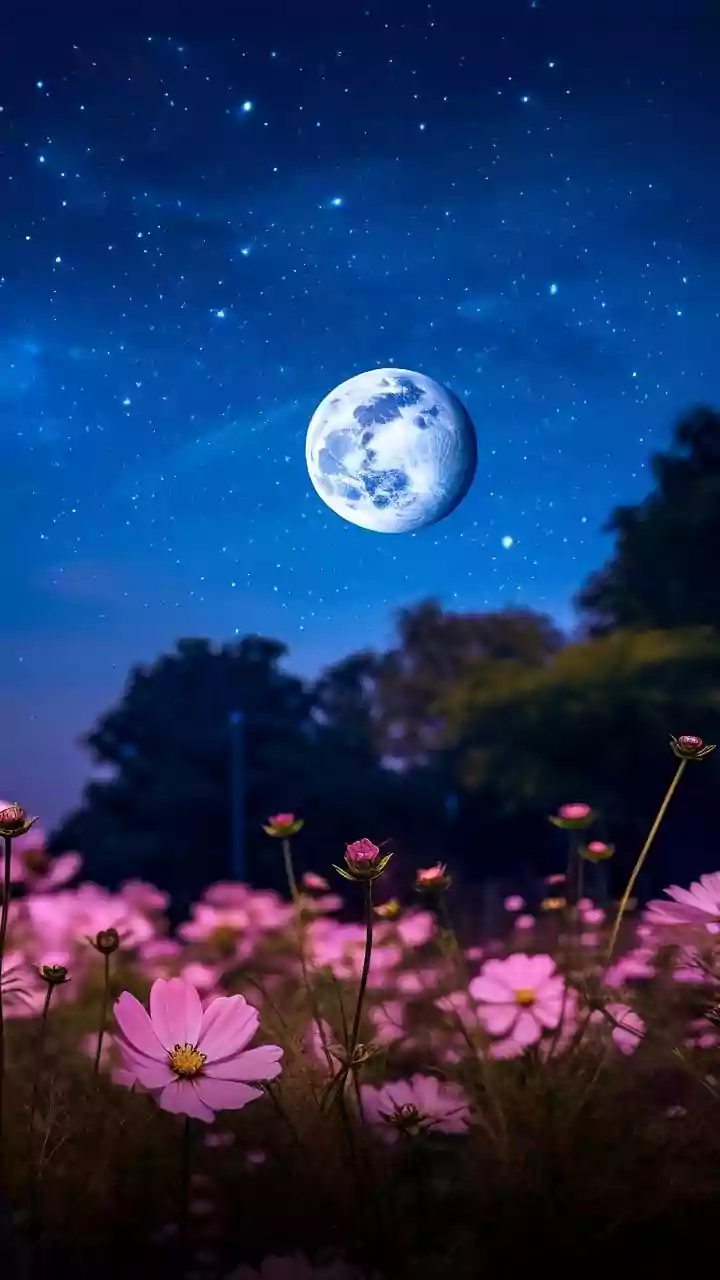
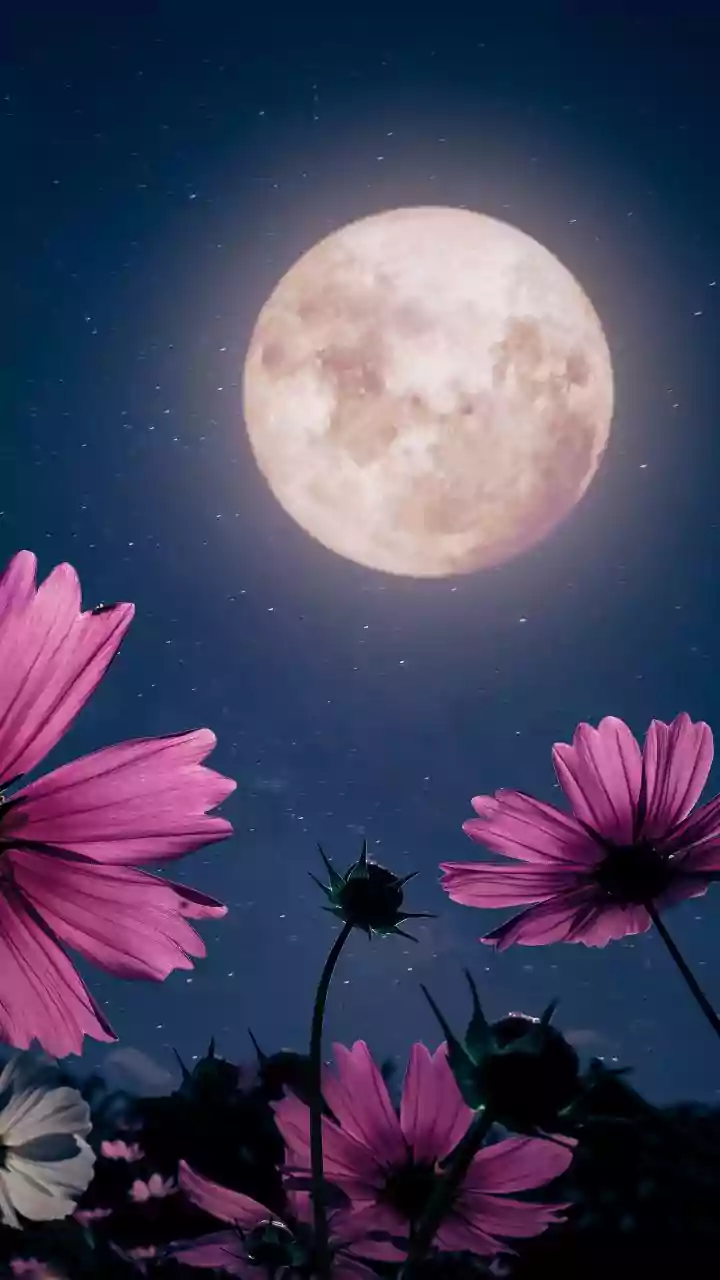
May heralds the arrival of not one, but two full moons, offering a double dose of lunar spectacle. The first full moon, often dubbed the 'Flower Moon'
due to the vibrant spring blossoms it accompanies, graced the sky on May 1. This celestial event also carries names like the 'Frog Moon' or 'Leaf Budding Moon,' reflecting its connection to the natural world and originating from indigenous North American traditions. Intriguingly, this same month hosts a second full moon on May 31, earning the title of a 'Blue Moon.' Despite its name, it won't appear blue, but rather signifies the rarity of two full moons occurring within a single calendar month. Both of these full moons are classified as 'micromoons,' meaning they occur when the Moon is at its farthest orbital point from Earth. Consequently, they may seem slightly smaller and less brilliant than a typical full moon. Nevertheless, their rising over the eastern horizon shortly after sunset promises a breathtaking view for observers.
Comet PANSTARRS Farewell
Skywatchers in the Southern Hemisphere received a special treat in early May with a final opportunity to view Comet PANSTARRS. Having captivated Northern Hemisphere observers since late April, the comet's trajectory after its close solar pass made it visible from southern latitudes. The optimal viewing period was the evening of May 5. By looking towards the west-southwest approximately 45 minutes after sunset, observers could spot the comet's glow before the rising gibbous moon began to dominate the horizon. This event marked a poignant farewell to the celestial visitor as it continued its journey back into the depths of space.
Eta-Aquariids Shower
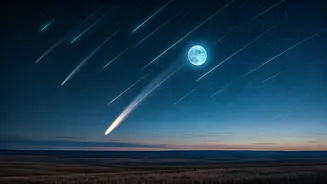
May 5th to 6th marked the peak of the Eta-Aquariids meteor shower, an annual event triggered by Earth's passage through the cosmic debris trail left by the famous Halley's Comet. These swift meteors appear to emanate from the constellation Aquarius. While the Southern Hemisphere offered superior viewing conditions due to the radiant climbing higher before dawn, observers in the Northern Hemisphere could still catch a few shooting stars in the hour or two preceding sunrise, once Aquarius ascended in the eastern sky. This year's viewing was somewhat challenged by the presence of a bright, waning gibbous moon near the shower's peak, which would obscure fainter meteors. However, activity often persists for several nights around the peak. For the best chance, viewers were advised to set alarms, strategically block the moon's glare with an obstruction, and allow their eyes ample time to adapt to the darkness.
Milky Way's Return
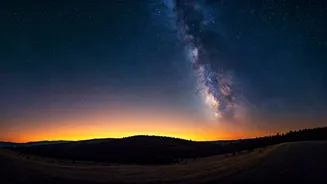
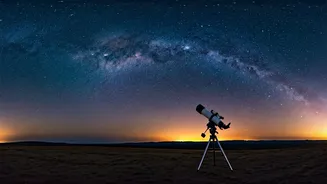
Mid-to-late May signifies the eagerly anticipated return of 'Milky Way Season,' a period highly prized by both amateur stargazers and professional astrophotographers. During these months, the luminous and colorful galactic core of our Milky Way galaxy becomes visible above the horizon before midnight. The new moon phase, occurring around May 16, provided the year's first truly dark sky conditions, ideal for observing the Milky Way's 'Great Rift.' This prominent, dusty band of stars, stretching upwards from the southeast, is a breathtaking sight in dark sky locations and serves as a magnificent marker for the unofficial commencement of the summer stargazing period.
Dark Skies Ahead
A new moon arrived around May 16, presenting an excellent opportunity for stargazing. Similar to a new supermoon, this event occurred when the new moon coincided with the Moon's closest approach to Earth. However, as with all new moons, this larger-than-average lunar disk was not visible because its sunlit face was oriented away from our planet. This celestial alignment resulted in naturally moonless nights on either side of May 16, creating perfect conditions for a variety of astronomical pursuits. From casual backyard binocular observations to dedicated dark sky expeditions, these nights offered unparalleled clarity. For those seeking a target, the Hercules Globular Cluster (M13) was recommended for viewing, appearing as a soft, grainy 'cotton ball' through binoculars when looking towards the constellation Hercules, positioned between the bright stars Vega and Arcturus, shortly after sunset.
Crescent Moon & Venus
On the evening of May 18, observers were treated to a beautiful conjunction: a slender crescent moon appearing in close proximity to Venus. This celestial pairing was visible low on the western horizon approximately 45 minutes after sunset. Venus, currently a brilliant spectacle dominating the twilight sky and often referred to as the 'evening star,' was positioned about three finger-widths below and to the right of the delicate lunar sliver. For the best viewing experience, a location offering an unobstructed panorama of the west-northwest was recommended, with the optimal window for observation extending from around 9:15 p.m. until approximately 10:15 p.m., before the pair dipped below the horizon.
Bonus Blue Moon
The month of May concluded with a rare celestial event: a 'Blue Moon' that was also the smallest full moon of 2026. The term 'Blue Moon' traditionally signifies the occurrence of a second full moon within a single calendar month, highlighting its infrequent nature. This particular full moon held additional significance as it reached its apogee—its farthest point from Earth—at nearly the same moment it became full, thus earning the classification of a 'micromoon.' Consequently, it appeared noticeably smaller, approximately 14 percent, and dimmer, around 30 percent, compared to the larger supermoons observed later in the year. Its rise over the eastern horizon on the evening of May 31 offered a unique and memorable astronomical sight.