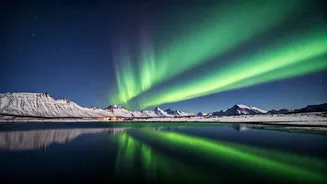








Understanding Aurora Borealis
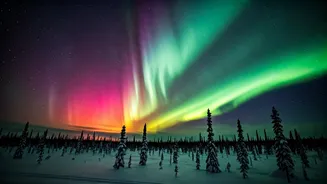
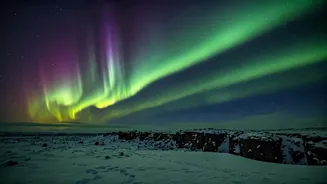
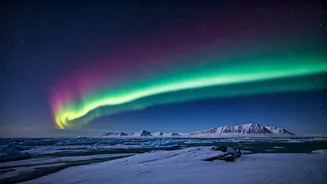
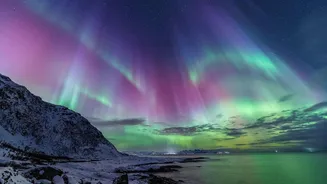
The aurora borealis, more commonly known as the Northern Lights, is a celestial phenomenon that captivates observers with its stunning light displays.
This breathtaking show is primarily visible in high-latitude regions and is caused by interactions between the solar wind and the Earth's magnetic field. This interplay between solar activity and our planet's atmosphere results in the vibrant curtains of light that we observe. It's not a common occurrence but a combination of factors must align to produce such a marvel.
Predicting Auroras: Forecasts
Forecasting the Northern Lights involves monitoring space weather, particularly geomagnetic activity and solar wind conditions. Various sources provide aurora forecasts, often detailing the likelihood of aurora visibility. The forecasts consider the strength of solar flares, the presence of coronal mass ejections (CMEs), and the speed and density of the solar wind. Geomagnetic storms, often graded using a G-scale (G1 to G5, with G5 being the most intense), significantly affect aurora visibility, with stronger storms increasing the chances of seeing auroras at lower latitudes. Regular observation of these forecasts improves the odds of witnessing this natural wonder.
Optimal Viewing Conditions
Several factors influence the visibility of the Northern Lights. Dark skies are essential, so viewing away from city lights is crucial. Clear weather is also important to ensure you can see the sky. Solar activity plays a major role; periods of increased solar wind and geomagnetic storms greatly enhance aurora displays. Even location matters: high-latitude regions, such as Alaska, Canada, Iceland, and Scandinavia, offer the best viewing opportunities. Check the aurora forecast regularly; being at the right place at the right time is critical.
Timing Your Observation
The time of year influences aurora viewing. During the winter months, with longer hours of darkness, are ideal, providing more opportunities for observation. The time of night also plays a crucial role. Auroras are often most vibrant during the hours around midnight when the Earth's magnetic field is best positioned to interact with solar particles. Pay close attention to solar activity and the aurora forecasts to anticipate the best viewing times. Monitoring for events like CMEs, which can trigger auroras, is also an intelligent viewing strategy.
Locations for Prime Views
The Northern Lights are primarily visible in high-latitude areas, also known as the 'aurora oval.' Prime locations include the northern parts of North America, Europe, and Asia. Some of the best places to observe the auroras are in Alaska, particularly Fairbanks and the Arctic Circle; Canada, especially Yukon and the Northwest Territories; Iceland, with its open landscapes and minimal light pollution; and the northern regions of Norway, Sweden, and Finland. Many of these regions provide guided tours and viewing opportunities.
Geomagnetic Storms: Impact
Geomagnetic storms, caused by disruptions in the Earth's magnetosphere, dramatically influence the visibility of the Northern Lights. These storms result from CMEs or fast solar wind impacting Earth. During a geomagnetic storm, the auroras can become brighter and more widespread, potentially visible at mid-latitudes, even as far south as Illinois and Oregon. The intensity of geomagnetic storms is measured on the G-scale, with G1 being minor and G5 being extreme. Monitoring geomagnetic storm forecasts helps predict when and where to see the best aurora displays.
Tips for Viewing
Maximize your chances of seeing the Northern Lights by planning in advance. First, check aurora forecasts regularly, paying attention to Kp index and geomagnetic activity levels. Second, seek out locations far from light pollution to enhance visibility. Third, be patient. Aurora displays can come and go, so allow ample time for observation. Dress warmly; winter conditions at high latitudes can be harsh. Bring a camera and tripod to capture the dancing lights. Finally, be flexible; weather conditions can change, so be prepared to adjust your viewing plans.
Solar Wind Connection
The solar wind is a stream of charged particles released from the sun, and it directly influences the occurrence and intensity of the Northern Lights. Fast solar wind streams interact with Earth's magnetic field, causing geomagnetic disturbances and triggering auroras. When Earth connects with a fast solar wind, the chances of seeing auroras increase. The density and speed of the solar wind also affect aurora displays, with higher speeds and densities often leading to brighter and more frequent auroras. Monitoring solar wind conditions is an essential part of aurora forecasting.