
Cosmic Tapestry Unveiled
NASA's commitment to exploring and documenting space results in a constant stream of awe-inspiring imagery. These pictures go beyond mere snapshots, offering
detailed insights into the universe's complexity. They showcase celestial events, diverse cosmic structures, and the raw beauty of space. The images are not just visual treats; they are vital for scientific study, helping experts to understand the universe better. The images represent diverse areas of study within astrophysics, from the formation of stars within nebulae to the distant galaxies. Each image allows experts to study elements of our universe. The continuous unveiling of images, thanks to cutting-edge technology, offers a deeper, more comprehensive understanding of the cosmos, encouraging curiosity and discovery.
Galaxies in Focus
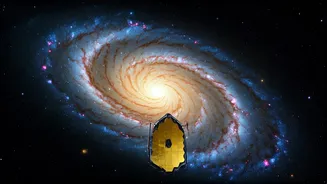
Many of NASA's images highlight distant galaxies, capturing their intricate shapes and structures. These galaxies, sometimes millions of light-years away, appear in vibrant colors, illustrating the diverse compositions of their stellar populations. Images often reveal spiral galaxies, like our Milky Way, showing their arms filled with young, blue stars, interspersed with older, redder ones. Additionally, these images show elliptical and irregular galaxies. Studying these galaxies provides insights into galaxy formation and evolution. Each image contributes valuable data, helping scientists piece together the history of the universe. The vastness of space and the sheer number of galaxies in the universe can be fully realized through these detailed galactic images, enabling a richer and greater understanding.
Nebulae's Radiant Beauty
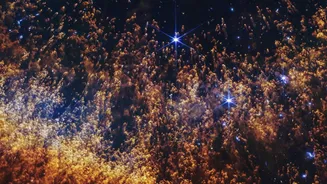
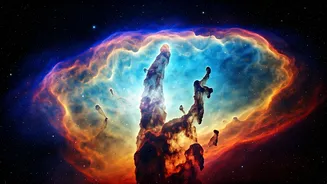
Nebulae, the stellar nurseries of the universe, come to life in the images shared by NASA. These vast clouds of gas and dust are where stars are born. The images reveal the nebulae's stunning colors, created by the interaction of elements with ultraviolet radiation from nearby stars. The iconic Pillars of Creation within the Eagle Nebula, for example, demonstrates the ongoing process of star birth. These images offer a detailed look at the complex physical processes that shape these stellar nurseries. The images highlight the constant cycle of stellar life and death. The data acquired from these studies contribute to scientists' knowledge of the early stages of star formation. These images are aesthetically pleasing, but they are also crucial to scientific research, revealing the universe's hidden complexities.
Earth's Planetary Perspective
NASA's observations aren't just limited to the deep cosmos; they also include detailed views of Earth. Images of our planet from space help track weather patterns, monitor environmental changes, and understand how the Earth's systems work together. Satellite images show the movement of clouds, the spread of ice caps, and the impact of human activity on the environment. The stunning imagery also captures the Earth's unique beauty, demonstrating the dynamic nature of our world. These images are invaluable for environmental research. They show the interconnectedness of our planet and the importance of conservation. The images often highlight different geographical areas, bringing to light the planet's diverse landscapes and climates. They create an understanding of how vital our planet's ecosystems are.
Capturing Celestial Events
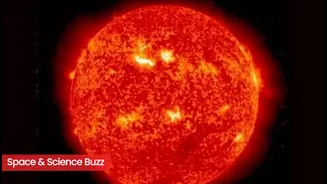
NASA's instruments capture unique moments in space, such as solar eclipses, planetary alignments, and the impact of comets. The images offer valuable scientific insights, and they also inspire wonder. Images from eclipses, for example, reveal the sun's corona, providing an opportunity to study its activity and dynamics. The images of these rare celestial events encourage the public's excitement and interest in astronomy. These events help promote a deeper understanding of the universe. Images of comets and asteroids, often captured during their approach to our solar system, provide important data about the composition and evolution of these celestial objects. These recordings offer a remarkable record of the dynamic nature of the cosmos, emphasizing the ever-changing universe.
Technological Marvels
Behind these stunning images lies advanced technology, from powerful telescopes like the Hubble Space Telescope and the James Webb Space Telescope to sophisticated instruments aboard spacecraft and satellites. These technologies collect the light and other forms of radiation from space, allowing scientists to analyze them and form images. The precision of these instruments and the capabilities of the telescopes are constantly evolving, leading to even more amazing revelations. NASA is constantly pushing the boundaries of imaging capabilities, capturing details that were previously impossible to see. The combined knowledge from these advanced tools gives scientists unprecedented insights into the universe. The success of NASA’s space programs is dependent on innovative design and engineering, allowing for groundbreaking scientific discoveries.
Inspiring Future Explorers
The images shared by NASA inspire people of all ages. They spark curiosity about space and encourage the next generation of scientists, engineers, and explorers. The vivid colors, intricate details, and amazing scale of the images demonstrate the vastness and mystery of the universe. NASA's work increases public interest in science, technology, engineering, and mathematics (STEM). The images also bring the global community together by sharing a universal language of wonder and discovery. The shared images encourage further exploration, creating a sense of shared purpose in understanding the cosmos. These images inspire a love of learning and discovery for generations to come.