





Origins of Raab
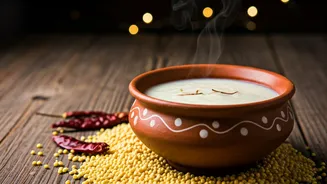
Bajre ki Raab, a traditional winter drink originating from Rajasthan, is more than just a beverage; it's a testament to the region's resourceful spirit.
Its roots are deeply entwined with the local agricultural practices and the necessity to combat the harsh winters. It's likely that the drink's creation was driven by the availability of ingredients, such as bajra (pearl millet), a hardy grain well-suited to the arid climate of Rajasthan. The recipe itself is a product of simplicity, ingenuity, and a dash of local wisdom. Over generations, the process of making raab has been fine-tuned, ensuring its deliciousness and its ability to provide warmth. It became a staple in households, offering sustenance and comfort. Its evolution mirrors the growth of the Rajasthani community and its ability to thrive in a challenging environment. This humble drink, therefore, has historical ties and is a cultural icon.
The Ingredients Used
The beauty of Bajre ki Raab lies in its straightforward ingredients and the straightforward way it is made. Bajra (pearl millet) is the main component. In Rajasthan, bajra is easily accessible, and it serves as the base for this revitalizing drink. The process involves grinding bajra into a fine powder. In the preparation, water is essential for creating the drink's consistency. Next comes buttermilk or curd, which gives the drink its sour taste and gives it a healthy dose of probiotics. The inclusion of spices, such as ginger, cumin, and sometimes even garlic, adds complexity and warming notes. In certain iterations, jaggery or sugar might be added to balance the tastes. These straightforward elements are skillfully combined to produce a beverage that is both nourishing and comforting, making it a well-loved Rajasthani winter staple.
Preparation Steps
Making Bajre ki Raab follows a simple process, with the objective of creating a warm, nourishing drink. First, the bajra flour is gently roasted, enhancing its flavor and aroma. Once browned, the flour is mixed with water, forming a thin paste. It is then gently cooked, and stirring is essential to ensure that no lumps form and the mixture thickens. Next, buttermilk or curd is added, which brings a tangy flavor to the mixture. The spices, like ginger and cumin, are added at this stage, infusing the drink with their distinctive flavors and warming qualities. The raab is gently simmered, allowing the flavors to meld. Sugar or jaggery is added for sweetness, if desired. The beverage is cooked slowly, and the thickness is adjusted to your preference. When ready, the Bajre ki Raab is served warm, offering comfort from the chilly winters and a taste of Rajasthani culture.
Cultural Significance
Bajre ki Raab isn't just a beverage; it has deep cultural significance in Rajasthan. It has been a winter essential for generations, closely connected with the local customs and values. Bajre ki Raab symbolizes hospitality, often offered to guests as a sign of warmth and welcome. It is frequently made during family gatherings and celebrations. It provides nourishment and comfort in cold weather and is an important part of the Rajasthani lifestyle. It reflects the area's agricultural heritage and the close relationship between the community and their food. The drink is a connection to the past, reflecting a legacy of practicality and resourcefulness passed down through generations. Today, Bajre ki Raab remains an important cultural symbol, bringing people together and providing warmth and comfort in the cold months.
Evolution of Recipes
Over time, Bajre ki Raab recipes have evolved. While the fundamental elements—bajra flour, water, buttermilk or curd, and spices—have remained constant, individual preferences and local variations have added to its diversity. Some families pass down their secret recipes, adding unique blends of spices or adjusting the ratio of ingredients. In some areas, jaggery is added for sweetness, while others use sugar or avoid sweeteners altogether. Additional ingredients, like ginger or garlic, can be included to enhance taste and medicinal qualities. Regional adaptations are common, with different methods of cooking or serving to reflect local tastes and preferences. Despite these variations, the core identity of Bajre ki Raab has remained, embodying warmth, comfort, and a taste of Rajasthani tradition. The drink reflects the community's flexibility and adaptability, with recipes constantly evolving to meet the demands of changing tastes and lifestyles.