





The Snail Vine Secret
Forget the usual red feeders and common flowers; the corkscrew vine, scientifically known as Cochliasanthus caracalla, is the unsung hero for creating
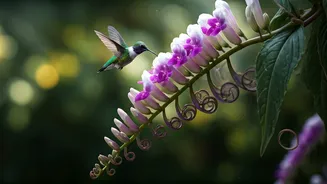
a hummingbird sanctuary. Hailing from the tropical regions of South and Central America, this vigorous climber boasts blossoms that are truly unique. They unfurl in a mesmerizing spiral, reminiscent of a miniature nautilus shell, earning it the charming moniker 'snail vine.' These blooms are a delightful palette of white, creamy yellow, and soft lavender, exuding a subtly sweet and captivating fragrance. This aroma, while noticeable and pleasant, doesn't overwhelm, offering an outdoor perfume akin to an expensive candle. Crucially, the corkscrew vine begins its prolific blooming from late spring and continues through fall, precisely when hummingbirds are most active across much of the United States, making it an ideal continuous food source.
Nature's Perfect Match
Hummingbirds are not wanderers; they are driven by nectar and flowers perfectly suited to their anatomy. The corkscrew vine's blossoms are a testament to this, featuring a tubular and spiral shape that aligns precisely with a hummingbird's long beak and tongue. This intricate floral architecture is essentially tailor-made for them, ensuring efficient nectar retrieval. Beyond anecdotal evidence, scientific research published in academic journals supports this remarkable co-evolution. Studies indicate that the asymmetrical structure of the Cochliasanthus caracalla bloom is specifically engineered to reward certain pollinators, with hummingbirds being prime beneficiaries. The vine's vibrant, warm hues also play a significant role, as hummingbirds are famously drawn to vivid colors, a finding supported by research into their foraging behaviors. They consistently return to flower sources that offer dependable, high-reward nectar, a criterion the corkscrew vine fulfills exceptionally well throughout its extended blooming period.
Effortless Cultivation
The good news for aspiring hummingbird gardeners is that the corkscrew vine is remarkably low-maintenance. While it has a few essential needs, none require significant time commitment. This vine thrives in full sun, needing at least six to eight hours daily, making south or west-facing trellises, porch posts, or fences ideal locations. Consistent moisture is key; the soil should be kept damp but never waterlogged, as the vine can wilt dramatically during dry spells. Potted specimens will dry out faster and necessitate more frequent watering. It prefers well-drained, slightly acidic soil; a quality outdoor potting mix works well for container planting. As a 'heavy feeder,' the corkscrew vine benefits from a balanced liquid fertilizer applied monthly throughout its growing season to encourage abundant blooms. Minimal pruning, a light clean-up in late winter or early spring before new growth appears, and pinching back tips in spring to promote a bushier habit, are all that's needed.
Container Gardening Boon
Due to its rapid growth and potential to cover a large area, growing the corkscrew vine in a sizable container is an excellent strategy, particularly for those with limited garden space, such as apartment dwellers with balconies or smaller yards. Container cultivation effectively manages the vine's size, allows for repositioning to maximize sun exposure, and still enables it to perform its primary functions: prolific blooming, delightful fragrance, and attracting pollinators. A large pot placed near a patio door or affixed to a balcony railing, with a simple trellis for support, is all that’s required to enjoy this remarkable plant without needing an expansive backyard. This method makes it accessible even for those with the smallest outdoor footprints, proving that a hummingbird paradise can be created anywhere.
Planting for Perennials
For those residing in USDA zones 9 through 11, encompassing regions like Southern California, Arizona, Texas, and Florida, where hard freezes are uncommon, the corkscrew vine flourishes as a perennial, returning year after year. Planting should occur in the spring, after the threat of the last frost has passed. Providing it with a structure to climb upon is essential from the outset, setting it up for a summer of spectacular growth and blooms. If you live in a cooler climate with colder winters, the corkscrew vine can be treated as an annual. While it won't overwinter, you will still experience its full summer splendor and enjoy its hummingbird-attracting capabilities during the warmer months. Ultimately, hummingbirds seek out the best food sources, and this vine presents a formidable offering that is difficult to surpass. Once established, its months-long bloom, captivating scent, and undemanding care make it a standout choice for any garden.