






Legal Tangle Unravels
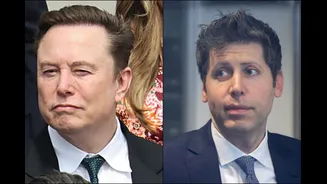
The recent legal proceedings involving Elon Musk and Sam Altman, stemming from Musk's lawsuit against OpenAI, concluded with a judicial decision that dismissed
Musk's claims on procedural grounds. The judge determined that Musk's lawsuit was filed too late, exceeding the statute of limitations for his allegations of a breach of charitable trust concerning OpenAI's initial non-profit mission. While Musk plans to appeal, citing the ruling as a mere 'calendar technicality,' the outcome of this high-profile trial has illuminated a broader concern: a pervasive lack of trust in the individuals steering the development of artificial intelligence. The trial's proceedings also revealed Musk's own complicated relationship with AI development, particularly his admission that his company, xAI, employs model distillation, a technique that involves using one AI model to train another, a method he initially deflected from when questioned directly. This revelation, coupled with the substantial $42 billion raised by xAI, raises questions about the cost-effectiveness and transparency of such development processes, especially when contrasted with the public outcry from companies like OpenAI and Anthropic against similar practices by competitors.
Microsoft's Strategic Play
Internal communications and testimonies from the recent trial have brought to light Microsoft's long-standing strategic interest in OpenAI, dating back to 2018. At that time, OpenAI was publicly maintaining its non-profit status, yet internal discussions within Microsoft, led by CEO Satya Nadella, reportedly debated OpenAI's commercial potential. This suggests a calculated anticipation of OpenAI's eventual pivot towards a profit-driven business model. Microsoft's substantial investments in the company, now totaling billions of dollars, became a critical factor during the 2023 turmoil surrounding Sam Altman's temporary ouster. Nadella described the event as "amateur city," implying a need for stability to protect these significant financial stakes. Legal arguments presented during the trial leveraged this history, reframing Microsoft's partnership not as pure benevolence, but as a strategic maneuver to secure its position in the burgeoning AI sector. This situation echoes historical precedents, such as the 1980s IBM-Microsoft deal, where Microsoft's foresight in retaining software rights ultimately led to its dominance over IBM in the computing landscape, highlighting a recurring theme of strategic foresight in technological partnerships.
Inconsistencies and Ambitions
Elon Musk, despite initiating this legal dispute, is not without his own contradictions. His courtroom demeanor was noted for evasiveness, particularly when questioned about his company's AI practices. Furthermore, testimony from Joshua Achiam, now OpenAI's chief futurist, suggested that Musk's intense drive to compete with Google in developing artificial general intelligence (AGI) led to a pursuit of AGI that was "obviously unsafe and reckless," with indications that his own Tesla AI projects experienced failures in this pursuit. The trial also cast a spotlight on Demis Hassabis, the head of Google's AI division, who founded DeepMind before its acquisition by Google. Musk's perceived fixation on Hassabis and his achievements was highlighted by testimonies from OpenAI's Greg Brockman and Shivon Zilis, an OpenAI board member. These accounts suggest Musk's desire to integrate OpenAI into Tesla for accelerated development, a move that underscores his competitive ambition. Meanwhile, Mira Murati's role in the Sam Altman ouster remains ambiguous. Allegations suggest she may have provided information to the board that led to Altman's removal, while also reportedly keeping Altman informed about the board's deliberations, leaving her exact involvement in the subsequent reinstatement unclear.
A Call for Responsible AI
In an era where the long-term economic and societal implications of AI are still unfolding, the recent legal wrangling has starkly revealed a concerning reality: many of the individuals considered pivotal in the AI domain exhibit traits of hypocrisy, immaturity, and a readiness to engage in public disputes. These influential figures, possessing considerable financial resources, appear to operate with a perceived lack of accountability for the potential consequences of their actions. This raises fundamental questions about whether these are the appropriate individuals to lead the charge towards advanced AI development. The public's growing skepticism towards AI, reflected in its current low sentiment, may well be a direct response to the visible discord and self-interest displayed by its leaders. The current model of AI governance, where critical decisions rest in the hands of a few powerful, often conflicting, personalities, is unsustainable. It necessitates a broader, more democratic approach to shaping AI's future, one that actively incorporates diverse perspectives and prioritizes collective well-being over individual ambition.