

Primate PALS Forever
Baby monkeys exhibit an almost perpetual state of attachment to their mothers. This tight embrace is crucial for their very survival, providing essential
warmth and security in their early stages of life. More than just physical closeness, this constant contact fosters a profound emotional bond between mother and offspring. This period of intense dependence allows the young to learn vital survival skills from their mothers, all while experiencing the comfort and reassurance that comes from being held close. The mother's vigilance and the baby's grip work in tandem to navigate the often-challenging environment of their habitat, highlighting a beautiful example of nature's protective instincts in action.
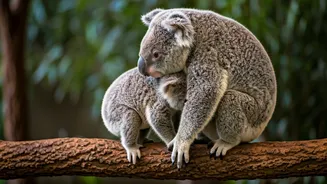
Koala's Constant Embrace
The iconic koala is renowned for its habit of clinging to tree trunks, a behavior that extends deeply into its maternal relationships. For many months, young koala joeys remain almost exclusively attached to their mothers' bodies. This prolonged period of physical contact is vital for the joey's development, offering protection from predators and the elements, as well as a consistent source of warmth and nourishment. The mother koala's strong, steady presence ensures the joey's safety as it grows, learning the rhythms of its arboreal world from a secure vantage point. This unwavering connection underscores the importance of maternal care in the koala's life cycle.
Octopus's Suctioned Embrace
The octopus, an invertebrate marvel, displays a unique form of clinginess thanks to its remarkable suction cups. These powerful appendages allow the octopus to firmly adhere to a wide array of surfaces, offering stability and a means of exploration. When interacting with their environment, octopuses often wrap their flexible arms around objects, investigating them with curiosity. This tactile exploration is a primary way they learn about the world. In some instances, their natural inquisitiveness might even lead them to extend this exploratory embrace to other living beings, showcasing a fascinating, albeit less common, form of tactile engagement.
Panda's Cuddly Companions
Panda cubs are characterized by their exceptionally clingy nature, often found firmly grasping onto their mothers or dedicated caretakers. This deep-seated attachment doesn't necessarily wane significantly as they mature; even into their juvenile stages, pandas are recognized for their affectionate behavior and strong propensity for bonding. This inherent desire for closeness suggests a complex social structure and a reliance on familial bonds for emotional security and social development. Their cuddly disposition makes them a symbol of gentle affection in the animal kingdom, highlighting how this trait is integral to their well-being.
Sea Otter Anchors
Sea otters have developed ingenious methods to maintain proximity, especially while navigating their aquatic environment. A well-known behavior is their practice of holding hands when they sleep, a deliberate action to prevent drifting apart in the water. Furthermore, these intelligent creatures utilize kelp forests as natural anchors, wrapping themselves around seaweed to remain stationary. This 'clinginess with purpose' not only ensures they stay together but also provides a stable resting place, demonstrating a clever adaptation to their open-water habitat and a strong emphasis on group cohesion.
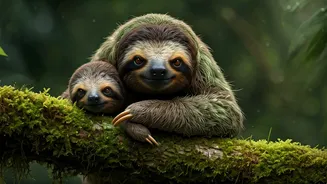
Sloth's Grasping Life
The very existence of sloths is defined by their perpetual grip. Spending nearly their entire lives suspended upside down, their bodies are exquisitely adapted for clinging to branches. This arboreal lifestyle dictates their every movement, as they slowly traverse their habitat by holding on. Their deliberate and unhurried pace is made possible by their powerful claws and strong limbs, which provide a secure hold. In some cases, this natural inclination to grip can even extend to their interactions with other sloths, further emphasizing their unique, branch-bound existence and inherent need to stay firmly attached.