






Lemon Steam Power
Harness the natural deodorizing power of lemons to tackle microwave smells. Citrus fruits contain natural oils and citric acid, which are effective at neutralizing
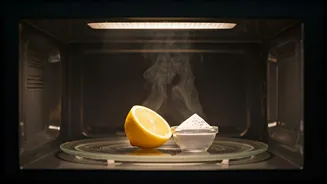
odors and breaking down greasy residue. To begin, slice a lemon and squeeze its juice into a microwave-safe bowl filled with about a cup of water. Place this mixture in the microwave and heat on high for three to five minutes, allowing the steam to build up. Once the steam has circulated, leave the bowl inside for a few extra minutes to soften any stuck-on food particles. Carefully remove the hot bowl and then wipe down the microwave's interior with a clean cloth. This simple steaming process loosens and lifts away odor-causing grime, leaving behind a fresh scent.
Vinegar's Odor Assault
When lemons aren't available or for more challenging smells like burnt popcorn or fish, white vinegar is an excellent alternative. Its acidic nature makes it a potent odor eliminator. Prepare a solution by filling a microwave-safe bowl mostly with water and adding one to two tablespoons of vinegar. Microwave this mixture for approximately four minutes until steam is produced. This steam works to dissolve stubborn buildup, making subsequent wiping much easier. For particularly persistent odors, increase the vinegar concentration by mixing half a cup of vinegar with one cup of water, and allow the bowl to sit inside the closed microwave for a few minutes before wiping. Be sure to ventilate the area if you're sensitive to the vinegar scent or leave the door ajar afterward to air out.
Baking Soda's Absorption
For an extra boost in deodorizing, baking soda stands out as a gentle yet highly effective odor absorber. To utilize its properties, combine two tablespoons of baking soda with one cup of warm water in a microwave-safe bowl. Heat this mixture on high for two to three minutes, then let it sit inside the microwave with the door closed for an extended period of 10 to 15 minutes. During this time, the baking soda actively absorbs airborne odor molecules. After the absorption period, remove the bowl and wipe the interior clean with a damp cloth. Baking soda works by trapping both acidic and basic compounds that contribute to unpleasant smells. Alternatively, a passive method involves leaving an open bowl of baking soda inside the microwave overnight. Another option is to create a baking soda paste with water, coat the interior surfaces (avoiding vents), and then thoroughly clean it off after it has sat for a while.
Wipe Away Residue
Regardless of the steaming or deodorizing method chosen, the crucial final step is thorough wiping. While steam does the heavy lifting by loosening grime, physically removing the residue is essential for a truly fresh microwave. After steaming, remove the turntable and wash it separately. Use a damp microfiber cloth to meticulously wipe down all interior surfaces, including the walls, ceiling, and door. Pay particular attention to the corners, as these are common collection points for splattered food. These concluding steps are vital for ensuring that no lingering odor-causing particles remain, transforming a merely clean microwave into one that smells genuinely fresh.
Proactive Odor Prevention
Once your microwave is refreshingly clean, adopting preventative habits is key to maintaining that state. To stop odors before they even have a chance to form, always use a microwave-safe cover when heating food, as this significantly reduces splattering. Avoid overcooking meals, which can lead to burnt smells. After heating, consider leaving the microwave door slightly ajar for a few minutes to allow any residual moisture and odors to dissipate. A simple daily wipe-down with a warm, damp cloth, even when the microwave appears clean, can prevent buildup. Incorporating these consistent, easy habits alongside the deep cleaning methods will ensure your microwave remains a pleasant-smelling appliance.