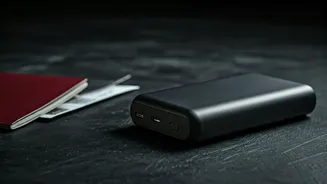







Understanding Power Bank Risks
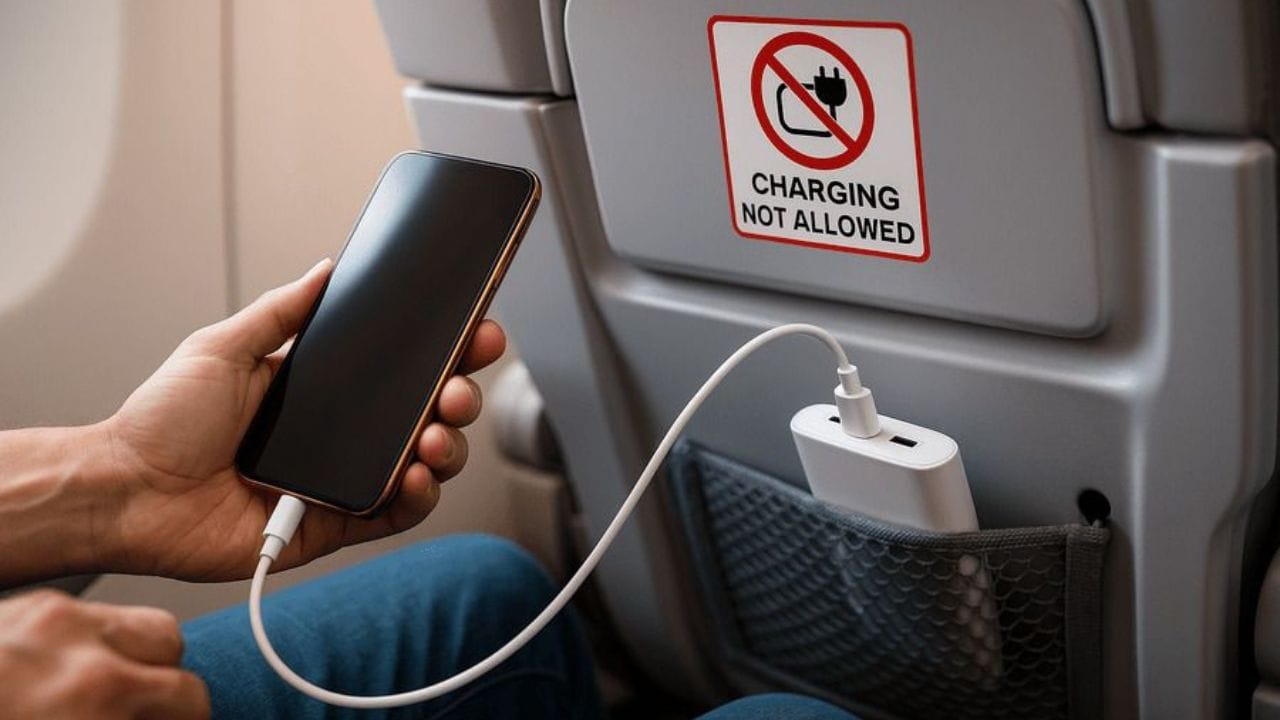
Power banks, powered by lithium-ion batteries, present unique safety challenges during air travel. These batteries can become hazardous if they are damaged,
defective, or subjected to extreme temperatures or pressure, leading to internal short circuits. This can trigger a rapid and uncontrolled temperature increase, known as thermal runaway. During this process, the battery degrades, releasing heat, volatile gases, and potentially igniting into flames, accompanied by dense smoke. In the confined space of an aircraft cabin, even a minor battery malfunction can quickly fill the environment with smoke, making strict airline regulations essential for passenger safety and prompt incident management.
Airline Regulations Explained
Airlines permit power banks but mandate their placement in cabin baggage, not checked luggage, to ensure immediate accessibility in case of an issue. Major Indian carriers have specific guidelines: Air India permits power banks up to 100 Wh (approximately 20,000 mAh), allowing up to two spare batteries per passenger, provided they don't exceed 2 grams of lithium metal content and are protected against short circuits, and must be kept accessible. IndiGo allows power banks up to 160 Wh, which must be clearly marked, though their use during the flight is forbidden. Passengers must ensure these devices are readily available. SpiceJet generally permits devices up to 30,000 mAh, also prohibiting their use mid-flight and requiring them to be kept accessible.