
Prairie Voles: Faithful Mates
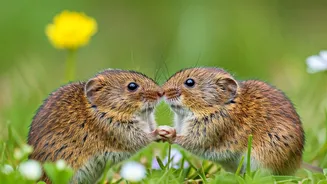
Prairie voles are renowned for their monogamous relationships, offering a glimpse into animal fidelity. These small rodents often form lifelong bonds with
a single partner, displaying behaviors like huddling together, sharing grooming duties, and co-parenting their offspring. Researchers have found that prairie voles experience a surge of oxytocin and vasopressin – hormones linked to bonding and social connection – when they interact with their mates. This hormonal interplay reinforces the pair bond, making them less likely to stray. Their commitment serves as a testament to the power of lasting partnership in the animal kingdom, and highlights that strong relationships aren't exclusive to humans. Prairie voles provide a striking example of devoted relationships within the animal kingdom, emphasizing the prevalence of commitment beyond human experiences.
Albatrosses: Long-Distance Romance
Albatrosses, with their impressive wingspans, are known for their extended breeding cycles and often form strong pair bonds that can last for years. These birds are renowned for their long-distance migrations, often spanning thousands of miles across oceans. Their relationships endure the test of time, and they maintain their partnerships for several seasons. However, these long absences can sometimes lead to infidelity. Despite their challenges, albatrosses showcase the resilience of love, navigating the complexities of their migratory lifestyle while maintaining their bonds. The strength and challenges of their relationships highlight the balance between commitment and circumstance, providing lessons on building a strong relationship.
Dolphins: Social Connections
Dolphins, intelligent marine mammals, have a complex social structure with varying degrees of relationships. They often form close-knit communities where social bonds play a vital role. Dolphins can have several partners, and their relationships are often based on alliances and social connections. Studies have shown that dolphins form relationships that contribute to their well-being and social support. Their social lives are full of interactions, sometimes leading to complex relationship dynamics. These connections emphasize the social nature of dolphins, showcasing the importance of community and cooperation in their lives. These relationships contribute to their overall fitness, making them a crucial part of dolphin culture. The dolphins' social lives are a compelling example of social organization in the animal world.
Bonobos: Love and Peace
Bonobos have a unique social order where sexual activity is a common way of managing social conflict and strengthening bonds. These primates are known for their egalitarian society, where females often hold positions of power. They employ a variety of behaviors to maintain social harmony. Their behavior demonstrates the significance of relationships in managing social conflicts. They use sexual interactions to relieve stress, build bonds, and reinforce peace within their community. This approach emphasizes the importance of understanding and resolving conflicts to build stronger connections. Bonobos, through their behavior, emphasize the importance of relationships in building a strong community.
Seahorses: Dedicated Partners
Seahorses offer a fascinating view of relationship dynamics as the male seahorse is responsible for carrying the eggs. The pair often engage in elaborate courtship rituals that strengthen their bond, including intertwining tails and changing colors. These rituals strengthen their bond, reinforcing the commitment between the partners. The male carries the eggs in a pouch, showcasing a unique form of parental investment, emphasizing the cooperative dynamics. Their relationships show the diversity of love and commitment, revealing the variety of partnership behaviors present in nature. Seahorses provide an unusual view of love, where dedication and parental care are key in a healthy relationship.
Spotted Hyenas: Complex Hierarchy
Spotted hyenas, known for their elaborate social structures, often live in large clans with complex hierarchical arrangements. These clans are usually dominated by females, who wield considerable power and influence in their social groups. The social lives of hyenas are often marked by competition, collaboration, and various mating strategies. Studies have revealed that hyenas have diverse social interactions. Infidelity and disputes can occur within hyena clans, reflecting complex behaviors in their social lives. The unique social lives of spotted hyenas emphasize the significance of social structures in their group. The hierarchical and competitive nature of hyena society showcases the diversity of social dynamics in the animal world.