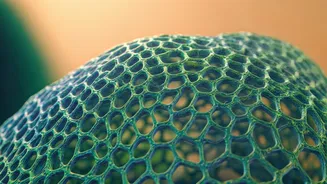









Revolutionary Womb Development
A prominent biotechnology company is reporting significant progress in developing an artificial womb capable of nurturing mammal embryos from conception
to birth outside a biological parent. This groundbreaking achievement, which has been the focus of intense research and development, is now said to be on the verge of full realization. The company has indicated that the primary remaining challenge lies in mastering the complex chemical signaling required for each stage of embryonic and fetal development. While the hardware and software components of the system are reportedly finalized, fine-tuning the intricate biochemical cues that guide development is the final frontier. This ectogenesis system aims to replicate the essential functions of a natural uterus, providing necessary oxygen, nutrients, and hormonal support while efficiently managing waste. Unlike previous research that focused on sustaining premature fetuses, this advanced platform is engineered to support the entire gestation period, potentially revolutionizing conservation biology and reproductive medical practices.
Advanced Technology and Testing
The innovative artificial womb platform, meticulously developed at a dedicated Australian laboratory by a team of expert biologists, employs a sophisticated approach. It integrates a dialysis-like mechanism with advanced artificial intelligence models and proprietary algorithms. These AI systems continuously monitor the developing embryo, making real-time adjustments to nutrient delivery, gas exchange, and crucial chemical signals. Researchers have focused on optimizing this artificial egg system, carefully observing development at various milestones to ensure accurate body patterning and the overall health of the embryos. The goal is to replicate natural developmental processes as closely as possible. Early testing has involved the fat-tailed dunnart, a small marsupial native to Australia known for its remarkably short 13-day gestation period. The team has reported remarkable success, guiding dunnart embryos through all three primary developmental phases. Through meticulous monitoring and AI-driven adjustments, they have achieved an impressive 100% development rate in their system. While acknowledging that approximately 25% of fertilized eggs naturally fail even within a biological uterus, their system has successfully brought 26 dunnart chicks to hatching, with ongoing observation of their growth.
Future Implications Beyond De-extinction
Despite the monumental advancements in artificial womb technology, the company has clarified that this system is not currently slated for use in its ambitious goal of recreating a woolly mammoth calf by late 2028. This distinction is important, as previous statements had suggested the artificial womb could serve as an alternative to using endangered Asian elephants as surrogate mothers. Over the past year, the company has significantly expanded its reproductive engineering endeavors, applying its cloning and genetic technologies to various species. Notable achievements include the birth of three wolf pups, created using ancient DNA, and more recently, the cloning of a beloved family dog. The company asserts full ownership of the intellectual property associated with its artificial womb system. Furthermore, it actively defends the ethical considerations of its project, arguing that controlled development outside the body could potentially improve survival rates compared to traditional breeding methods. The implications of this technology are envisioned to extend far beyond the realm of de-extinction, with a stated commitment to using its advancements to aid in saving endangered species and openly sharing its technologies for conservation purposes.