




Super Heavy's Fiery Debut
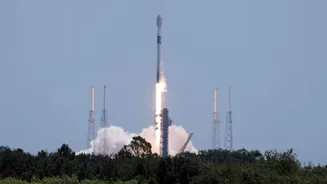
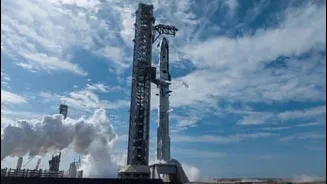
SpaceX has successfully conducted a crucial static-fire test of its Starship V3 Super Heavy first stage. This event, which took place at the company's
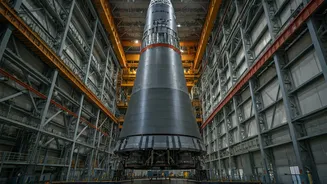
Texas facility, involved firing all 33 Raptor engines simultaneously while the massive booster remained firmly attached to the launchpad. The test, lasting its full intended duration, generated immense power and thrust, representing a major validation of the new V3 design. Previous attempts with this booster, though involving fewer engines or ending prematurely due to ground system issues, have now been surpassed. The successful full-duration, full-thrust 33-engine ignition is a vital step in proving the reliability and capability of the Super Heavy booster, which is integral to launching the Starship vehicle for its ambitious missions.
Starship's Celestial Ambitions
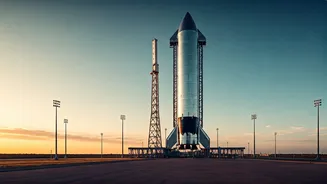
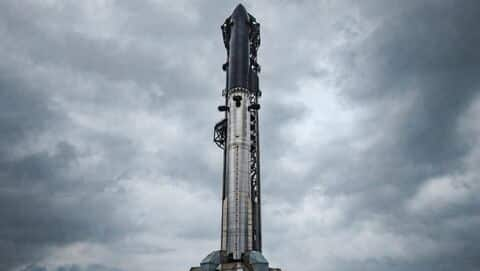
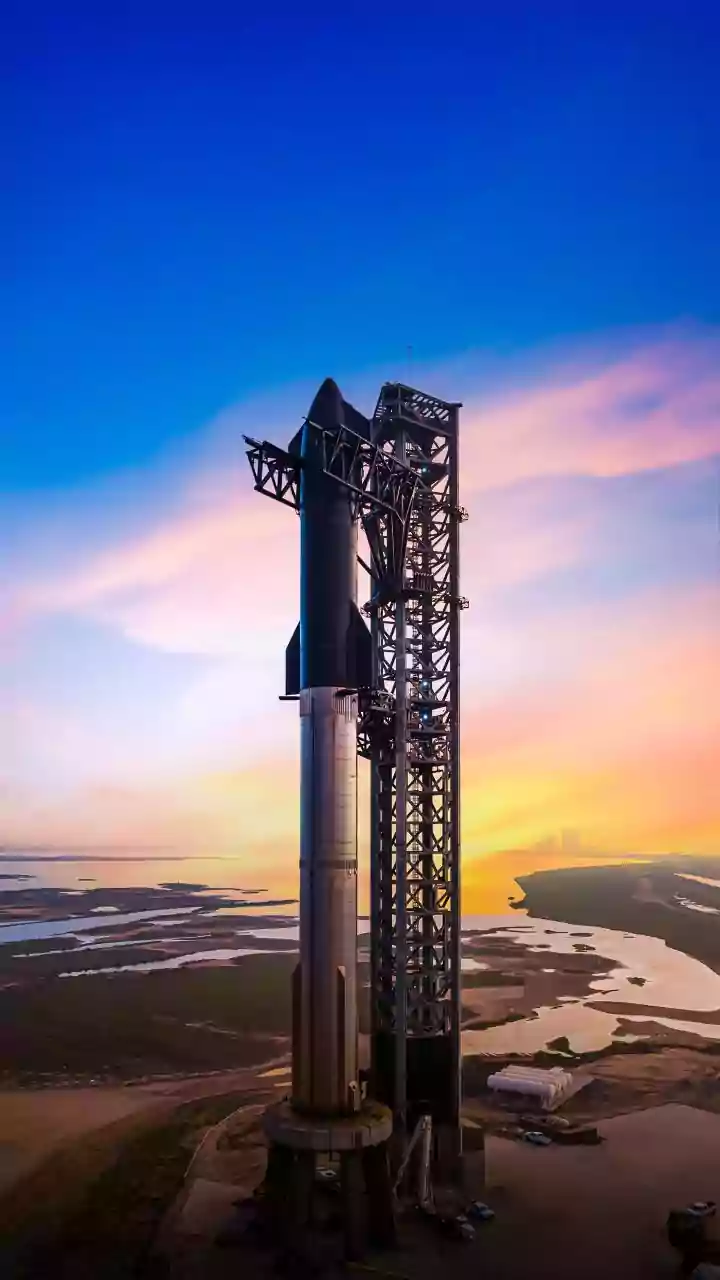
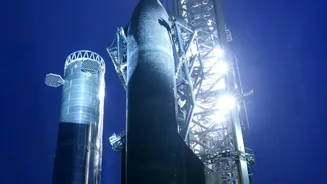
This successful Super Heavy test is a pivotal moment for the entire Starship program, a vehicle designed for unprecedented payload capacity and deep space exploration. Standing over 400 feet tall, Starship is engineered to transport more than 100 tons of cargo or crew, making it the largest and most powerful rocket ever constructed. Its ultimate goal is to facilitate human settlement on the Moon and Mars. Beyond these ambitious colonization efforts, Starship is also slated for critical roles in NASA's lunar exploration initiatives. The Starship upper stage has been selected as a lunar lander for the Artemis program, demonstrating its importance in returning humans to the moon and beyond.
Path to Artemis 3
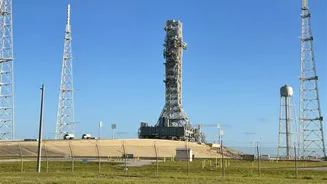
The upcoming 12th flight of Starship, designated as Flight 12, is poised to be a suborbital test, even with the successful static-fire advancements. This mission will serve to gather more data and fulfill necessary milestones before the vehicle can undertake more complex endeavors like the Artemis moon missions. Specifically, for Starship to be ready for Artemis 3, scheduled for late 2027, it will need to be equipped with essential life support systems and demonstrate its ability to achieve Earth orbit and undergo refueling in space. The Artemis 3 mission itself is designed to test rendezvous and docking operations in lunar orbit, with Starship's upper stage potentially serving alongside other private lunar landers, such as Blue Moon.
Lessons from Past Flights
Starship's journey has included 11 suborbital test flights since its first launch in April 2023. The significant gap between the 11th and the upcoming 12th flight is partly attributed to an earlier setback involving a previous Flight 12 Super Heavy booster, which was unfortunately destroyed during a pressure test in November. This incident underscores the rigorous testing and development process SpaceX undertakes. Each test flight, including the upcoming suborbital one, is crucial for refining the rocket's performance, identifying potential issues, and gathering valuable engineering data. The progression from early tests to this advanced static fire demonstrates continuous improvement and learning within the program.