

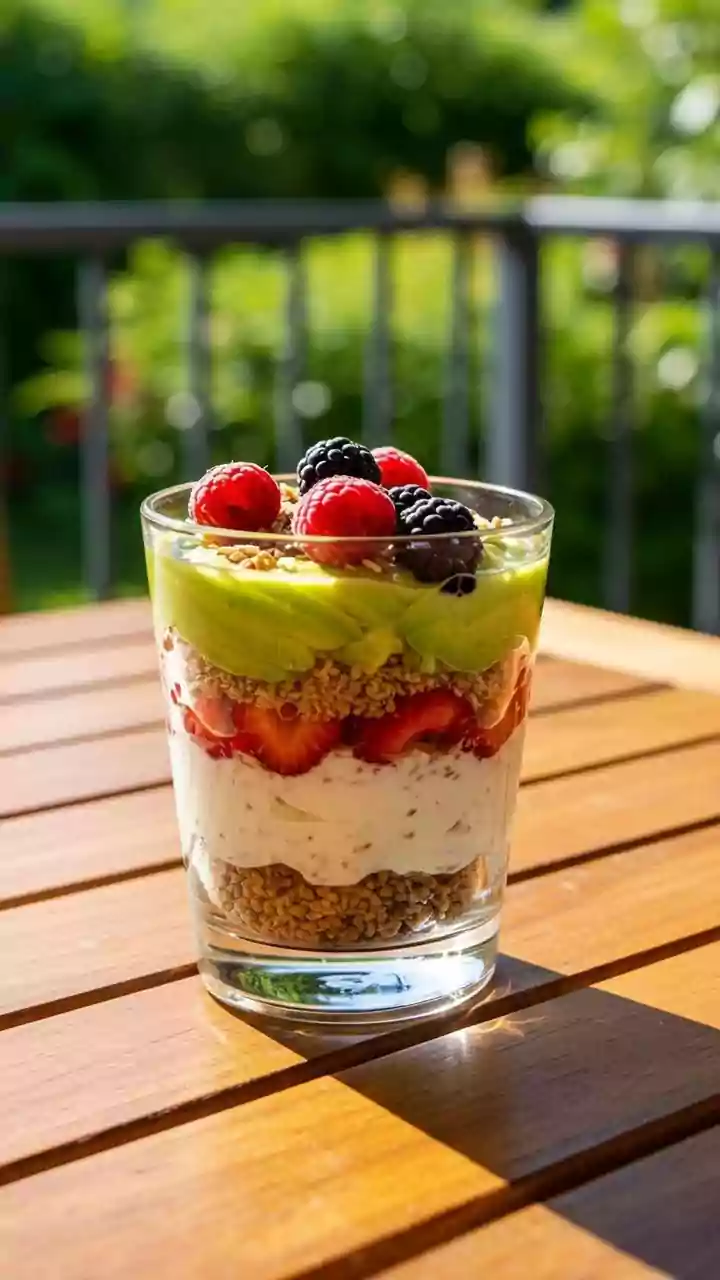




Millet Lentil Comfort Soup
Embark on a culinary journey with this Millet and Lentil Soup, a robust dish packed with wholesome ingredients and vibrant flavors. The preparation begins
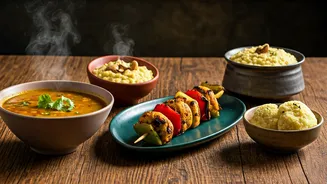
by thoroughly rinsing a blend of mixed lentils – moong, masoor, toor, and chana – to remove any starch, ensuring a clean base for the soup. These lentils are then pressure cooked alongside diced raw mango for a touch of tanginess, turmeric powder for its earthy notes and color, and salt to taste, all simmered in a litre of water. Simultaneously, a mixture of Jowar and Bajra flour is lightly roasted in a bit of fat until it achieves a delicate golden-brown hue, creating a nutty aroma. A flavorful tempering, or tadka, is prepared by heating pure ghee and frying chopped garlic until it's crisp and golden. This fragrant garlic is then combined with cumin seeds and asafoetida, which are allowed to splutter in the ghee, releasing their essential oils. Once the lentils and mango are tender from pressure cooking, they are carefully transferred to the pan with the tempering. The roasted millet flour is stirred in to thicken the soup, followed by red chilli powder for a mild heat and fresh coriander for brightness. The soup is then allowed to simmer for several minutes, allowing the flavors to meld. Before serving, it's garnished with the crispy fried garlic and more fresh coriander, offering a warm and satisfying meal.
Proso Millet Seekh Kabab
Savor the delightful Proso Millet and Vegetable Seekh Kabab, a perfect blend of nutritious grains and fresh produce. The process starts with soaking proso millet for an hour, then boiling it until tender but not mushy. After draining thoroughly, the cooked millet is sautéed in ghee until its grains separate, ensuring a light texture. In parallel, a medley of finely chopped vegetables—carrots, French beans, cauliflower, and green peas—are sautéed until they are tender yet retain a firm consistency. A critical step is to ensure these vegetables are dry to prevent a soggy kebab mixture. The cooled millet and sautéed vegetables are then combined in a large mixing tray with grated boiled potatoes and fresh paneer, adding both body and richness. Finely chopped ginger, green chilies, and fresh coriander are incorporated for aromatic depth. The seasoning includes salt, yellow chilli powder, and garam masala, which are gently mixed into the base. To bind the mixture, roasted gram flour, bread crumbs, and corn flour are added. The ingredients are then mashed and mixed using the palm of your hand until a cohesive, pliable dough forms, ready to be shaped. This dough is divided and carefully wrapped around metal skewers, forming uniform cylindrical kebabs. These kebabs are then grilled to perfection, with periodic basting of unsalted butter to maintain moisture and achieve a beautiful char. Once grilled, they are dusted with chaat masala and served hot, offering a flavorful and healthy alternative to traditional kebabs.
Kesar Amaranth Phirni
Indulge in the delicate sweetness of Kesar Amaranth Phirni, a creamy dessert that showcases the subtle nuttiness of amaranth flour. The preparation begins by gently toasting the amaranth flour in a heavy-bottomed pan with a touch of ghee until it releases a pleasant aroma and turns a light golden. Meanwhile, full-cream milk is brought to a boil in a separate saucepan and then simmered for several minutes to achieve a slightly reduced, richer consistency. The toasted amaranth flour and green cardamom powder are then gradually whisked into the simmering milk, ensuring a lump-free, smooth mixture. The concoction is cooked on low heat, stirring continuously, until it thickens to a pudding-like texture. At this stage, sugar is added and dissolved completely. For that luxurious touch, a small amount of warm milk is used to soak saffron strands, which are then stirred into the phirni, imparting a beautiful golden hue and a distinctive aroma. Once the desired consistency is reached, the mixture is removed from heat and allowed to cool to room temperature before being transferred into individual serving bowls. After chilling in the refrigerator until perfectly set, the phirni is ready to be garnished with a few extra saffron strands and served as a delightful end to any meal.
Saffron Barnyard Kulfi
Experience the regal taste of Saffron Barnyard Millet Kulfi, a frozen dessert that offers a unique twist on traditional Indian kulfi. The base of this delightful treat starts with barnyard millets, also known as Samak ke Chawal, which are soaked for four hours in lukewarm water. After soaking, they are ground with a little water into a fine paste, which is then strained to achieve a milky liquid, mimicking the texture of milk itself. This millet liquid is then combined with full-cream milk in a thick-bottomed pan and brought to a boil. The mixture is simmered on low heat, stirring frequently to prevent sticking, until the milk quantity reduces by half, concentrating its flavor and richness. The prepared millet paste is then slowly incorporated into the reduced milk, and the mixture is stirred continuously for about 5 to 7 minutes until it begins to thicken significantly due to the starch in the millets. Granulated sugar is added and stirred until fully dissolved, followed by the fragrant green cardamom powder and chopped nuts like cashews and pistachios for a delightful crunch. A saffron infusion, made by soaking saffron strands in lukewarm milk, is then added to the kulfi mixture, lending it a beautiful golden color and an exquisite aroma. After cooling to room temperature, the mixture will thicken further. It is then poured into kulfi molds and frozen for at least 6 to 8 hours, or preferably overnight, until firm. To serve, the molds are briefly dipped in warm water to ease demolding, presenting a perfectly chilled, saffron-infused, nutty kulfi.