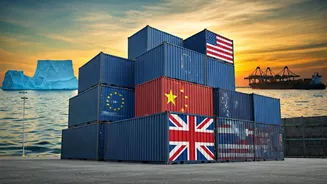









The Greenland Dispute
At the heart of the current international friction lies Donald Trump's decision to impose tariffs related to Greenland. This move has been met with significant
resistance and criticism from various international leaders. Key figures, including UK Prime Minister Keir Starmer and European Union representatives, have voiced strong opposition, condemning the tariffs as potentially damaging to international cooperation. These tariffs have injected uncertainty into the already complex relationships between the United States and its allies, stirring a potential for a full-scale trade war. Such actions have raised questions about global trade dynamics and the importance of diplomacy in the current international landscape. The situation demands careful evaluation of its consequences, including their potential impacts on countries like India, which are deeply integrated into the global economy.
Global Reactions Emerge
The imposition of tariffs has triggered a cascade of responses from various corners of the globe. The UK Prime Minister, Keir Starmer, condemned the US's actions, calling them 'completely wrong,' indicating a unified stance within Europe. The European Union, anticipating the situation, has initiated preparations for a 'trade bazooka', signaling their readiness to counter any tariffs. This proactive stance suggests a shift towards protective measures in light of the US tariffs, reflecting the sentiment of safeguarding European interests. Conversely, some voices like Scott Bessent have cautioned against retaliatory actions, emphasizing the complexities involved in such trade disputes. These diverse reactions highlight the intricate nature of the situation and the range of potential outcomes that could influence global commerce.
Trump's Motivations Explored
Understanding Donald Trump's strategic rationale behind imposing tariffs on Greenland is essential for comprehensively analyzing the situation. Various reports indicate that the imposition of tariffs appears to be a calculated move. This strategy, as alleged, serves multiple objectives, potentially including the weakening of transatlantic alliances or the assertion of US trade dominance. The impact on nations, like India, could be indirect. The geopolitical implications suggest that the US intends to reconfigure established partnerships and the global order. These actions call for scrutiny, urging India to assess its stance in a rapidly transforming world. The implications of these policies extend beyond immediate trade dynamics, warranting a deeper analysis of geopolitical strategies and diplomatic maneuvers on a global scale.
EU's Response and India
The European Union's response to the tariffs has been resolute. The EU is preparing to tackle Trump’s tariffs head-on in a bid to safeguard Greenland’s sovereignty, demonstrating a firm stance in the face of trade challenges. This proactive approach underscores the EU's commitment to protecting its economic interests. For India, the situation demands attention, since the implications of the European Union's response can potentially alter trade dynamics. India is increasingly integrating into the global economy and needs to watch developments in trade relations between major economic players. Moreover, such shifts could affect trade agreements, supply chains, and investment flows. Understanding the EU's strategy is paramount for India to assess its trade policies and adjust to the shifting international economic landscape, ensuring its interests are protected amidst global trade disputes.
Global Trade Implications
The trade dispute over Greenland has far-reaching consequences for global commerce. It is contributing to instability in international trade, a consequence that extends beyond the immediate parties. The imposition of tariffs can trigger retaliatory measures, leading to a possible trade war. Such conflicts increase costs, disrupt supply chains, and curb economic growth worldwide. They also challenge the foundations of the rules-based global trade system, with negative repercussions for countries like India. India needs to be prepared for the possible adjustments and disruptions in global trade flows. The situation highlights the need for a collaborative approach to resolving trade disputes and promoting international cooperation to protect the interests of all participants.
Geopolitical Considerations
The imposition of tariffs is not solely an economic issue; it also has major geopolitical repercussions. The tariff conflict strains relationships, particularly those between the United States and its allies. The repercussions include weakened diplomatic ties and potential challenges to established alliances. These shifts can alter the balance of power, with implications for global security. It is vital for India to closely observe and evaluate these developments, considering its partnerships and strategic interests. The evolving geopolitical landscape has the potential to reshape international cooperation, underscoring the need for flexibility, strategic partnerships, and a balanced approach to international affairs. A comprehensive understanding of these factors will enable India to navigate these complex geopolitical dynamics effectively.