

Widows Embrace Holi
Vrindavan's Gopinath Temple hosts a touching 'Widow's Holi,' a modern tradition offering dignity and joy to marginalized elderly women. Participants joyfully
sing devotional songs and engage with colors and flowers, symbolizing social evolution within the ancient festival. This event enriches Holi's diversity, demonstrating how deeply rooted traditions can adapt to foster inclusivity while preserving their spiritual essence.
Flower-Filled Devotion
Experience the serene 'Phoolon Wali Holi' at Banke Bihari Temple, where priests shower devotees with rose and marigold petals. This fragrant celebration, distinct from boisterous street festivities, is filled with devotional music and a sense of divine calm. Held a few days before the main event, it allows visitors to soak in the spiritual essence of Holi in a tranquil atmosphere, a truly unique ritual in the Braj region.
Culinary Delights of Holi
Holi in Mathura and Vrindavan is as much a food festival as it is a celebration of colors. The local cuisine is a vital cultural component. Don't miss traditional sweets like 'gujiya,' a delightful pastry filled with khoya and dry fruits, and 'thandai,' a refreshing cold milk beverage infused with nuts and saffron. Savvy travelers also highly recommend trying 'makhan mishri,' 'kachori sabzi,' and an array of other local sweet treats, readily available throughout the vibrant markets.
Lathmar Holi's Playful Duel
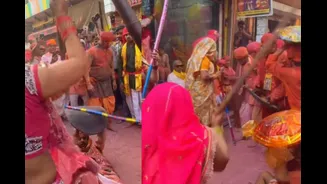
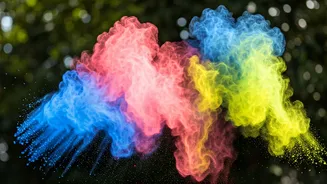
In Barsana, near Mathura, 'Lathmar Holi' is a legendary spectacle rooted in a 5,000-year-old anecdote from Lord Krishna's youth. The tradition playfully reenacts women chasing and playfully striking men with sticks ('lathis') after Krishna teased Radha and her friends. This vibrant tradition, celebrated with immense joy and song, involves millions of pounds worth of colored powder filling the air, accompanied by the energetic rhythms of 'dhol' drums.
Dhulandi and Rangbhari
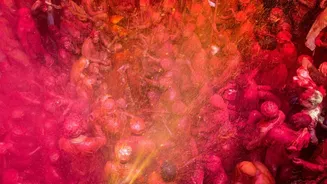
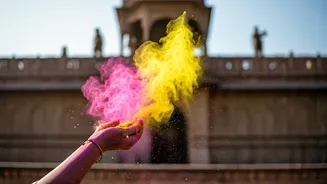
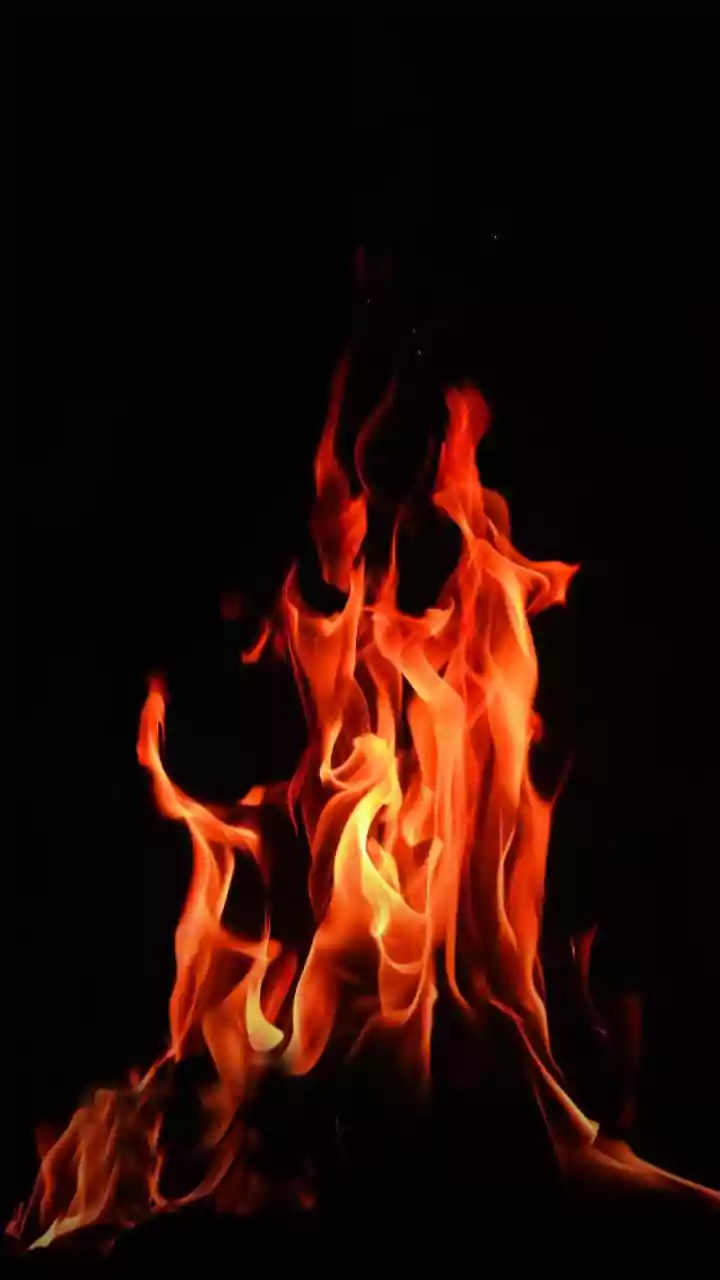
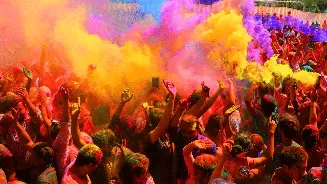
The heart of Braj's Holi spirit lies in the street revelry of 'Dhulandi.' The celebrations in Mathura and Vrindavan extend for nearly 40 days, beginning with 'Holika Dahan,' a bonfire symbolizing good over evil. The following day, 'Dhulandi,' sees enthusiastic crowds throwing 'gulal' (colored powder) and splashing colored water, dancing to lively music. Special days like 'Rangbhari Holi' and 'Rangbhari Ekadashi' further enhance the festivities with abundant color play in a pious ambiance, particularly around prominent temples.