



The Resistance Crisis
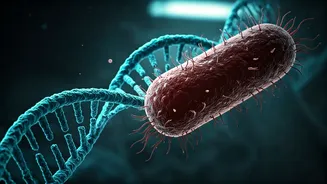
Antimicrobial resistance (AMR) poses a severe global health challenge, rendering common infections increasingly difficult to treat and, in some cases,
fatal. India alone faced an estimated 2.6 lakh deaths in 2021 directly linked to AMR, highlighting the urgent need for effective solutions. This growing problem means that infections previously manageable with standard treatments are becoming life-threatening. The inability of antibiotics to combat these resilient bacteria is a major concern for healthcare systems worldwide, emphasizing the critical importance of finding ways to overcome this resistance. The development of new antibiotics is a slow and costly process, making strategies that rejuvenate existing drugs highly valuable.
Macrolides Under Siege
A significant class of antibiotics, known as macrolides, which includes common drugs like azithromycin and erythromycin, functions by targeting the bacterial protein-making machinery, the ribosome. When antibiotics bind to the ribosome, bacteria are unable to synthesize essential proteins for survival and eventually perish. However, bacteria have evolved a defense mechanism: they produce enzymes called Erm enzymes. These enzymes modify the ribosome, altering its structure so that the antibiotics can no longer attach. This modification effectively neutralizes the antibiotic's action, allowing the bacteria to survive and multiply even in the presence of the drug, akin to changing the lock so the original key cannot be used.
Aptamers to the Rescue
Researchers at IIT Bombay have devised a clever strategy to counter this bacterial defense. Their approach involves using short, synthetic DNA sequences called aptamers. These aptamers are designed to specifically bind to the Erm42 enzyme, the very component responsible for modifying the ribosome and conferring resistance. After screening millions of DNA sequences, the team identified two highly effective aptamers. Professor Pradeepkumar explained that these aptamers were further refined by removing unnecessary segments to enhance their precision in targeting the Erm protein. Laboratory tests confirmed that these engineered aptamers successfully prevented the Erm enzyme from altering the ribosome, thereby restoring the effectiveness of macrolide antibiotics.
Liposomes: The Delivery System
A critical challenge in implementing this aptamer-based strategy was figuring out how to effectively deliver these delicate DNA molecules into bacterial cells. Aptamers are susceptible to degradation in the body and face difficulties crossing the bacterial cell membranes. To overcome this hurdle, a separate team led by Swagata Patra developed a solution using liposomes. Liposomes are tiny, spherical structures with a double-layered membrane similar to biological cell membranes. These 'fat bubbles' can encapsulate the aptamers and facilitate their entry into bacterial cells. The liposomes were meticulously engineered for several purposes: to bind with DNA for efficient aptamer encapsulation, to promote fusion with the bacterial membrane for entry, and to ensure the stability of the payload.
Successful In-Vitro Trial
The combined system, featuring aptamers encapsulated within liposomes, was rigorously tested against antibiotic-resistant strains of Staphylococcus aureus, a common pathogen responsible for challenging infections. The results were highly encouraging: when delivered via liposomes, the uptake of aptamers into bacterial cells exceeded 90%, a stark contrast to the negligible uptake observed without the liposomal delivery system. Crucially, the combination of aptamers and existing antibiotics led to a significantly higher rate of bacterial cell death compared to using antibiotics alone. Professor Anand stated that this outcome is significant because it demonstrates the inhibition of Erm activity, allowing the antibiotic to re-bind with the ribosomes and effectively reversing the resistance mechanism.
A Paradigm Shift
While still an initial proof-of-concept, this research signifies a fundamental shift in how scientists are approaching the problem of antimicrobial resistance. Instead of focusing solely on the development of novel, often more complex and expensive, antibiotics, this method aims to re-sensitize bacteria to established drugs. The advantages of this approach are numerous: it prolongs the useful life of existing antibiotic stockpiles, reduces the pressure to discover entirely new drug classes, and leverages technologies already well-integrated into medical practice. The synthesis of DNA is relatively straightforward, and liposome formulations are already common in pharmaceutical applications. Further enhancements to aptamer stability are achievable through established chemical modification techniques used in nucleic acid therapeutics.
Future Implications
The development of new antibiotics is an exceptionally lengthy, demanding, costly, and uncertain endeavor, often taking more than a decade from initial discovery to clinical availability. Even when new drugs are introduced, bacteria can rapidly evolve new resistance mechanisms, diminishing their effectiveness. Between 2017 and 2022, a limited number of new antibiotics reached the market, many being variations of existing drug classes, thus remaining susceptible to established resistance. This reality drives the exploration of alternative strategies, such as maximizing the efficacy of current medications. Professor Anand suggests that improving existing drugs presents a more pragmatic path, given their established safety and efficacy profiles, compared to the high-risk pathway of discovering entirely novel compounds.