






The Science of Tiny Holes
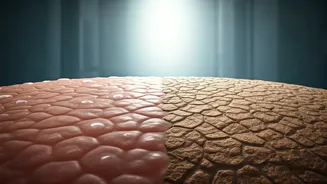
Scalp microneedling, a popular technique for hair regrowth, works by creating controlled micro-injuries on the scalp. This process, known as collagen induction
therapy, stimulates the body's natural healing response, waking up dormant dermal papilla cells that are crucial for hair regeneration and triggering essential growth factors. Furthermore, these microscopic channels act as superhighways, allowing topical hair growth treatments, such as minoxidil or rosemary oil, to penetrate the skin's natural barrier more effectively and reach the hair follicles directly. The effectiveness of microneedling hinges on the precise method used to create these channels, making the tool choice paramount for optimal results and avoiding further scalp trauma.
Roller Risks Unveiled
While derma rollers are widely accessible and appear convenient for covering large scalp areas quickly, their design poses significant risks when used for hair loss concerns. The rolling mechanism causes needles to enter and exit the skin at an angle, creating jagged, V-shaped tears rather than clean punctures. This unnecessary trauma can lead to unintended damage. Moreover, maintaining consistent pressure across the curved surface of the scalp is incredibly challenging with a roller, often resulting in uneven treatment and patchy outcomes. The most detrimental issue, however, is the roller's tendency to snag and pull on existing hair strands during use, potentially ripping out healthy hair that you are trying desperately to preserve. This makes the roller a problematic choice for those aiming to protect and regrow their hair.
Stamp's Superior Action
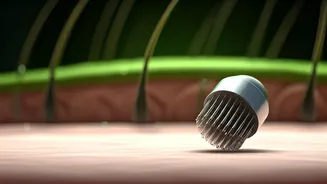
The derma stamp offers a clear advantage over rollers due to its distinct application method. Unlike the sweeping motion of a roller, a stamp involves a direct vertical pressing and lifting motion. This ensures that the needles penetrate and exit the skin at a precise 90-degree angle, creating clean, I-shaped micro-channels without any dragging or tearing of the surrounding skin or delicate hair follicles. The absence of any sweeping movement eliminates the risk of hair becoming entangled and pulled out from the root, making it a far safer option for individuals with thinning hair or longer hair that might get caught. Additionally, the stamp provides targeted control, allowing users to focus precisely on specific areas of thinning, such as the crown, hairline, or widening part, without unnecessarily irritating adjacent healthy skin. This precision is key for effective spot treatment.
Optimizing Your Treatment
For the most impactful hair regrowth results, combining microneedling with a 5% minoxidil solution has been scientifically proven to be highly effective, yielding significantly better outcomes than minoxidil used alone. When using a microneedling tool, needle length is critical for achieving desired outcomes. For enhancing serum absorption, shorter needles ranging from 0.25 mm to 0.5 mm can be used up to three times weekly. However, to directly stimulate hair follicles and encourage regrowth, longer needles of 1.0 mm to 1.5 mm are recommended. This more intensive treatment should only be performed once every one to two weeks to allow adequate time for scalp healing and recovery. Crucially, maintaining impeccable hygiene is paramount; soaking the derma stamp in isopropyl alcohol before and after each use is essential to prevent scalp infections, which can severely disrupt the hair growth cycle and undermine treatment progress.