







Deep Emotional Bonds
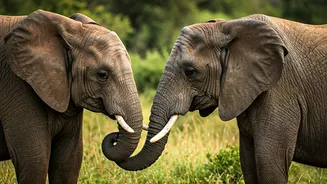
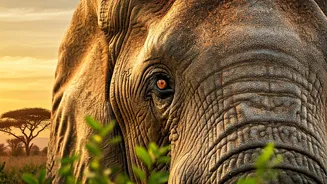
Elephants exhibit a profound capacity for emotion, a trait highlighted by their intricate mourning rituals. Observations reveal that these intelligent
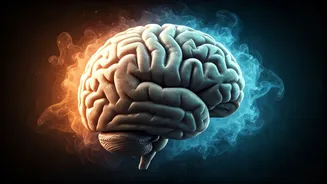
creatures often return to the resting places of deceased herd members, touching their skeletal remains with a solemn stillness. This deeply moving behavior strongly suggests a complex emotional response to loss, akin to grief, demonstrating a level of empathy and social awareness that places them in a select group of highly sentient beings, including humans, great apes, and dolphins, all of whom share specialized brain cells known as spindle neurons, crucial for processing social cues and emotional states.
The Mighty Trunk
An elephant's trunk is a marvel of biological engineering, boasting an astonishing repertoire of over 40,000 muscles. This incredible dexterity allows for a wide range of actions, from delicately plucking a single blade of grass to effortlessly lifting heavy logs. Its versatility makes it one of the most complex and adaptable organs found in the entire animal kingdom, serving as a primary tool for feeding, drinking, smelling, and social interaction, showcasing an extraordinary level of fine motor control and brute strength.
Self-Aware Sentinels
Elephants are among the rare species on Earth capable of recognizing themselves in a mirror, a key indicator of advanced self-awareness. This remarkable ability places them in elite company, alongside dolphins and great apes, suggesting a sophisticated understanding of their own identity. Passing the mirror self-recognition test signifies a complex internal world and a consciousness that goes beyond simple instinct, underscoring their significant cognitive capabilities.
Vibrational Communication Network
Communication among elephants extends beyond audible sounds, utilizing an ingenious system of low-frequency vibrations transmitted through the ground. These seismic signals, sensed by other elephants through their sensitive feet, allow for communication across vast distances. This 'earthquake' communication network enables herds to stay connected, coordinate movements, and alert each other to potential dangers, even when visual or auditory contact is impossible, demonstrating a sophisticated and far-reaching communication strategy.
Exceptional Long-Term Memory
The renowned memory of elephants is not just a myth; it's a critical survival tool. These animals possess an exceptional capacity to recall vital information, such as the locations of scarce water sources and established migration routes, for many decades. This long-term memory is indispensable for navigating arid landscapes and ensuring herd survival during prolonged droughts. Furthermore, their ability to remember individuals, both conspecifics and potentially humans, plays a significant role in their social dynamics and their interactions with their environment.
Dominant Tusk Preference
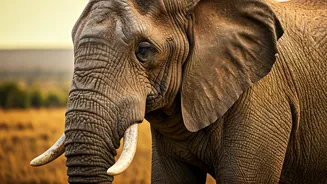
Much like humans exhibit a preference for being right or left-handed, elephants often display a dominant tusk. This specialized use leads to the primary tusk becoming noticeably shorter and more worn over time, a subtle yet distinct characteristic that can be easily overlooked. This trait provides an intriguing insight into individual animal behavior and the subtle ways in which their environment and habits shape their physical attributes, mirroring the concept of handedness in humans.