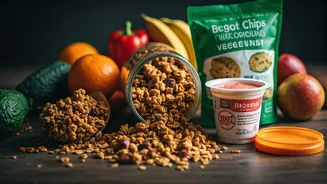




The Granola Deception
While oats and nuts are nutritional powerhouses, many commercially available granolas are essentially sugar bombs. Manufacturers often load them with added
sugars, syrups, and oils to enhance taste and texture. A single serving can contain a surprising amount of sugar, comparable to a dessert, turning a seemingly wholesome breakfast into a high-calorie indulgence. It's crucial to scrutinize labels and opt for granolas with minimal added sweeteners or consider making your own from scratch to control the ingredients.
Yogurt's Sugary Secret
Yogurt is renowned for its probiotic benefits and protein content, but flavored varieties often come with a hefty dose of added sugars and artificial flavorings. The sugar levels in a small cup of flavored yogurt can surprisingly rival those of a candy bar, transforming a supposedly healthy snack into a sweet treat. For a genuinely nutritious choice, plain Greek yogurt, perhaps with some fresh fruit added for natural sweetness, is a superior option that bypasses the hidden sugars.
Smoothies: Not Always Healthy
The perception of smoothies as health drinks can be misleading. When prepared with fruit juices, sugary syrups, or ice cream bases, they can become calorie and sugar-laden beverages. Even green smoothies might not be as virtuous as they appear if they rely heavily on concentrated fruit juices instead of whole vegetables. What seems like a refreshing drink can quickly escalate into a significant sugar intake, undermining your health objectives.
Veggie Chips' False Promise
Marketed as a healthier alternative to traditional potato chips, veggie chips often undergo a similar processing and frying treatment. This means they can contain comparable amounts of salt and unhealthy fats. The beneficial nutrients present in the original vegetables are often diminished during the manufacturing process, resulting in a snack that offers little nutritional advantage over its potato-based counterpart. Look for baked or air-fried options with minimal oil and salt.
Energy Bars: Disguised Candy
Many energy bars, presented as essential fuel for active lifestyles and busy individuals, are in reality quite similar to candy bars, albeit with added protein. They frequently contain significant amounts of refined sugars, hydrogenated oils, and artificial additives. Unless one is very careful in selecting them, these bars can hinder rather than support fitness and health goals due to their high sugar and unhealthy fat content.
Fruit Juice: Sugar Overload
While fruit juice is often viewed as a wholesome beverage, most commercially produced versions are depleted of their natural fiber and are heavily fortified with added sugars. Even 100% fruit juice can cause rapid spikes in blood sugar levels, providing far less nutritional value than consuming whole fruit. Opting to eat an orange, for instance, is a much healthier choice than drinking a glass of its juice due to the retained fiber and slower sugar absorption.
Gluten-Free: Not Always Guilt-Free
The 'gluten-free' label doesn't automatically equate to healthier food. Many packaged gluten-free snacks compensate for the absence of wheat by using refined starches, extra sugars, and unhealthy fats. While essential for individuals with celiac disease or gluten sensitivities, for others, these products can be just as processed and calorie-dense as their regular counterparts, offering no inherent health benefit.
Dressing's Hidden Dangers
A salad is typically considered a pinnacle of healthy eating, but the dressing used can easily negate all its benefits. Creamy salad dressings are often laden with saturated fats, sugar, and sodium. Even seemingly lighter vinaigrettes can contain hidden preservatives and sweeteners. For a truly healthy option, a simple drizzle of olive oil and lemon juice or vinegar is a far superior choice that avoids these hidden nutritional pitfalls.
Trail Mix Traps
Although trail mix is intended as an energy-boosting and nutritious snack, many pre-packaged versions are loaded with tempting but unhealthy ingredients. These often include chocolate candies, sugar-coated dried fruits, and heavily salted nuts. What could be a balanced and beneficial snack frequently transforms into a calorie-dense treat that is easily consumed in excessive amounts, making mindful portion control crucial.
Diet Soda's Subtle Impact
Diet sodas, promoted as a low-calorie alternative to sugary drinks, contain artificial sweeteners. Emerging research suggests these sweeteners may disrupt metabolism and potentially increase cravings for sweet foods over time. While they don't contribute direct calories, their long-term impact on eating habits and metabolic processes warrants consideration, making water or unsweetened beverages a healthier choice.