




Sankranti: A Festive Beginning
Makar Sankranti marks the sun's transition into the zodiac sign of Capricorn (Makar), a significant event observed with zeal all over India. This festive
occasion signifies the end of winter and the commencement of longer days, symbolizing new beginnings and optimism. The celebrations of Makar Sankranti vary across different regions of India, but the common thread is the expression of gratitude to the sun god, Surya, and the enjoyment of various traditional foods. The festival also holds great social significance, fostering community bonding, and promoting cultural heritage. As a harvest festival, Makar Sankranti also celebrates the abundance and prosperity of the harvest season, with special dishes being prepared using newly harvested grains and produce.
Til and Gur: The Pairing
The pairing of til (sesame seeds) and gur (jaggery) is a central element of Makar Sankranti celebrations. This combination is not just about taste but is also deeply rooted in tradition and wellness. Til, known for its protein content and heat-generating properties, is especially beneficial during the cold winter months. Gur, a natural sweetener made from sugarcane, offers a slow release of energy and is known for its warming effects. Together, til and gur create a balanced food that provides warmth, sustained energy, and essential nutrients, perfectly suited to the winter season's needs. This pairing is a simple yet profound example of how traditional knowledge and natural ingredients come together to support well-being.
Til's Nutritional Benefits
Sesame seeds, or til, bring a host of nutritional benefits to the table. They are a good source of protein, which is vital for maintaining and repairing body tissues. This is particularly important during winter when the body needs more energy to stay warm and fight off illnesses. Additionally, til is rich in minerals such as calcium, iron, and magnesium, which contribute to bone health, oxygen transport, and muscle function. The consumption of til also provides the body with healthy fats and antioxidants, contributing to overall health and boosting the immune system. Therefore, consuming til during Makar Sankranti supports both energy levels and general health during the cold months.
Gur's Energizing Qualities
Jaggery, or gur, is a natural sweetener that plays a crucial role in providing sustained energy during the winter. It is rich in iron, which helps in preventing anemia, and it also contains small amounts of other essential minerals. Unlike refined sugars, gur is digested slowly, ensuring a steady release of energy, which helps maintain stable blood sugar levels. Gur also aids digestion and can help cleanse the body, making it a valuable addition to the diet during the colder months when digestive issues may be more common. This combination of energy provision, mineral content, and digestive benefits makes gur an ideal complement to til, enhancing the nutritional value of Makar Sankranti treats.
Traditional Dishes Galore
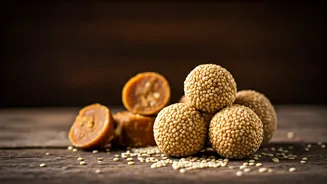
Makar Sankranti is also known for its array of delicious dishes made with til and gur. Til chikki is a popular sweet treat, made by combining sesame seeds with jaggery and then setting them into a brittle form. Til gur ladoos are another favorite, made by mixing til and gur with ghee and shaping them into bite-sized balls. Til gul poli is a flatbread filled with a mixture of til and gur, offering a fulfilling and nutritious meal. Each dish not only satisfies the taste buds but also carries symbolic meaning, representing the festive spirit and the coming of new beginnings. The preparation of these traditional dishes is often a communal activity, strengthening family bonds and celebrating the cultural heritage of the festival.