






Fighting Brain Fog
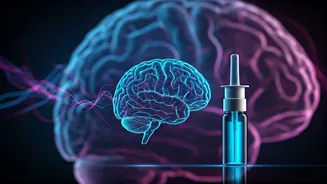
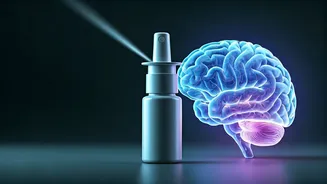
Researchers have unveiled an exciting new nasal spray designed to combat age-related cognitive decline by directly addressing inflammation within the brain.
This novel approach challenges the long-held belief that brain aging and its associated cognitive impairments, like memory loss and reduced learning capacity, are irreversible. The study, conducted by scientists at Texas A&M University, posits that neuroinflammation, a process that typically escalates with age and is implicated in conditions such as Alzheimer's disease, can indeed be reversed. This discovery opens up a promising avenue for interventions aimed at restoring brain function and improving overall cognitive performance in older adults, shifting the paradigm from mere prevention of decline to active rejuvenation.
How It Works
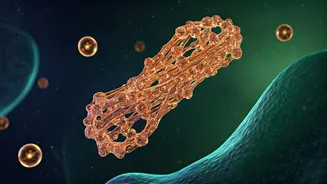
The innovative therapy hinges on the use of extracellular vesicles, which are microscopic biological particles that act as sophisticated delivery vehicles. These vesicles are engineered to carry microRNAs, crucial genetic regulators within cells, directly into the brain. Administered via a simple nasal spray, these tiny carriers are capable of navigating past the brain's natural protective barriers to reach brain tissue. Once inside, they are absorbed by local immune cells, where they initiate a cascade of anti-inflammatory actions. Specifically, the treatment targets key inflammatory pathways, including the NLRP3 inflammasome and the cGAS–STING system, both of which are heavily implicated in the chronic inflammation observed in aging brains. Concurrently, the therapy aids in restoring the functionality of mitochondria, the cell's powerhouses, thereby boosting energy production and enhancing the brain's capacity for information processing and memory retention.
Promising Trial Results
Early-stage testing has yielded remarkably encouraging outcomes, demonstrating a clear positive impact on cognitive abilities. Behavioral assessments revealed that subjects receiving the nasal spray treatment exhibited significant improvements in memory recall and general awareness. Participants were demonstrably better at recognizing familiar objects and distinguishing them from new ones. A particularly noteworthy finding was the consistent efficacy across both male and female participants, a result often challenging to achieve in biomedical research. These findings hold considerable implications, suggesting that if human trials replicate these effects, this nasal spray could offer a more accessible and straightforward alternative to existing treatments for cognitive impairments. Furthermore, its anti-inflammatory mechanism makes it a potential candidate for aiding recovery in individuals who have suffered brain injuries or strokes.
Toward Healthier Aging
While further extensive research is requisite before this nasal spray can be widely adopted as a clinical treatment, this pioneering work represents a significant stride toward understanding and intervening in the aging process of the brain. It underscores the growing realization that cognitive decline associated with aging may not be an immutable fate. The focus is shifting beyond simply slowing degeneration; researchers are now exploring ways to actively rejuvenate the brain, promoting sustained cognitive vitality throughout an individual's lifespan. This evolving scientific perspective suggests a fundamental redefinition of how we view aging and its profound effects on our mental faculties, moving towards a future where a sharp and active mind is maintained well into later life.