









A Culinary Spark Ignites
What began as a casual online exchange about Bengali sweets quickly escalated into a spirited debate, drawing in prominent figures and igniting discussions
nationwide. A user's dismissive remark likening rasgulla to 'idli in sugar syrup' served as the catalyst. This seemingly simple comparison, however, tapped into a deeper well of regional pride and cultural attachment to iconic dishes. The internet buzzed with reactions, with many chiming in on the perceived inaccuracy and emotional weight of such an analogy. The discussion transcended mere culinary preference, evolving into an exploration of how food items become intertwined with personal and collective identities, prompting a deeper look at the nuances that define beloved regional specialties.
Tharoor's Eloquent Defense
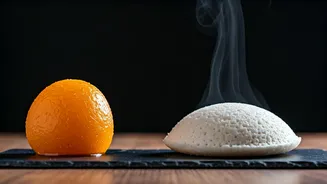
Stepping into the fray, Shashi Tharoor offered a meticulously crafted response that elevated the debate from a simple comparison to a profound commentary on food. He expertly dismantled the notion of rasgulla and idli being alike, framing it not just as a culinary misstep but a 'cosmological misunderstanding.' Tharoor detailed the fundamental differences in their composition, contrasting the delicate chenna of rasgulla with the meticulously fermented batter of rice and urad dal used for idli. He underscored that their origins stem from entirely distinct culinary philosophies and ingredients. His articulation highlighted the unique textural and structural properties of each, emphasizing that they share no common ground in taste, consistency, or purpose, thereby defending the distinct dignity of both dishes.
The Science of Idli
Tharoor’s defense extended to highlighting the idli's status as a feat of 'biotechnology.' He explained that achieving a perfect idli is a testament to masterful fermentation, a process that involves balancing specific microflora over time. This ancient technique, he argued, results in a light, steamed product that is not only delicious but also beneficial for gut health. The idli, in his view, is a complex carbohydrate and protein matrix, engineered to perfectly complement the flavors of sambar or gunpowder. This scientific appreciation underscores the thought and skill involved in creating this staple, moving it beyond a simple 'bland cake' to a symbol of South Indian culinary ingenuity and nutritional prowess.
Identity, Culture, and Cuisine
Beyond the technicalities, the debate underscored the profound emotional and cultural significance of food in India. Experts like Sadaf Hussain and Ananya Banerjee corroborated Tharoor’s stance, emphasizing that rasgulla and idli, while both popular, represent different culinary experiences – one often associated with celebration, the other with daily sustenance. Food expert Alok Singh elaborated on how such comparisons can unintentionally diminish the 'cultural labor' and regional specificity inherent in dishes. He explained that for many, these foods are deeply tied to their heritage, representing centuries of perfected techniques and regional pride, making any trivialization feel like an affront to collective memory and identity.
Mastering Fermentation
The key to a truly exceptional idli, as highlighted by culinary professionals, lies in the art of fermentation. This process is sensitive and requires precise control over various factors, including the rice-to-lentil ratio, the quality of the bacterial cultures, the grinding texture, and the aeration of the batter. Even slight variations in ambient temperature can significantly alter the outcome, leading to dense idlis rather than their characteristic soft, airy texture. This intricate process is what makes perfecting homemade idlis a challenge, often distinguishing them from the consistently excellent versions found in restaurants. The entire alignment of these elements is crucial for achieving the desired result.
Ancient Biotechnology Unveiled
The scientifically accurate descriptor of idli as a 'masterclass in biotechnology' points to ancient Indian culinary wisdom. Long before modern scientific tools existed, indigenous populations mastered controlled fermentation as a method for food preservation and enhancement. In India's tropical climate, fermentation provided a way to extend the shelf-life of food and improve its digestibility. The interaction of specific microbes, like Leuconostoc mesenteroides and Lactobacillus bulgaricus, during idli batter preparation not only breaks down complex starches and reduces anti-nutrients like phytic acid but also synthesizes essential B-vitamins. This process allowed for the creation of leavened textures and enhanced nutritional value, showcasing an intuitive understanding of biological processes.