




Innovating Offshore Compute
A pioneering San Francisco-based company, Aikido Technologies, is charting a new course for the future of data processing by integrating data centers directly
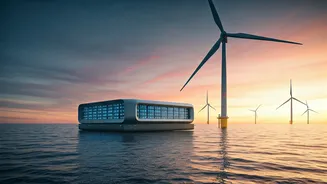
onto offshore wind turbine platforms. This ambitious venture aims to tackle the significant power and physical space constraints that are currently hindering the rapid expansion of artificial intelligence infrastructure. The company is preparing to launch a pilot project by the end of 2026 off Norway's coast in the North Sea. This initial unit will combine a wind turbine with an AI server, boasting a 100-kilowatt capacity. This initiative comes at a crucial time, as many large-scale AI projects face considerable delays and opposition due to local land-use disputes, commonly referred to as 'not in my backyard' conflicts. By moving computing offshore, Aikido seeks to circumvent these terrestrial challenges and provide a sustainable, scalable solution for AI's ever-increasing hunger for resources.
Robust Submersible Design
The architectural marvel behind Aikido's offshore data centers lies in their sophisticated semi-submersible design, a configuration familiar to the offshore oil and gas industry for its resilience in harsh marine environments. Each turbine platform is anchored to the seabed by a network of chains and anchors, ensuring it remains stable even amidst turbulent winds and strong ocean currents. The structure itself features three substantial legs, each filled with fresh water acting as ballast. This ballast system is crucial for maintaining buoyancy and keeping the entire platform upright and secure. This robust engineering is paramount to creating a stable foundation for both energy generation and intensive data processing in the unpredictable conditions of the open sea.
Integrated Cooling System
Aikido's design ingeniously repurposes the turbine's structure to house substantial data halls, potentially accommodating up to 3 to 4 MW of computing capacity within the upper sections of each leg. This means a single wind turbine could potentially serve as a powerful 9 to 12 MW data center. A key innovation is the cooling mechanism, which leverages the surrounding marine environment. The fresh water used for ballast is strategically pumped to cool the AI chips. Once warmed, this water is recirculated back into the ballast system, where the cold waters of the North Sea efficiently dissipate the heat. Additionally, an air-conditioning system is incorporated to manage the thermal regulation of other components not directly involved in the water-cooling loop, ensuring optimal operational temperatures for all equipment.
Cost-Competitive Advantage
The CEO of Aikido, Sam Kanner, highlights the significant cost advantages of their offshore, wind-powered data centers. He points out that by harnessing abundant wind energy and utilizing the natural cooling properties of the ocean, they can achieve remarkable cost-competitiveness compared to conventional land-based data center solutions. This approach not only utilizes free resources but also offers a unique opportunity to position compute power precisely where it is needed. Kanner views the current 'crunch' in data center capacity over the next five years not as a problem, but as a prime opportunity for their innovative model to be validated and deployed, supplying critical AI processing power in strategic offshore locations.
Addressing Power Inconsistency
While wind power offers a clean energy source, its inherent variability presents a challenge for consistent data center operation. To mitigate this, each offshore data center is equipped with advanced battery systems designed to store surplus energy generated during periods of high wind. This stored energy can then be deployed to maintain uninterrupted operations when wind production dips. Furthermore, these offshore facilities are interconnected to the main power grid. This crucial link allows them to draw power from alternative sources if extended periods of low wind persist, ensuring a reliable and continuous supply of electricity essential for the demanding workloads of AI computations and preventing any downtime.
Navigating Marine Challenges
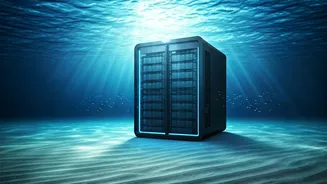
Operating data centers at sea introduces unique environmental hurdles. The unforgiving nature of the marine environment, particularly the corrosive effects of saltwater, necessitates robust material choices and diligent maintenance protocols to prevent equipment degradation and ensure longevity. Despite these complexities, such experimental ventures are crucial for overcoming the spatial and energy limitations faced by land-based facilities. Similar concepts have been explored globally, with China piloting a wind-powered underwater data center. While ambitious, these offshore endeavors are considered more practical than far-reaching proposals for space-based data centers, representing a tangible step towards sustainable and scalable AI infrastructure.