








The Orbital Menace
Our orbital highways are increasingly congested with defunct satellites, rocket fragments, and other discarded materials, a growing concern for the future
of space exploration and utilization. NASA and the European Space Agency highlight this significant problem, estimating tens of thousands of pieces of debris actively circling Earth in low Earth orbit. This space junk represents a serious hazard, capable of causing catastrophic collisions with operational satellites and spacecraft. As launches increase and space activities expand, the volume of debris is projected to grow, compounding the risk. Traditionally, the primary strategy for managing this threat has been avoidance, but a new technological advancement promises a more proactive approach to safeguarding our orbital space.
Introducing Stargaze
In response to the escalating challenge of orbital debris, a new system called the Stargaze Situational Awareness System (SSA) is being deployed. Developed by SpaceX, this initiative aims to bolster the safety and long-term sustainability of operations within low Earth orbit. Crucially, the valuable screening data generated by SSA will be made accessible without charge to the wider community of satellite operators. This move is poised to significantly enhance the ability to detect orbiting debris and other objects, largely due to its rapid polling capabilities. SpaceX anticipates achieving roughly 30 million daily transits using a fleet of 30,000 star trackers, providing near-continuous observation.
Superior Detection Methods
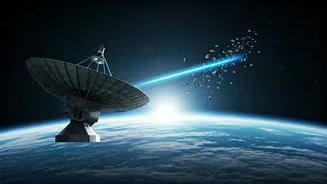
The efficacy of the Stargaze system lies in its advanced observation capabilities, which far surpass conventional ground-based tracking methods. Traditional systems typically manage only a limited number of observations per day and are susceptible to external factors like unpredictable space weather, making consistent debris monitoring a formidable task. Stargaze, conversely, leverages the extensive Starlink constellation, allowing for almost constant vigilance. By sharing Starlink ephemeris data hourly, the system provides other satellite operators with up-to-date trajectory information. This enables them to more effectively track potential debris, execute collision avoidance maneuvers, and mitigate risks, ultimately contributing to a safer orbital environment for all.
Enabling Debris Removal
Beyond merely tracking and avoiding existing debris, the Stargaze system holds the potential to unlock more effective debris removal strategies. Researchers and technology firms have proposed various methods for clearing the orbital environment, including specialized capture satellites and plasma propulsion systems designed to bring debris into the atmosphere for safe burning. A significant hurdle for these proposed solutions has always been the difficulty in accurately tracking the vast amount of space junk. Stargaze could be the key to overcoming this challenge, enabling teams to monitor debris with much greater precision, perhaps even in near real-time. This enhanced tracking accuracy is vital for planning and executing successful debris capture and disposal missions, paving the way for a cleaner, more sustainable orbit.
Community Access and Future
While Stargaze has been in a closed beta phase for select satellite operators, its accessibility is expanding to encompass all operators willing to contribute data. This inclusive approach is expected to benefit researchers working on similar orbital safety projects, providing them with essential ephemeris data. The long-term impact of Stargaze on reducing space junk remains to be seen, but its availability to a broader community, free of charge, marks a significant positive development. SpaceX's commitment to sharing this crucial situational awareness information is a crucial step towards fostering greater collaboration and ensuring the responsible stewardship of Earth's orbital space for generations to come.