





Revolutionary In-Space Refueling
NASA, in collaboration with Eta Space, is developing a groundbreaking system to enable refueling in space, a concept vital for extending the reach of human
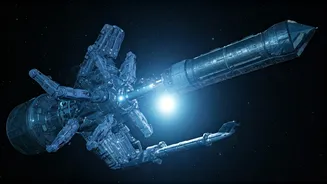
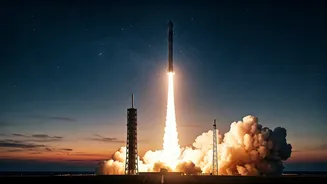
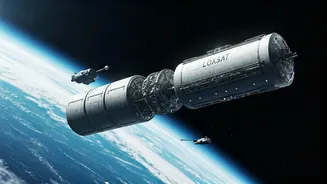
and robotic exploration. This project, known as the Liquid Oxygen Flight Demonstration (LOXSAT), centers on testing advanced cryogenic fluid management (CFM) technologies. The ultimate goal is to establish 'in-space propellant depots,' effectively creating gas stations among the stars. These depots will allow spacecraft to replenish their fuel supplies while en route to distant destinations, such as Mars. Unlike previous experiments that relied on terrestrial or low-Earth orbit robotic refueling, LOXSAT aims to position these stations in deep space. A significant challenge is developing CFM systems capable of maintaining cryogenic fluids like liquid oxygen and hydrogen at the necessary low temperatures for extended durations in the harsh vacuum of space. NASA is leveraging powerful supercomputers to monitor and coordinate the demonstration of 11 distinct CFM technologies throughout the nine-month LOXSAT mission, which is targeted for a July 17, 2026, launch.
Enabling Deeper Space Ventures
The successful development of in-space refueling capabilities is seen as a critical step, especially following missions like Artemis II, which demonstrated extended crewed spaceflight. The ability for astronauts to refuel in orbit drastically alters the economics and feasibility of long-duration missions. Currently, the necessity to carry all fuel from Earth dictates that longer journeys require a significantly higher proportion of the spacecraft's total mass to be fuel. This fundamental limitation could be overturned by in-space refueling, allowing for smaller, more agile spacecraft to undertake ambitious journeys. NASA views these refueling capabilities as indispensable for a sustainable space exploration program, with sights set on the Moon, Mars, and beyond. This initiative aligns with other forward-looking plans, such as NASA's proposed nuclear-powered mission to Mars in 2028, underscoring the agency's commitment to pushing the boundaries of space exploration this decade.
LOXSAT Mission Breakdown
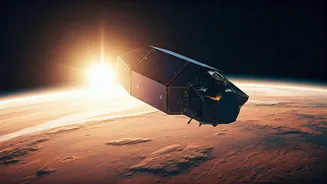
The LOXSAT 1 mission is designed as a compact, practical demonstration of an entire cryogenic oxygen fluid management system in action. The 11 CFM technologies identified as essential for creating functional propellant depots will be the primary scientific payload aboard a Rocket Lab Photon satellite. This satellite will be placed into a low-Earth orbit where it will meticulously test the capabilities of these technologies. Specifically, the demonstration will assess the systems' ability to efficiently store, control, pressurize, and transfer liquid oxygen within that environment. Proving these capabilities in orbit is paramount to validating their potential for supporting longer and more distant space missions with potentially smaller spacecraft. The data gathered from this demonstration will be instrumental in refining the design and operation of future in-space refueling infrastructure, a key enabler for sustained human presence beyond Earth's immediate vicinity.