





Prime Location Unveiled
Nestled within the breathtaking Tehri Garhwal district of Uttarakhand, the Tehri Dam commands a spectacular position in India's northern landscape. Situated
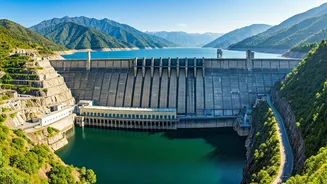
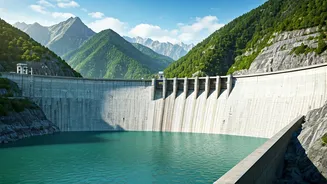
approximately 70 kilometers from the city of Dehradun, this engineering marvel is strategically placed where rugged Himalayan terrain meets the powerful currents of the Bhagirathi River. This unique geographical setting, characterized by steep valleys and dynamic river systems, presented considerable challenges but also offered the ideal conditions for constructing such an ambitious water management project. The dam's presence dramatically alters the visual panorama of the region, blending human ingenuity with the raw beauty of the mountains.
Towering Verticality
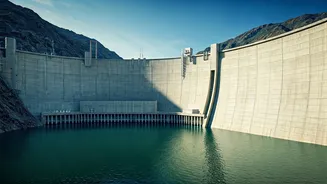
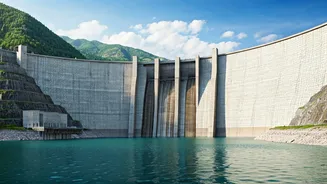
The sheer scale of the Tehri Dam is its most defining characteristic. Reaching an astonishing height of 260.5 meters (855 feet), it proudly holds the title of the tallest dam in Asia and ranks among the highest globally. This immense verticality is not merely for show; it is fundamental to its operational capacity. The dam's towering stature enables it to impound an enormous volume of water, forming the expansive Tehri Lake. This vast reservoir, which extends significantly into the surrounding hills, is crucial for the dam's functions, including power generation and water storage.
A Multifaceted Lifeline
The Tehri Dam transcends its identity as a mere water barrier; it functions as a critical infrastructure artery for northern India. Its primary role is in hydroelectric power generation, contributing over 1,000 MW of electricity to the national grid, with plans for additional capacity through pumped storage. Beyond power, the dam plays an indispensable part in water security, supplying essential potable water to major metropolitan areas like Delhi and the state of Uttar Pradesh. Furthermore, its waters are vital for agricultural development, supporting irrigation systems that benefit thousands of hectares, thus bolstering food production and economic stability in the region.
Engineering Triumph
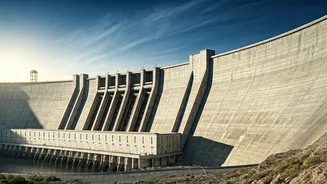
The construction of the Tehri Dam was an exercise in overcoming significant environmental and geological hurdles. A key challenge was its location within a highly seismic zone, necessitating robust engineering solutions to ensure safety and resilience. The dam employs an advanced rock and earth-fill design, a strategic choice that imbues it with a degree of flexibility crucial for withstanding substantial seismic activity. Engineers meticulously integrated state-of-the-art safety protocols and structural reinforcements, guaranteeing the dam's ability to endure powerful earthquakes despite its proximity to sensitive Himalayan fault lines. This construction stands as a testament to human innovation in harmonizing large-scale projects with precarious natural environments.
Debates and Criticisms
The development of the Tehri Dam has been accompanied by significant public discourse and controversy. A primary concern was the submergence of the historical town of Tehri, which resulted in the displacement of thousands of its inhabitants, leading to profound social upheaval. Environmental advocates and activists voiced considerable apprehension regarding the potential ecological repercussions, including impacts on biodiversity and riverine ecosystems. Concerns were also raised about the long-term seismic safety and the broader socio-economic costs associated with such monumental dam projects. These debates have positioned the Tehri Dam as one of India's most intensely discussed infrastructure initiatives.
Remarkable Statistics
The journey of the Tehri Dam from conception to completion spanned an extensive period, taking over thirty years to finalize its planning and execution phases. It is an integral component of the broader Tehri Hydro Development Corporation (THDC) initiative, underscoring its strategic importance. The immense reservoir created by the dam is not only a vital resource but has also transformed into a burgeoning center for aquatic recreation and tourism, attracting visitors for water sports. The project is designed to generate a total hydroelectric power output of 2400 MW, highlighting its significant contribution to India's energy matrix.