






The Unexpected Ordeal
A recent incident involving an Indian national traveling from Laos to Cambodia brought to light a distressing travel scenario. The tourist, originating
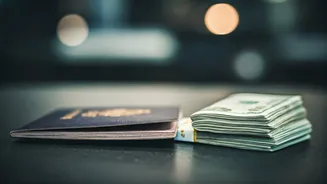
from Visakhapatnam, shared her experience on Instagram, detailing how she was prevented from boarding her flight. Despite having successfully entered Cambodia earlier using a visa-on-arrival paid by card, she was suddenly confronted with a demand for $400 USD in cash at Luang Prabang International Airport in Laos. This requirement, presented as a condition for boarding her return flight to Cambodia, was an unexpected and significant hurdle. She emphasized that even presenting alternative proofs of financial solvency, such as bank statements and her travel history, along with evidence of prior card payments for entry into Cambodia, did not appease the airline officials. The tourist described the situation as humiliating and noted the lack of clear official documentation for this demand, suggesting it originated from internal airline communications.
Unpacking The Rules
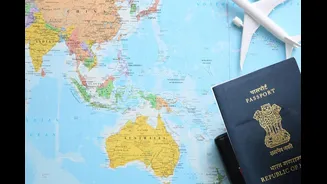
Examining the official guidelines reveals a nuanced picture regarding cash requirements for Indian travelers. The Indian Ministry of External Affairs website indicates that Cambodia, a country offering visa-on-arrival facilities for Indian citizens, mandates certain documents for entry. These include confirmed accommodation details and return flight tickets. Crucially, Cambodian Immigration Police may indeed request proof of funds, with some reports suggesting a minimum of $500 USD per passenger. For Laos, the MEA website does not explicitly list such a cash requirement. This discrepancy between stated policy and the traveler's experience underscores a potential gap in clarity and consistent application of rules on the ground, leading to unexpected challenges for unsuspecting tourists. The situation prompts a closer look at how these policies are communicated and enforced by various authorities and airlines.
Expert Insights On Funds
GS Bawa, Secretary General of the Air Travellers Association and former GM of the Airports Authority of India, sheds light on the practicalities of carrying cash for international travel. He clarifies that there isn't a universally enforced legal statute mandating a precise amount like $400 USD in cash for all travelers. However, he acknowledges that immigration officers, particularly in countries like Cambodia, may indeed request travelers to demonstrate their financial capability to support their stay. This proof can encompass not just cash, but also credit cards and bank statements, signifying a genuine tourist intent. Bawa notes that some nationalities might be subject to higher perceived fund requirements, potentially ranging from $500 to $1000 USD, although this is not a standardized or absolute rule. He advises carrying some US dollars, ensuring notes are in good condition, and being prepared with alternative financial proofs to avoid such stressful encounters.
Navigating Travel With Cash
For any international traveler, strategic planning around visa, immigration, and currency is paramount. When preparing for journeys to destinations like those in Southeast Asia, carrying a modest amount of US dollars is a prudent measure, particularly as USD is widely accepted in many dollarized economies. Beyond just the quantity of cash, the condition of the currency is also important; crisp, clean notes are generally preferred over damaged or torn bills, which may be rejected. Travelers are also reminded of declaration rules, with foreign currency exceeding $10,000 USD needing to be reported. Experts suggest that countries develop their entry requirements based on their unique experiences with various traveler demographics. Therefore, understanding and adhering to these implicit or explicit expectations, such as proof of funds, can significantly smooth the travel process and prevent inconvenient situations like the one described.