




Grandeur on the Danube
Budapest, Hungary's dynamic capital, is gracefully divided by the mighty Danube River. To the west lies the hilly expanse of Buda, boasting historical
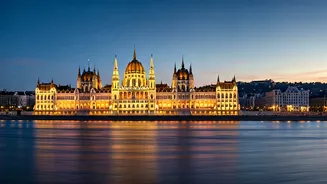
treasures, while the eastern bank features the flatter, more bustling district of Pest. The iconic Chain Bridge serves as a picturesque link between these two distinct personalities. The city is renowned for its abundant thermal baths, including the opulent Gellért and the sprawling Széchenyi, which are popular year-round attractions for relaxation and rejuvenation. Ascending Buda Castle via its funicular offers breathtaking panoramic vistas, while the nearby Fisherman's Bastion provides a whimsical, fairytale-like atmosphere with its turrets and terraces. Dominating the Pest skyline is the magnificent Hungarian Parliament Building, a neo-Gothic architectural marvel that exemplifies the city's grandeur and historical significance.
Avenues of Dreams
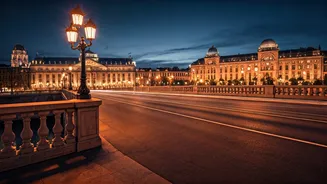
Andrássy Avenue, conceived in 1872, stands as a testament to Hungary's post-Habsburg autonomy, mirroring the grandeur of Paris's Champs-Élysées. This broad boulevard, a symbol of burgeoning political and commercial power, was fueled by a wave of immigrants, many of whom were Jewish, arriving from across the Habsburg Empire. These newcomers significantly contributed to Budapest's economic revitalization and endowed the city with monumental late-Habsburg architecture, transforming it into one of the world's fastest-growing metropolises by the century's end. While Chicago pursued skyscrapers, Budapest erected palatial apartment blocks that still line Andrássy Avenue, affectionately termed the 'avenue of dreams.' Even today, buildings like the former Drechsler Palace, with its 172,000 square feet and stratospheric ceilings, offer a glimpse into this opulent past, now housing luxurious accommodations like the W Budapest hotel, which artfully blends contemporary design with subtle nods to local culture, such as its tutu-inspired lamps and chess-themed restaurant floors.
The Ruin Bar Revolution
The historic Jewish quarter, just a stone's throw from the W hotel, preserves the spirit of Budapest's more bohemian era through its world-famous "ruin bars." These unique establishments, born in derelict buildings during the economically challenging late 1990s and early 2000s, exuded a joyful and subversive energy fueled by affordable drinks, reminiscent of New York's Lower East Side in the 1970s. They represented a 'second renaissance' for the city, characterized by freedom and creativity. However, as these bars gained international popularity, attracting stag parties and a more commercialized crowd, their authentic underground essence began to fade, with some establishments adopting overly polished amenities. While the original vibe might be harder to find, the legacy of innovation and artistic repurposing lives on, with new venues continuing to emerge, like the former Ensō, now reborn as in the same location, still showcasing the chef's eclectic culinary vision.
Heroes' Square and City Park
Beyond Heroes' Square, where Andrássy Avenue culminates, lies Városliget, or City Park, a vast expanse that embodies Budapest's future aspirations, much as the avenue celebrated its past. The park itself, along with the M1 subway line – Continental Europe's oldest electrified line dating back to 1896 – provides a charming link to history. Heroes' Square, with its colonnade commemorating Hungarian leaders and their often-victorious struggles, offers a stark reminder of the nation's turbulent past, including the poignant 1989 reburial ceremony of Imre Nagy. Városliget, originally conceived for the 1896 millennial celebrations and featuring the whimsical Vajdahunyad Castle, had fallen into disrepair but is now undergoing a massive $750 million transformation into a cultural and leisure hub. This ambitious Liget Budapest Project has introduced striking modernist museums, like the National House of Music Hungary, designed by Sou Fujimoto to harmonize with its natural surroundings, and revitalized historical structures, creating an oasis of art and recreation.
Cultural Melodies and Echoes
Budapest continues to be a vibrant center for music, notably home to the Palace of Arts (Müpa), often referred to as Budapest's Lincoln Center, since 2005. Its Béla Bartók National Concert Hall boasts world-class acoustics, and the resident orchestra, under the baton of its esteemed founder Iván Fischer, is among the finest globally. Fischer also leads intimate ensemble performances at the meticulously restored Rumbach Street Synagogue, an 1868 Otto Wagner masterpiece noted for its Moorish-style architecture. The synagogue's history mirrors that of Budapest's significant Jewish population, which once comprised 25% of the city, earning it the moniker 'Judapest.' Despite hardships faced during World War II, many of Budapest's Jewish residents survived, a testament to a complex history. The poignant "Shoes on the Danube Bank" memorial, comprising 60 pairs of cast-iron shoes, serves as a solemn remembrance of the thousands forced to their deaths by Arrow Cross militiamen during the winter of 1944-45.
Architectural Splendor and River Views
The Four Seasons Hotel Gresham Palace, a meticulously restored early 1900s Art Nouveau masterpiece, offers an unparalleled glimpse into Budapest's opulent past. Commissioned as a prestigious headquarters and residence, its intricate leaded glass and wrought iron details are a visual delight. The hotel's lobby alone is a destination, enhanced by a stylish new cocktail bar. For those fortunate enough to secure a room facing the Danube, the views are spectacular, with the iconic Széchenyi Chain Bridge dominating the panorama. This bridge, pivotal in uniting Buda and Pest in 1873, bears a striking resemblance to New York's Brooklyn Bridge in its engineering brilliance and aesthetic appeal. Above the bridge, the Buda Castle complex stands as a monumental symbol of the city's enduring history, a history that is continually being re-examined and revitalized through national and city-led preservation and development efforts.