



Caterpillar's Culinary Choices
The distinct feel of silk against your skin is deeply rooted in a caterpillar's eating habits. Standard Mulberry silk, known for its liquid-glass smoothness,
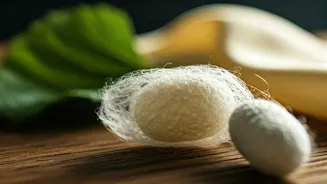
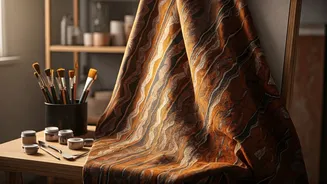
originates from the Bombyx mori silkworm. These silkworms are meticulously raised in controlled environments, consuming only mulberry leaves. This monotonous diet results in the spinning of a single, uniformly round filament, creating an unblemished surface. In contrast, the silkworms that produce Vanya silks, such as Tussar, Muga, and Eri, are wild foragers. They thrive in open forests, feeding on a diverse range of leaves like oak, castor, and juniper. This varied diet, rich in tannins and other nutrients, significantly alters the protein composition of the silk they produce. The resulting threads are shorter, thicker, and possess an irregularity that imparts a desirable, breathable, and almost linen-like textured quality to the fabric, often referred to as a 'slubby' finish.
Silk's Geographic Footprint
Just as wine carries the essence of its origin, silk exhibits a unique 'terroir' influenced by its environment. The climate where the cocoon is spun directly impacts the development of silk's core proteins, fibroin and the binding agent, sericin. For instance, the humid climate of Assam leads to the production of Muga silk, naturally endowed with exceptional tensile strength and a captivating golden sheen, a direct adaptation to its surroundings. Conversely, the dry heat prevalent in central Indian regions like Chhattisgarh and Bhagalpur yields Tussar silk. This variety is remarkably porous, trapping air within its fibers. This characteristic makes it an excellent natural insulator, providing a crisp feel in cooler weather and a refreshingly airy sensation during intense heat, making it ideal for varying climates.
The Weaver's Subtle Art
The tension applied during weaving significantly differentiates silk fabrics. Mechanical power looms exert an unyielding tension, producing a uniformly flat surface. Handlooms, however, are operated with a distinct rhythm. The human touch introduces microscopic inconsistencies, weaving subtle pockets of air into the fabric. This imbues the final textile with a softer drape and a more organic, forgiving feel. Furthermore, the process of boiling silk to remove the sticky sericin gum plays a crucial role. Commercial manufacturers often aggressively boil the silk to eliminate nearly all the gum, resulting in a limp, overly drapeable fabric. Traditional weavers, however, intentionally retain a specific portion of the natural sericin. This deliberate inclusion is the secret behind the crispness, the paper-like stiffness, and the architectural volume found in heritage weaves, giving them a substantial and structured quality.
Tactile Differences Explained
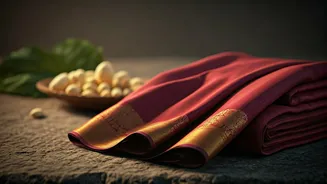
The palpable difference in texture between a mass-produced silk shirt and a heritage Kanjeevaram or handwoven Tussar is not merely a matter of price or perceived quality; it is a manifestation of biological and artisanal factors. Mass-produced silks often feel smooth and frictionless, almost lacking in character. In contrast, artisanal silks possess a noticeable weight, texture, and a distinct personality. This tactile variation stems directly from the intrinsic qualities of the silk fibers themselves, shaped by the caterpillar's diet, the geographical conditions during cocoon formation, and the specific techniques employed by weavers. Understanding these elements provides a deeper appreciation for the intricate craftsmanship and natural processes that contribute to the unique feel and drape of fine silk textiles.