






Global Moon Sighting
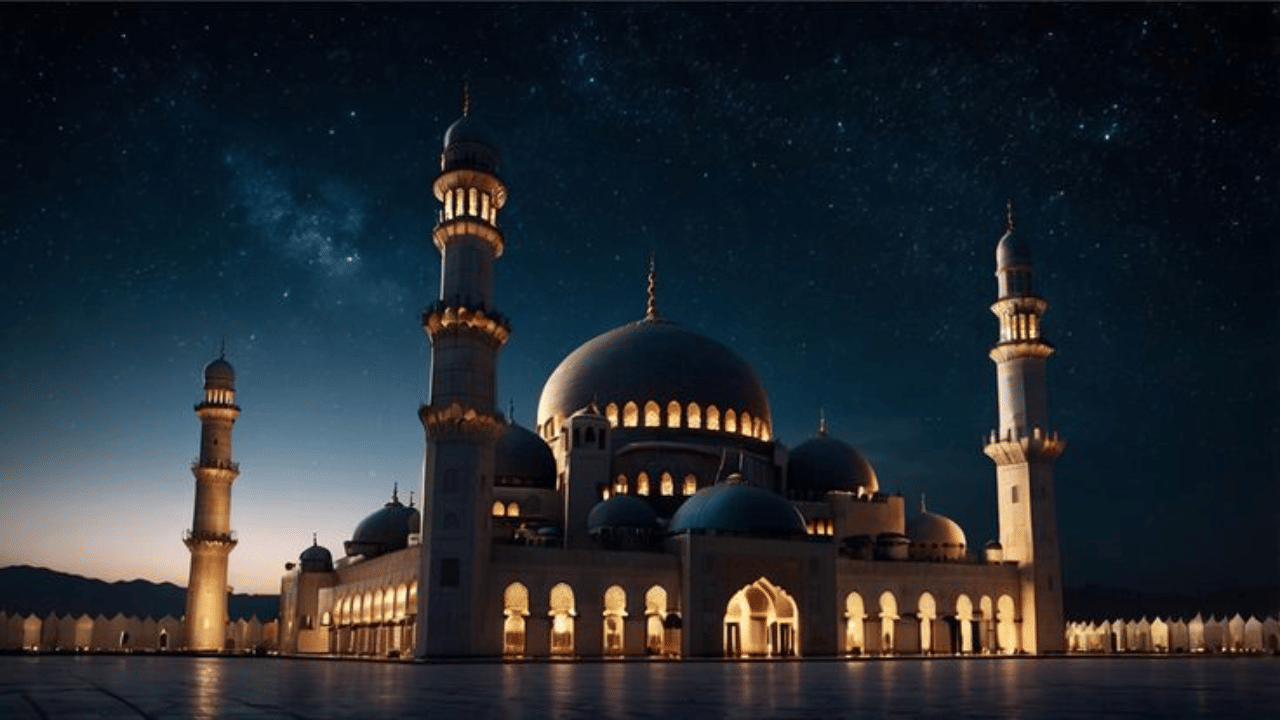
The commencement of Ramadan 2026 was marked by the crucial sighting of the crescent moon, a practice deeply rooted in Islamic tradition. Countries across
the globe diligently observed the skies, with announcements varying based on lunar visibility. Turkey, for instance, confirmed February 19 as the first day after the moon was not sighted on Tuesday evening. Similarly, Oman and Indonesia declared February 19 as the inaugural fasting day following their traditional observation processes. In Pakistan, authorities awaited the final announcement after the 28th of Sha’aban. Meanwhile, Saudi Arabia’s Riyadh region prepared its observation sites, with astronomical calculations suggesting a potentially difficult sighting on the expected evening. Japan and Brunei also confirmed February 19 as the start, contingent on the moon's visibility. Malaysia and the Philippines, after failing to sight the crescent, also aligned with a February 19 start. The sighting of the 'Hilal' (crescent moon) is a pivotal moment, dictating the precise start of this holy month for millions.
Fasting Hours Around World
Ramadan 2026, occurring near the spring equinox, presents a more balanced distribution of fasting hours across the globe compared to seasons with longer daylight. In India and South Asia, daily fasts are anticipated to span approximately 12.5 to 14 hours, fluctuating slightly by location. The Middle East, encompassing Saudi Arabia and the UAE, is expected to experience fasting periods averaging around 12 to 13 hours, with a minor increase towards the month's end. Observers in the United Kingdom and other parts of Europe may fast for around 14 to 16 hours. Conversely, regions in the Southern Hemisphere, such as New Zealand and Chile, might begin with longer fasts of about 14 to 15 hours, which will progressively shorten. This timing, falling in late winter and early spring in the Northern Hemisphere, generally means less extreme fasting durations than when Ramadan falls during peak summer months.
Ramadan's Significance in India
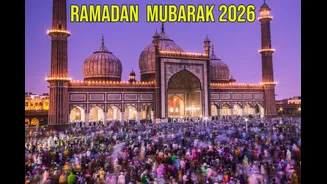
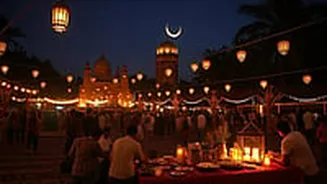
Ramadan holds profound spiritual and cultural importance for Muslims in India, interwoven with faith, community practices, and regional customs. Beyond the dawn-to-dusk fast, the month is characterized by heightened prayer, increased charitable acts, and introspection. Evenings come alive in mosques and neighborhoods with the communal breaking of the fast, known as iftar, and the special nightly prayers, Taraweeh. Charity is a cornerstone of Ramadan in India, with many families and organizations facilitating community iftars and distributing food to those in need, alongside fulfilling the obligation of Zakat. Despite diverse culinary traditions and customs across different regions, the essential spirit of Ramadan in India centers on spiritual discipline, fostering empathy, and reinforcing community bonds. Historic cities like Delhi and Hyderabad have long been centers of vibrant Ramadan celebrations, drawing large numbers of worshippers and visitors.
Historical Roots and Lessons
The observance of Ramadan in the Indian subcontinent boasts a history spanning over a millennium, evolving alongside the region's rich Islamic heritage. The practice of fasting became firmly established with the arrival of Muslim communities from the 7th century onwards and flourished notably during the Delhi Sultanate and Mughal Empire eras. Over time, Indian Ramadan traditions acquired a distinctive local character, with special dishes like haleem and seviyan becoming synonymous with the season, alongside central roles for community iftars and charitable giving. This sacred month offers invaluable life lessons. Through fasting (Sawm), individuals cultivate self-discipline. Acts of charity, both obligatory (Zakat) and voluntary (Sadaqah), foster empathy for the less fortunate, and the importance of community and moral uprightness is reinforced. The month is also significant for the Quran's divine revelation to Prophet Muhammad, which occurred on Laylat al-Qadr during the final ten nights.
Greetings and Practices
As the crescent moon heralds the start of Ramadan 2026, universally recognized greetings like 'Ramadan Mubarak' and 'Ramadan Kareem' are exchanged, wishing the recipient a blessed or generous month, respectively. During this holy period, Muslims observe a fast called 'Roza,' which continues from dawn until sunset. This practice, originating from the Persian word 'roz' meaning 'day,' signifies a full 24-hour cycle and is considered a fundamental pillar of Islam. A fasting day commences with a pre-dawn meal, 'sehri,' and concludes with 'iftar,' the meal taken after sunset, often beginning with dates and water. The spiritual intensity culminates in the final days with Laylat al-Qadr and the subsequent celebration of Eid al-Fitr. Recommended practices include performing the special nightly Taraweeh prayers in addition to the five obligatory daily prayers, engaging in heartfelt supplications (duas), reading the Quran, and performing Tahajjud (night prayers) and I'tikaaf (spiritual seclusion).