





Echoes of Apollo
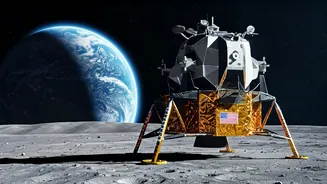
NASA's return to the moon, marked by the Artemis program, inevitably draws comparisons to the groundbreaking Apollo missions. While the initial Apollo voyages
achieved the monumental feat of landing humans on the lunar surface within a decade, Artemis represents a more deliberate and evolving journey. The Artemis II mission, for instance, will replicate the out-and-back trajectory of Apollo 8, the first mission to orbit the moon, rather than attempting an immediate landing. This careful approach highlights how Artemis, while honoring its predecessor, is charting a distinct course. The composition of the Artemis II crew itself signifies a significant shift, including the first woman and first person of color to travel to the moon, alongside a Canadian astronaut, reflecting a more inclusive vision for space exploration than the Apollo era, which sent exclusively American men to its destinations. This evolution underscores the sentiment that replicating the past is not the goal, but rather building upon its legacy to achieve new milestones.
Pacing Progress
The pace of NASA's lunar endeavors has notably differed between the Apollo and Artemis programs. Apollo's rapid progression from its first crewed spaceflight to a lunar landing in just eight years was a testament to a singular, urgent national goal. In contrast, Artemis has progressed more slowly, influenced by shifting priorities and extended periods of deliberation regarding the ultimate destination, whether the moon or Mars. The development of NASA's new Space Launch System (SLS) rocket, the powerhouse for Artemis, has also seen a more gradual evolution, with its inaugural uncrewed test flight occurring over three years ago. This measured approach led to recent overhauls of the Artemis program, aimed at accelerating progress and emulating Apollo's spirit of innovation. A key adjustment involves staging critical lunar landing technology, with early missions like Artemis III focusing on practicing critical maneuvers, such as docking with commercial landers developed by SpaceX and Blue Origin, in Earth orbit. This mirrors the strategy of Apollo 9, which tested lunar module systems in Earth orbit before subsequent landing attempts.
New Rivalries Emerge
The geopolitical landscape has shifted significantly since the Apollo era, when the Soviet Union was the primary competitor in the space race. The success of the Apollo missions was heavily influenced by the intense rivalry with the USSR, which ultimately faltered in its lunar ambitions due to rocket failures. Today, the competitive dynamic has evolved, with China emerging as a key player. China has already demonstrated its lunar capabilities by successfully landing robotic spacecraft on the far side of the moon, a feat unmatched by any other nation, and is actively pursuing a crewed mission to the lunar south pole by 2030. NASA's Artemis program shares this ambitious target, aiming to explore the lunar south pole, a region believed to harbor substantial ice deposits crucial for future sustenance and fuel. This renewed competition underscores a global drive to establish a presence on the moon, with NASA focused on outpacing China in this new space race.
Rocketry and Launchpads
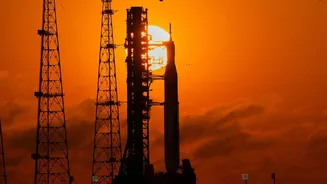
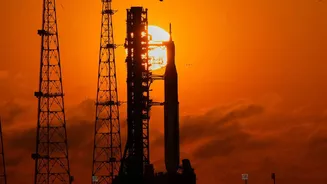
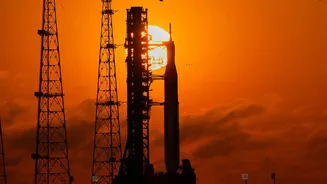
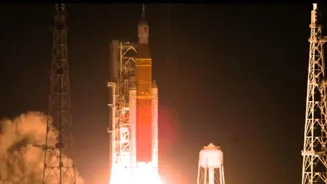
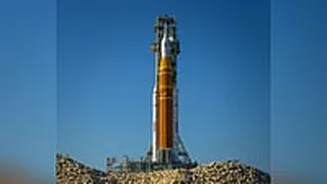
The hardware powering these lunar missions showcases distinct technological advancements. Apollo's iconic Saturn V rocket, standing at an impressive 110 meters, featured five first-stage engines. The Artemis program's SLS rocket, while slightly shorter at 98 meters, generates greater liftoff thrust, propelled by four main engines and two supplementary boosters. The launch infrastructure also sees a transition, with Apollo missions primarily utilizing Kennedy Space Center's Launch Complex 39-A, a pad now managed by SpaceX. Future SLS flights will operate from the adjacent pad 39-B. A notable difference lies in the flight history of these rockets: the Saturn V successfully launched multiple times before carrying astronauts, whereas the SLS has completed only one uncrewed test flight. Delays for the SLS debut in 2022 and subsequent tests in February were attributed to hydrogen fuel leaks and helium system issues, leading to recent postponements and a revised target for the Artemis II liftoff in April. Meanwhile, the launch control center remains in its historical location, now led by Artemis launch director Charlie Blackwell-Thompson, a significant change from the single woman present in the Apollo 11 launch control room.
Orbital Daring and Trajectories
The early missions of both programs highlight differing approaches to lunar reconnaissance. Apollo 8, in 1968, remains a landmark achievement for its daring orbital mission, with astronauts Frank Borman, Jim Lovell, and Bill Anders becoming the first humans to circumnavigate the moon. Commander Borman prioritized minimal lunar orbits due to perceived risks, settling on 10 orbits as preparation for the subsequent landing. NASA's decision for the Artemis II crew debut was to avoid a lunar orbit, deeming it too hazardous for the initial flight. The primary objective for Artemis II is to rigorously test the Orion capsule's life-support systems during its maiden voyage. A shared challenge between Apollo 8 and Artemis II lies in the turbulent times surrounding their missions. As Artemis II pilot Victor Glover noted, the endeavor aims to offer a measure of hope and inspiration to humanity during potentially trying periods.
Lunar Journeys and Return
The Artemis II mission will commence with a full day of orbiting Earth to ensure all systems are functioning optimally before initiating the journey to the moon. The transit to lunar proximity is expected to take three to four days, with the spacecraft venturing approximately 8,000 kilometers beyond the moon, surpassing the distance record set by the ill-fated Apollo 13 mission in the 1970s. Similar to Apollo 13's return trajectory, Artemis II will leverage the gravitational pull of both the moon and Earth, executing a figure-eight path around the moon to return home. This maneuver, known as a free-return trajectory, conserves fuel and proved crucial in safely returning the Apollo 13 astronauts despite their inability to land. Upon mission completion, the Artemis astronauts will follow the precedent set by Apollo crews, parachuting into the Pacific Ocean.
Suits and Living Quarters
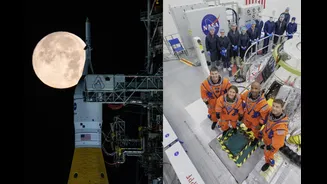
The evolution of spacesuit technology reflects the changing demands of lunar exploration. During the Apollo missions, astronauts utilized a single, bulky white suit for both launch and lunar surface activities due to limited storage capacity. The Orion capsules for Artemis are significantly larger, designed to accommodate four astronauts and multiple sets of specialized suits. For Artemis, new suits have been developed for in-capsule use, while private companies are tasked with creating the lunar surface suits. Commander Reid Wiseman and his crew will wear orange suits, custom-fitted for launch and reentry, which can also serve as emergency protection. These suits are designed to sustain occupants for up to six days, featuring integrated hydration systems and waste management solutions. Axiom Space, a Houston-based firm, is developing the white suits intended for future lunar surface excursions.
Sustained Lunar Presence
The overarching goal of the Apollo program was to triumph over the Soviet Union and establish an American presence on the moon, resulting in six successful landings between 1969 and 1972, with the longest surface stay spanning 75 hours. The Artemis program, however, envisions a more enduring lunar presence, with initial landing crews potentially spending close to a week on the surface. This ambitious objective entails a complex mission architecture: Artemis astronauts will travel to lunar orbit in Orion, then transfer to either SpaceX's Starship or Blue Origin's Blue Moon lander, depending on which is operational first. After exploring the surface, they will ascend to rendezvous with their Orion capsule for the journey back to Earth. NASA's long-term strategy extends to establishing a sustainable lunar base, paving the way for eventual Mars exploration. Plans include significant investment over the next seven years, detailing future habitats, rovers, drones, and power infrastructure for lunar living.