



Celestial Spectacle Arrives
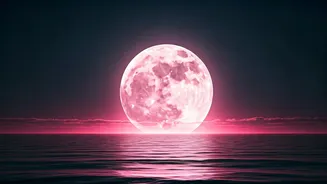
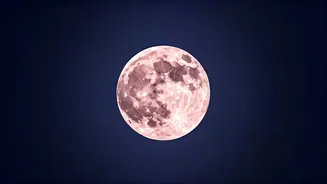
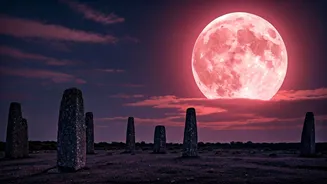
Get ready for a stunning celestial display as April 2026 ushers in its full moon, famously known as the Pink Moon. This significant lunar event is set
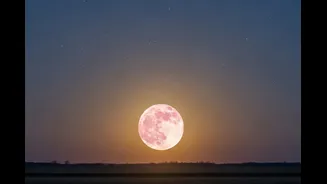
to grace the night sky on April 1st, coincidentally falling on April Fools' Day. While its name might suggest a rosy hue, the Pink Moon will actually present a beautiful, luminous golden glow, illuminating the darkness with its radiance. This natural phenomenon offers a chance to reconnect with the cosmos and observe one of nature's most consistent and awe-inspiring events. Whether you're a seasoned stargazer or a casual observer, the Pink Moon promises a memorable visual experience, drawing attention to the moon's ever-present, yet often overlooked, beauty. Its appearance serves as a reminder of the predictable cycles of the universe and provides a focal point for wonder and contemplation.
Timing Your Viewing
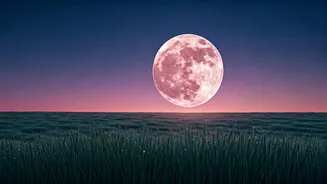
To fully appreciate the April 2026 Pink Moon, understanding its peak timing is crucial. In the Eastern Time zone of the U.S., the moon will reach its zenith at precisely 10:12 PM ET on April 1st. For those in other U.S. time zones, this translates to 9:12 PM CT and 7:12 PM PT. However, for observers in India, the peak will occur the following morning, April 2nd, at 7:42 AM IST. To experience the moon at its most impressive, seek out a location away from the glare of urban lights, finding a dark spot where the sky is unobstructed. As the moon ascends in the eastern or southeastern sky, it may appear larger than usual due to a captivating optical illusion known as the 'moon illusion.' This phenomenon enhances the visual impact of the rising moon, making it seem grander against the landscape, providing a truly magical sight.
The 'Pink' Nomenclature
The intriguing moniker 'Pink Moon' doesn't refer to the moon's actual color but rather to a beautiful spring wildflower. This name originates from the blooming of moss pink, also known as creeping phlox, a vibrant ground cover that heralds the arrival of spring in many regions. Historically, Native American tribes and early European colonists adopted these seasonal floral blooms to name the full moons, linking celestial events with the natural rhythms of the earth. Therefore, the Pink Moon signifies the transition into spring and is celebrated as the first full moon of the season. Beyond its floral connection, this moon also holds astronomical significance as the Paschal Moon, a designation that plays a vital role in determining the date of Easter each year. Its presence marks a time of renewal and is deeply embedded in both natural and cultural calendars.
Lunar Exploration Echoes
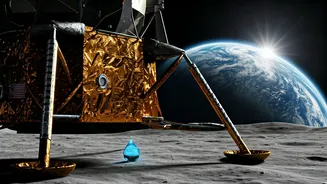
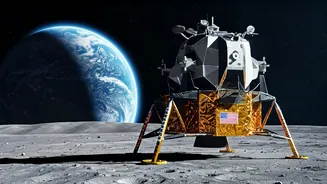
Interestingly, the April 2026 Pink Moon's appearance coincides with a monumental moment in human space exploration: NASA's Artemis II mission. This upcoming voyage represents the first time humans will journey around the Moon since the Apollo 17 mission concluded in 1972. The Artemis II crew will embark on a crucial mission to test and validate the capabilities of the Orion spacecraft and other vital systems, serving as a critical precursor to future lunar landings. This mission is a significant step in NASA's ambitious plan to establish a sustainable human presence on the Moon, with the ultimate goal of a lunar surface return anticipated by 2028. The celestial alignment of the Pink Moon and the Artemis II mission provides a unique dual focus on both the natural wonders of our night sky and humanity's expanding reach into the cosmos.
Optimal Viewing Practices
Enjoying the ethereal glow of the Pink Moon requires no specialized equipment; its natural beauty is accessible to all. To maximize your viewing experience, your primary objective should be to find an open area that minimizes the intrusion of artificial light pollution. Position yourself to observe the moon as it ascends in the eastern horizon, where it will appear notably larger and more luminous due to the aforementioned moon illusion. Consider bringing along comfortable seating, such as blankets or chairs, to enhance your outdoor viewing session, especially if you plan to spend an extended period admiring the moon. While binoculars or a telescope can offer a more magnified perspective, they are entirely optional for appreciating the moon's grandeur. Above all, check the local weather forecast to ensure clear skies, as clouds can obscure this magnificent celestial event. Regardless of the lunar phase, the Pink Moon will radiate a captivating golden luminescence, making it a perfect opportunity for a moment of quiet reflection and appreciation of the night sky.