







Unfolding Tragedy
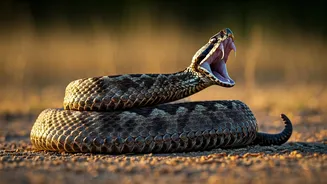
Recent tragic events in Kerala have underscored a serious and escalating public health issue: snakebites. Two elderly women, aged 65 and 75, succumbed
to venomous encounters near their residences in Kannur and Idukki on a recent Sunday, marking the seventh death in a spate of incidents. These fatalities are part of a larger pattern of snakebite attacks occurring across various districts, including Thrissur and Alappuzha, where numerous individuals are currently receiving critical medical attention in hospitals. The state is witnessing a concerning increase in snakebite cases, prompting an urgent examination of the underlying causes and at-risk populations.
Rural Workers' Vulnerability
Evidence increasingly points towards Kerala's rural and agricultural communities as bearing the brunt of snakebite threats. Annually, the state grapples with an estimated 3,000 to 4,000 severe snakebite cases, a significant number indicating a persistent danger. While advancements in farming machinery have somewhat mitigated risks in conventional agricultural practices, a new vulnerability has emerged. Individuals involved in clearing dense undergrowth, often as part of national rural employment schemes, are now identified as the most susceptible group. Approximately 60 percent of reported victims are laborers who unexpectedly come into contact with snakes lurking in thick vegetation or along unpaved rural paths, highlighting the occupational hazards faced by this segment of the population.
Beyond Summer Heat
While the instinct is to attribute increased snake activity to soaring summer temperatures, scientific investigation reveals a more intricate reality. Snakes, being ectothermic creatures, are highly dependent on external sources for thermoregulation, and extreme heat can indeed be perilous, driving them to seek cooler refuge in burrows. However, the surge in encounters near human dwellings is more likely influenced by a confluence of factors. These can include the persistent search for essential water sources, natural breeding cycles that lead to increased movement, or the migration patterns of their prey, such as rodents, which in turn brings them closer to populated areas. Therefore, attributing the rise solely to heat oversimplifies a complex ecological interplay.
Proactive Health Measures
Recognizing the gravity of the situation, the Kerala government took a significant step in 2025 by officially classifying snakebite envenomation as a disease of public health importance. This crucial designation mandates all healthcare facilities within the state to meticulously report every snakebite case they encounter. The primary objective of this classification is to foster enhanced collaboration among various healthcare stakeholders, streamline treatment protocols, and ensure a readily available and consistent supply of essential antivenom across all medical institutions. This strategic public health response aims to mitigate fatalities and improve patient outcomes by ensuring timely and effective medical intervention.