





Precious Metals Rise
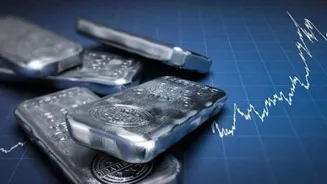
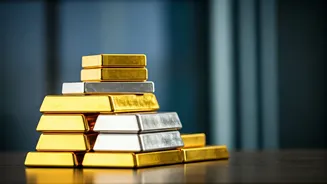
Gold and silver have recently experienced a significant surge in value, reaching record price levels. This upward trend highlights their role as safe-haven
investments, especially during times of economic or political uncertainty. The current market conditions, including decisions made by the Federal Reserve and ongoing geopolitical tensions, have further amplified the demand for these precious metals. For example, the price of gold has seen a steady climb, attracting investors looking for stability amidst global instability. Concurrently, silver has also benefited from this trend, increasing in value due to its industrial applications alongside its status as a safe asset. Analysts observe that these trends are not isolated incidents but reflect a broader market shift towards seeking security in tangible assets like gold and silver.
Fed's Impact on Markets
The actions of the Federal Reserve significantly influence the valuation of precious metals. The Fed's monetary policies, particularly decisions related to interest rates, can affect the attractiveness of gold and silver. A decrease in interest rates often makes these assets more appealing because they do not yield returns in the same way as bonds. Lower rates mean a reduced opportunity cost for holding gold and silver, which, in turn, can increase demand and, subsequently, prices. Furthermore, the market perceives any signals of future rate cuts as encouraging investment in precious metals. Such actions by the Fed can therefore influence how investors perceive the future economic landscape. This perception can lead them to seek safe-haven assets like gold and silver, hedging against potential economic uncertainties.
Geopolitical Tensions' Influence
Geopolitical tensions also play a crucial role in the increased demand for gold and silver. Global conflicts, political unrest, or instability can drive investors to seek safe assets. Historically, these precious metals have served as reliable stores of value during periods of uncertainty, offering a hedge against inflation and currency devaluation. The threat of conflicts or economic instability, such as those related to Iran or other global developments, can push investors towards these assets. As a result, gold and silver act as a defensive mechanism within investment portfolios, their value tending to hold or even increase during periods of instability, when other investments might suffer. This defensive characteristic underpins the ongoing interest and the price increase observed in these markets during times of heightened geopolitical risk.
Investor Sentiment Shifts
Investor sentiment forms a significant component driving the demand for gold and silver. The perceived economic outlook, including concerns about inflation, economic slowdowns, or currency devaluation, shapes investor choices. When investors anticipate these challenges, they tend to allocate a larger portion of their portfolios to safe-haven assets, such as gold and silver. The sentiment is fueled by media reports and expert opinions. For example, if there is a discussion about the possibility of rising inflation, investors might buy gold as a hedge, expecting its value to increase as the cost of living rises. Similarly, if confidence in a country’s currency declines, investors may choose to hold gold and silver as more reliable alternatives. These shifts in sentiment, often driven by both actual events and expectations, have a considerable effect on the market dynamics of precious metals.
Market Outlook and Analysis
Looking at the future, the outlook for gold and silver depends on multiple factors. Key factors include the Federal Reserve's future policy moves, the global geopolitical environment, and the overall state of the global economy. Analysts will carefully consider these factors. For example, if the Fed continues to hint at or implement further rate cuts, it is expected that prices for gold and silver could continue to rise. Conversely, any indications of economic stability or reduced geopolitical risk might lower demand, and, therefore, may lead to price corrections. Additionally, any significant changes in industrial applications that use silver could affect its value. Therefore, investors and market watchers continuously assess the interplay of these conditions to forecast future trends. Their decisions will impact the direction of gold and silver markets.