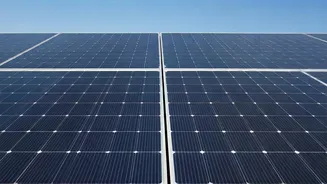

A Groundbreaking Discovery
Researchers have made a significant leap in solar panel technology, ushering in a new era of possibilities. The innovative technology is expected to dramatically
enhance the efficiency of solar panels, leading to a substantial increase in energy conversion rates. This breakthrough holds the potential to make solar energy even more accessible and cost-effective, thus accelerating the adoption of renewable energy sources globally. The development is a testament to the power of scientific innovation and its capacity to address critical global challenges.
Boosting Efficiency Levels
The newly developed technology directly targets the efficiency of solar panels, with initial tests showing remarkable improvements. The team of scientists has devised a novel method to capture and convert sunlight into electricity, significantly reducing energy loss during the process. This optimization could potentially lead to solar panels that generate substantially more power compared to existing models of the same size. Enhanced efficiency will not only make solar power more competitive with traditional energy sources but also reduce the environmental impact by minimizing the land area needed for solar farms.
Impact on Solar Energy
This technological advancement is set to have a transformative effect on the solar energy sector. The enhanced efficiency could drive down the overall cost of solar power by maximizing energy output. This, in turn, may spur greater investments in solar infrastructure, leading to a wider deployment of solar panels across residential, commercial, and industrial sectors. The scientists' innovation is expected to contribute to a cleaner energy landscape, reducing dependency on fossil fuels and mitigating the effects of climate change. The breakthrough provides a promising pathway toward a sustainable future, where solar energy plays a central role in meeting global power demands.
Future Possibilities Explored
The possibilities this new technology opens up are vast and exciting. Researchers are already exploring how the innovation can be applied to different types of solar panels, including those used in space and extreme environments. They are also investigating ways to further optimize the technology, potentially leading to even greater efficiency gains in the years to come. Moreover, the team is looking at integrating the technology with existing solar panel designs, allowing for a smooth transition and encouraging wider adoption. The future might see solar-powered devices and electric grids that function better, powered by the sun.
Challenges and Outlook
While the technology is indeed promising, the process of bringing it to commercial viability will likely come with its own set of challenges. Production costs, scalability, and integration with existing infrastructure are just a few aspects that researchers will need to address. However, the initial findings offer a positive outlook for the future of solar energy. As the technology continues to mature, it will move beyond the research phase. With additional investments and collaboration, the research will make this technology accessible on a broader scale. These efforts may mark a major leap toward the goal of a sustainable, solar-powered world.