
Supermoons and Beyond
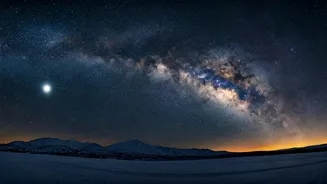
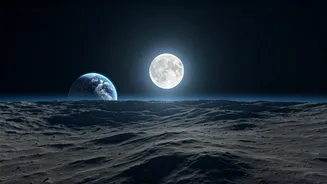
The year 2026 kicks off with the first supermoon on January 3rd, visible at dusk. This is an excellent opportunity to observe the Moon as it appears larger
and brighter than usual. Following this, the January full moon, also known as the 'Wolf Moon,' is set to wow skywatchers. Later in the year, the closest full moon since 2019 will grace the skies on December 23rd at dusk. Supermoons offer spectacular views and are a treat for any stargazer. These aren't the only lunar delights planned for the year; a range of conjunctions involving the Moon and planets, such as Mars, Jupiter, and Mercury, are also expected. In addition to these events, the year includes two partial lunar eclipses and a 'Blood Moon' total lunar eclipse, promising a year full of visual treats for the avid sky observer.
Eclipses: A Spectacle
2026 is primed to be a great year for viewing eclipses. The year begins with an annular solar eclipse, also known as a 'Ring of Fire,' on February 17th. This offers a unique view as the Moon passes in front of the Sun, leaving a bright ring visible. August brings two exciting events: a total solar eclipse on August 12th and a partial lunar eclipse on August 27-28th. The total solar eclipse will be visible during the daytime, allowing daytime skygazers a view of a lifetime. The partial lunar eclipse will be visible after dark. March 2-3rd features a 'Blood Moon' total lunar eclipse, occurring from night to early morning. These dramatic events underscore the dynamism of our solar system and the dance of celestial bodies.
Lunar-Planetary Conjunctions
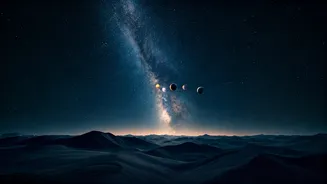
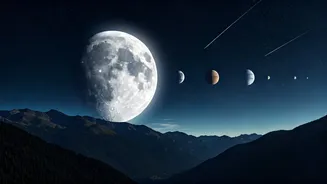
Throughout 2026, keep your eyes peeled for celestial pairings. On February 18th, a crescent moon will appear near Mercury after sunset. This conjunction offers a beautiful view, with the Moon and Mercury close together in the night sky. Later, on March 20th, a crescent moon will meet Venus after sunset, providing another stunning sight. April 19th brings the crescent moon, Venus, and the Pleiades cluster together after sunset. In November, on the 2nd, you can witness the crescent moon with Mars and Jupiter before sunrise. Additionally, the moon will be in conjunction with Saturn on September 26th after sunset. These events provide superb photo opportunities and are wonderful to see with the naked eye.