









The Pineapple Capital Unveiled
Vazhakulam, nestled in Kerala's Ernakulam district, holds the prestigious title of India's Pineapple City, a distinction solidified by its Geographical
Indication (GI) tag awarded in 2009. This vibrant town is more than just a producer; it's the nation's largest market for pineapples. The sheer scale of its operation is astonishing: approximately 350 dedicated farmers cultivate this tropical fruit, creating a ripple effect that supports an estimated 400,000 individuals through direct and indirect employment. During its peak season, Vazhakulam astonishingly ships out 1,000 tonnes of pineapples daily, contributing to an impressive annual turnover of Rs 800 crore. The scent of ripe pineapples permeates the air, with lorries laden with the fruit, bustling markets, and extensive plantations defining the town's very essence. This isn't merely an agricultural outpost; it's a place where the pineapple is woven into the fabric of its economy, culture, and daily life.
A Fruit's Fertile Journey
The pineapple's journey to becoming the cornerstone of Vazhakulam's identity began with its introduction to India by the Portuguese in 1548, originating from Brazil. However, it was in Vazhakulam that the fruit truly found its ideal environment. The region boasts a perfect confluence of a warm, humid climate and well-drained soil, complemented by an annual rainfall of 1,000 to 1,500 mm, all contributing to optimal pineapple growth. What started as incidental border crops evolved into the primary economic driver by the mid-20th century. The establishment of the Pineapple Farmers' Association in the 1990s marked a turning point, fostering collective action and organization. This was further bolstered by the inauguration of a research station in 1995, which introduced advanced cultivation techniques and provided crucial technical support, including access to financial aid. This strategic blend of inherited farming wisdom and modern agricultural practices revitalized the industry, attracting younger generations back to the land and transforming pineapple cultivation into an industrially scaled enterprise.
The Distinct Vazhakulam Pineapple
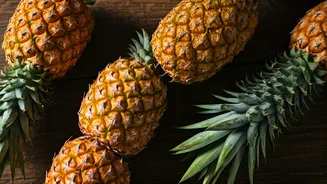
The pineapples originating from Vazhakulam, particularly the Mauritius variety often referred to as Kannara, are celebrated for their exceptional characteristics. These fruits are distinguished by their appealing conical shape, vibrant golden-yellow flesh, and an intoxicating aroma that signals their ripeness. Their flavour profile is a masterful balance, offering a pronounced sweetness with a notably low acidity level, typically ranging from 0.5% to 0.7%. This desirable taste is further enhanced by a rich content of carotene and essential vitamins and minerals, all developed naturally without the reliance on heavy chemical inputs, ensuring an authentic flavour. Typically weighing between 1.3 to 1.6 kg, the Kannara pineapple also boasts a commendable shelf life of seven to eight days, preserving its freshness from farm to consumer. Farmers favor this variety for its efficient growth cycle, maturing in nine to twelve months, which is significantly shorter than the eighteen months required by the Kew variety. This superior quality and distinctiveness led to the Vazhakulam pineapple receiving a Geographical Indication (GI) tag in 2009, underscoring its unique origin and heritage. This prestigious certification has significantly boosted its appeal in both domestic and international markets, with a substantial 80% of Kerala's yield exported to various Indian cities and overseas destinations, especially the Gulf countries.
Culinary Pineapple Delights
The famed Vazhakulam pineapple transcends its role as a fresh fruit, finding its way into a delectable array of traditional and contemporary Kerala dishes. A quintessential preparation is Pineapple Pachadi, a revered dish in the Onam Sadhya, featuring ripe pineapple cubes simmered in a creamy blend of coconut paste, green chilies, and yogurt, finished with a fragrant tempering of mustard seeds, red chilies, and curry leaves. This dish offers a delightful interplay of tanginess, sweetness, and mild spice, perfectly complementing the richness of a traditional feast. Another variation is Pineapple Pulissery, a more liquid, yogurt-centric curry that is both comforting and subtly sour, pairing exceptionally well with steamed rice. The intrinsic sweetness of the Kannara pineapple shines through in this preparation, enhanced by the yogurt's pleasant tartness. Historically, the Kew variety was favoured for making thick, aromatic pineapple jams and preserves, offering a flavour far superior to mass-produced alternatives. For beverages, the Mauritius variety is hailed for its juiciness; its low acidity and natural sweetness mean minimal added sugar is required for a refreshing juice. The experience of sipping freshly pressed pineapple juice from street vendors near the Vazhakulam market is a simple yet unforgettable culinary pleasure. Furthermore, pineapple is a popular ingredient in festive desserts like Pineapple Kheer (Payasam), where small fruit chunks are gently cooked in sweetened milk with cardamom, creating a warm, fragrant, and comforting sweet. The fruit also plays a role in savory dishes, with its acidity acting as a tenderizer in meat preparations and its sweetness balancing the heat in curries, such as pineapple prawn curry, where its tartness cuts through the richness of the seafood. Chutneys made with pineapple also add a bright, zesty note to meals.
Pineapple's Cultural Resonance
In Vazhakulam, the pineapple is far more than a mere agricultural commodity; it has ascended to the status of a cultural icon and the economic bedrock for a vast population. The reliance of 400,000 individuals on this fruit underscores its profound integration into the region's social and economic structure. The peak season, spanning from September to May, injects a palpable energy into the town, particularly during the Ramzan period (September-October), when demand surges and transportation networks are stretched to their limits. This period witnesses miles of lorries queuing up for transport and attracts migrant workers, notably from Assam, to aid in the harvest. The market buzzes with traders from across India, transforming the seasonal trade into a vibrant commercial festival. The Pineapple Farmers' Association plays a crucial role in supporting farmers, advocating for fair prices, and fostering collective growth. Concurrently, the state's research station serves as an indispensable resource, offering technical expertise and promoting innovation. The attainment of the GI tag has significantly elevated Vazhakulam's global recognition, providing consumers with a guarantee of quality and a connection to the fruit's rich heritage and origin story.