






Bold Foliage Stars
Introducing plants with striking leaves that command attention, perfect for creating a focal point. The Dieffenbachia boasts elegant silver-centered variegated
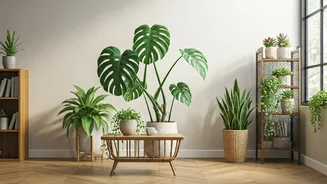
leaves, though caution is advised due to its toxic sap. Growing up to 10 feet tall, it thrives in medium, indirect light and prefers soil that's moist but not waterlogged, requiring watering when the top two inches feel dry. The Snake Plant, a resilient favorite, comes in various forms, often featuring green-banded leaves with cream or yellow edges; it's incredibly adaptable, tolerating full sun to shade and needing water only when the soil is completely dry, reaching a modest height of 3 feet. For a splash of floral color, the Bird of Paradise offers vibrant orange blooms, though it may take up to six years to flower, making mature specimens ideal if immediate blossoms are desired. This tropical beauty can reach 6 feet tall and 4 feet wide, requiring bright, indirect light and consistently moist, but not saturated, soil. The Corn Plant, with its robust green leaves and sturdy stalk, injects a tropical feel into any room and can grow to 4 feet tall. It prefers bright, indirect light to partial shade and should be watered only after the soil has fully dried out. Mildly toxic if ingested, it requires careful placement. Finally, the Monstera Deliciosa, a highly sought-after houseplant, is known for its rapid growth and dramatic fenestrated leaves, capable of spreading up to 8 feet wide and 8 feet tall. It flourishes in bright, indirect light and needs watering when the top two inches of soil are dry. While stunning, it's also toxic to pets if consumed.
Architectural Statement Plants
Discover plants with impressive stature and form, ideal for filling larger spaces and adding vertical interest. The Kentia Palm, a classic choice reminiscent of Victorian parlors, is a slow-growing specimen that can reach an impressive 10 feet tall. It flourishes in bright, indirect light and benefits from watering when the top two inches of soil are dry, making it a stately addition to any corner. The Fiddle-Leaf Fig is another grand option, its large, glossy leaves making a significant visual impact. Positioned near a window, it can grow up to 10 feet tall, though initial leaf drop is normal. It requires bright, indirect light and a consistent watering schedule, allowing the top two inches of soil to dry out between applications. Toxic to cats and dogs, care should be taken with placement. For an architectural marvel, consider the ZZ Plant. Its thick, waxy leaves and ability to store water in its rhizomes make it incredibly drought-tolerant and a slow but steady grower, reaching up to 4 feet tall and 4 feet wide. It prefers partial shade to bright, indirect light and should be watered only when the soil is completely dry. Despite its hardiness, it is toxic if ingested. The Elephant Ear plant is a true showstopper, with its large, dramatic foliage available in various forms, capable of reaching substantial sizes of 6 feet tall and 6 feet wide. It demands bright light and consistently moist, but not soggy, soil. However, it's important to note that Elephant Ears are toxic to both pets and humans if ingested.
Resilient & Low-Maintenance
Explore hardy houseplants that thrive with minimal fuss, perfect for busy individuals or beginner plant parents. The Cast Iron Plant lives up to its name, exhibiting remarkable resilience and tolerating neglect, including infrequent watering and low-light conditions, making it ideal for dimly lit corners or those without a 'green thumb'. It can grow up to 3 feet tall and 2 feet wide, preferring partial to full shade and needing its soil to dry out completely between waterings. The Marble Queen Pothos is a fantastic trailing option, its variegated leaves adding beauty as it cascades from shelves or mantels. This plant is exceptionally forgiving and requires minimal care to flourish. It thrives in bright, indirect light to partial shade, and watering is needed when the top two inches of soil feel dry. Though toxic to pets if ingested, its easy-care nature makes it a popular choice. Another resilient choice is the ZZ Plant. Its unique rhizomes store water, allowing it to withstand periods of drought. This slow-growing plant, reaching up to 4 feet tall, prefers partial shade to bright, indirect light and should be watered only when the soil is completely dry. It is toxic if ingested, so keep it away from curious pets and children. The String of Nickels offers a whimsical, cascading habit, perfect for adorning shelves or mantels with its delicate vines that can grow up to 18 inches long. It prefers partial shade to medium light and requires allowing the soil to dry out between waterings, making it a relatively low-maintenance addition to your decor.
Trailing & Cascading Beauties
Adorn your living room with plants that gracefully trail and cascade, adding a dynamic and flowing aesthetic. The Marble Queen Pothos, with its attractive variegated foliage, is a prime example, looking stunning as it spills over the edges of hanging baskets or shelves. It thrives in bright, indirect light or partial shade and requires watering when the top two inches of its soil are dry. Although toxic to pets, its ease of care makes it a consistent favorite. The Swiss Cheese Plant, a relative of the Monstera Deliciosa, features unique leaves with natural holes, allowing light to penetrate to lower foliage. This visually appealing plant can either trail elegantly or be trained around a moss pole. It prefers partial shade to bright, indirect light and needs watering when the top two inches of soil are dry. It is mildly toxic to pets. The Satin Pothos is another exceptional trailing plant, particularly beautiful when its silver-spotted leaves catch the light as it hangs from a window. While it can survive in low light, it performs best in bright, indirect conditions. It is drought-tolerant, needing watering only when the top two inches of soil are dry. The vines can extend up to 8 feet long. The Hoya Carnosa offers a unique charm with its clusters of tropical, ball-shaped flowers and the ability to either vine or trail gracefully over its pot. It can tolerate a range of light conditions, from bright, indirect light to partial shade, and prefers its soil to be kept moist but not waterlogged. Its vines can reach lengths of up to 4 feet, adding a delicate, flowing element to your space.
Colorful Accents & Lucky Charms
Introduce vibrant hues and plants believed to bring good fortune to your living space. The Red Chinese Evergreen is a fantastic choice for those seeking a pop of color, with variegated leaves that become more vibrant under increased light exposure. It does well in indirect light but flourishes with more. Watering is recommended when the top two inches of soil are dry. While toxic to pets, its visual appeal is undeniable, and it grows to about 2 feet tall. The Chinese Money Plant is often gifted as a housewarming present and is considered a symbol of good luck, making it a popular and auspicious choice for the living room. It prefers bright, indirect light and requires watering when the soil feels dry to the touch. This compact plant typically reaches about 1 foot tall and 1 foot wide. The Triostar Stromanthe adds another dimension of color, with its striking mix of pinks, purples, whites, and greens, which become richer and more pronounced when the plant is situated in bright, indirect sunlight. It prefers partial sun and requires consistently moist soil, not to the point of being soggy. This plant usually grows to about 2-3 feet tall. Together, these plants offer not only aesthetic appeal but also cultural significance and a touch of vibrancy to your home.