



Preserved Delights For Miles
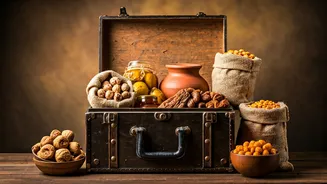
In an age without refrigeration, pickles and preserved chutneys were indispensable companions for Indian travellers. These potent concoctions, often made
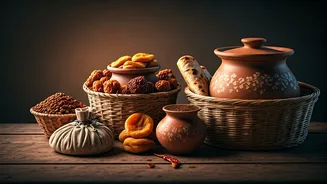
with oil, salt, and a tart element like vinegar or raw mango, served a dual purpose: enhancing the flavour of bland staples and acting as robust preservatives. Similarly, fruits and vegetables preserved in thick sugar syrups or oil could endure the rigors of heat and extended travel. Their concentrated nature meant a small amount could transform a simple meal, and their ability to mask the staleness of bread or rice was invaluable when access to fresh food was scarce. These items were not just food; they were a vital part of making a journey palatable and manageable, offering a burst of flavour and a sense of comfort across vast distances.
Sun-Kissed Fruit Power
Sun-dried fruit preparations, like the popular aam papad (dried mango leather), represented a ingenious method of preserving seasonal abundance for travel. By concentrating the fruit into thin, pliable sheets, moisture was significantly reduced, preventing spoilage and creating a compact, energy-rich snack. This process, often undertaken during peak harvest seasons when sunlight was plentiful, intensified the natural sugars and flavours. Other fruits, such as bananas and mangoes, were also dried to enhance their shelf life and provide a quick source of energy. These dried fruits, frequently wrapped in protective materials like waxed paper or banana leaves and tucked away for safekeeping, offered a delightful sweet and tangy contrast to the savoury meals travellers carried, proving to be both nourishing and a welcome treat.
Sweet & Dense Confections
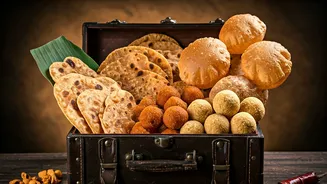
Traditional sweet treats, including thekua (a robust wheat and jaggery cookie from Bihar) and various types of laddoos (made from ingredients like chickpea flour, sesame, or coconut), were staple travel provisions. Their high sugar or jaggery content naturally aided preservation, while their dense, dry consistency ensured minimal breakage during transit. Families meticulously prepared these items ahead of time, often employing techniques like using ghee and toasted flours to lower moisture content – a practical, ancient preservation strategy. These energy-dense sweets provided quick calories, lasted for several days, and often doubled as celebratory items for travellers whose journeys coincided with festivals or important visits, adding a touch of sweetness to the arduous journey.
Crisp Khakhra's Durability
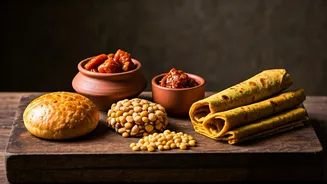
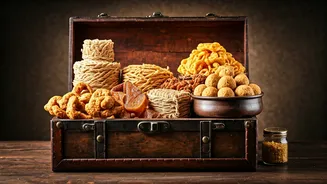
Hailing from western India, khakhra is a testament to the power of simple preparation for long-term viability. Essentially a thinly rolled and thoroughly dried roti, this crisp flatbread is remarkably resistant to moisture and damage. Families would prepare large batches, rolling the whole-wheat dough paper-thin and roasting it until it achieved a brittle texture. To enhance flavour and preservation, layers of khakhra were often separated by cloth and lightly smeared with ghee before being packed carefully into tins. This low-weight, long-lasting snack could be enjoyed plain, with a sweet jaggery, or a zesty pickle, making it an ideal, convenient option for daytime travel when hot meals were not feasible, and it paired wonderfully with a cup of chai or coffee.
Lightweight Puffed Rice
Puffed rice, or murmura, along with its spiced variations known as chivda, stands as an exemplary lightweight snack for long journeys. Prepared in large quantities by both vendors and households, the puffed rice was typically seasoned with ingredients like peanuts, roasted lentils, curry leaves, and a touch of lime or salt. Its aerated structure made it incredibly light for its volume, providing a satisfyingly crunchy snack to combat hunger during extended travel periods. While susceptible to softening in humidity, it didn't spoil easily, allowing travellers to refill their portions from communal containers. This snack offered a convenient, airy crunch that was both filling and readily available.
Protein-Rich Roasted Grains
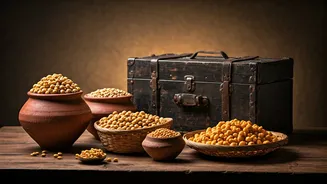
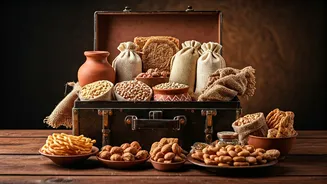
For travellers needing a sustained source of energy and protein, sattu (a flour made from roasted gram) and whole roasted grams (chana) or peanuts were ancient and effective solutions. Sattu could be conveniently carried as a dry flour and mixed with water or buttermilk at rest stops to create a fortifying beverage. Roasted chana and peanuts required no preparation at all, offering readily available, slow-burning energy. In central and eastern India, travellers often carried small earthen pots filled with sattu, which could be mixed with sour yogurt or jaggery to form a substantial and cooling meal that was far more portable than fresh pulses, providing essential nutrition on the move.