





The Magic of No-Churn
Making ice cream traditionally relies on constant churning to break down ice crystals, ensuring a smooth texture. Without a machine, this crucial step
must be replicated manually. The core principle involves preventing large ice crystals from forming by periodically disrupting the freezing process. This manual intervention leads to a denser, richer ice cream compared to its machine-churned counterpart, as less air is incorporated. Several straightforward methods achieve this, making homemade ice cream accessible even without specialized appliances. Key preparation includes chilling all components, like bowls, beaters, and the cream itself, for an extended period, ideally 12 to 24 hours. This temperature control is vital for achieving the best texture. Furthermore, using metal containers for freezing is recommended because metal conducts cold more efficiently than plastic, promoting faster and more even freezing, which further aids in minimizing ice crystal size for a smoother final product. A simple trick to prevent frost and iciness is to press cling film directly onto the surface of the ice cream before sealing the container.
Simple Sweet Cream Base
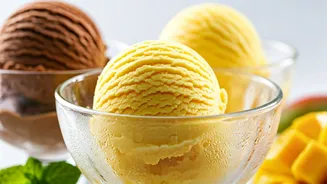
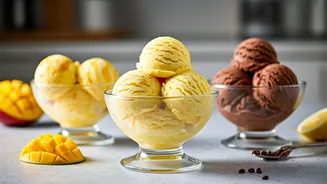
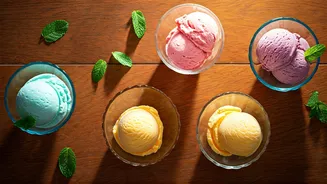
This no-egg, Philadelphia-style ice cream is incredibly straightforward and ideal for showcasing delicate flavours. It comes together quickly with just a few ingredients and requires no active churning during the freezing process. The foundation of this recipe lies in combining heavy whipping cream and sweetened condensed milk. The high fat content in the cream ensures a luxurious texture, while the condensed milk not only sweetens the mixture but also acts as a stabilizer due to its high sugar content, preventing the ice cream from freezing into a solid, unmanageable block. For the best results, ensure your heavy whipping cream has a fat content of 36-40%; alternatives like Amul Fresh Cream or Milky Mist can also be used, though they might yield slightly less airy results. The method involves whipping the chilled cream to stiff peaks, then gently folding in a mixture of condensed milk, vanilla extract, and a pinch of salt. This technique incorporates air while preserving the cream's volume. Indian variations can include the addition of mango puree for a tropical twist, rose water and cardamom for an aromatic profile, or a blend of paan ingredients for a unique regional flavour.
Tangy Yoghurt Delight
For a lighter, tangier frozen treat, a yoghurt-based ice cream is an excellent choice. This recipe utilizes hung curd, which is essentially Greek-style yogurt created by straining regular full-fat dahi through a muslin cloth until the whey is removed, resulting in a thick, creamy, and protein-rich base. Using low-fat curd is discouraged as it can lead to an icy consistency. The preparation involves whisking the hung curd with icing sugar, vanilla extract, and a pinch of salt until smooth. Separately, heavy cream is whipped to soft peaks. The whipped cream is then gently folded into the yoghurt mixture to lighten it. This blend is transferred to a pre-chilled container, covered with cling film pressed directly onto the surface, and frozen. Because yoghurt ice cream tends to freeze harder than cream-based versions, it benefits from a brief resting period at room temperature before scooping. Popular Indian variations include incorporating pureed strawberries, a blend of lemon zest and honey, or a blueberry swirl created by cooking blueberries with sugar and then swirling the cooled mixture into the ice cream base just before freezing.
Velvety Custard Creation
This recipe offers a richer, more traditional ice cream experience, achieved without relying on egg yolks. It uses cornflour (cornstarch) as a stabiliser, which effectively prevents the formation of ice crystals, yielding a remarkably smooth and velvety texture. The process begins by combining full-fat milk, sugar, and cornflour in a saucepan, along with a vanilla pod for a subtle infusion. This mixture is cooked over medium heat, stirring constantly, until it thickens to coat the back of a spoon. It's crucial to cook it thoroughly to avoid any starchy flavour, then strain and cool it completely before proceeding. Once chilled, the custard base is briefly beaten until smooth. Separately, heavy cream is whipped to peaks. A portion of the whipped cream is gently mixed into the custard to lighten it, and then this combined mixture is folded into the remaining whipped cream. The final mixture is transferred to a chilled container, covered, and frozen. This method produces a more structured, classic ice cream. Indian-inspired additions can include ground pistachios and saffron for an aromatic twist, a butterscotch swirl made from caramelised butter and brown sugar, or enhancing the milk mixture with cocoa powder for a chocolate version.
The Freeze-and-Stir Technique
While the preceding recipes are 'no-churn,' meaning they don't require manual stirring during freezing, the 'freeze-and-stir' technique serves as a valuable alternative or a troubleshooting method. This approach is particularly useful if you're adapting other ice cream recipes or if your initial attempt results in a less-than-ideal icy texture. The process involves pouring your ice cream mixture into an airtight container and placing it in the coldest part of your freezer. After approximately 45 minutes, you retrieve the container and vigorously stir the mixture, ensuring you scrape the frozen edges and incorporate them into the softer centre. This step is repeated every 45 minutes for about three to four hours. A hand mixer or immersion blender is highly recommended for this stage, as it more effectively breaks up ice crystals than a spatula alone. After the stirring phase, the ice cream is left to freeze completely for another three to four hours, resulting in a much smoother consistency than if it were left undisturbed.