







Radar's Evolving Role
Historically, radar served primarily as a detection tool, enabling the identification of objects via emitted radio waves and their subsequent reflections.
However, the trajectory of radar technology has dramatically transformed, particularly due to the integration with advanced concepts like 6G. The focus is increasingly on manipulating and utilizing radar signals. The shift is from simply identifying to actively engaging and exploiting radar waves for alternative purposes. This includes the fascinating prospect of converting radar energy into usable power, a concept that could revolutionize various applications, from military systems to everyday devices. This shift signifies a departure from the traditional understanding of radar's capabilities, ushering in a new era of innovation and strategic advantage.
6G's Game-Changing Influence
The advent of 6G technology is poised to redefine radar capabilities. With significantly faster data transmission speeds and enhanced connectivity compared to its predecessors, 6G is set to enable far more sophisticated control over radar systems. This includes the ability to modulate radar signals with unprecedented precision, thus allowing for enhanced stealth and improved target acquisition. This increased control could facilitate the development of new radar applications. For instance, it allows the creation of extremely sensitive sensors capable of detecting minuscule changes in the environment or the design of powerful energy-harvesting systems. This synergy between 6G and radar technology thus represents a massive leap forward, opening doors to new possibilities.
China's Fighter Jet Advancement
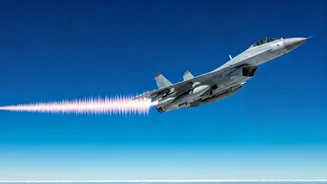
China’s defense strategy reflects a strong push to capitalize on the developments in radar technology, notably in the design of fighter jets. The interest centers around the potential to integrate radar systems, converting the energy of radar signals into power. This would significantly extend the operational range of these aircraft. It would also increase their overall efficiency. This innovative approach suggests a move beyond traditional methods of powering aircraft, possibly removing the dependency on conventional fuel sources. This would represent a paradigm shift in air combat capabilities. It would enhance both the stealth and the offensive capabilities of fighter jets.
Radar's Power Generation
The idea of using radar signals to generate power is gaining traction as a key area of study. Instead of only detecting objects, radar systems might be engineered to efficiently capture the energy from the emitted waves. This energy could be utilized to fuel the systems themselves. It also includes charging onboard devices or transmitting power to other systems. This concept requires advanced materials. These are being developed to capture and convert electromagnetic radiation. If successful, this technology will not only enhance the performance of radar but also reduce reliance on traditional energy sources. This could create new possibilities for energy-efficient solutions across various sectors, especially in military applications.
Implications and Future Trends
The merging of radar, 6G, and energy-harvesting capabilities has broad implications for several fields. For example, in military applications, improved radar technology could enhance stealth capabilities, improve surveillance, and provide new means for electronic warfare. In civilian sectors, the capacity to convert radar signals into power could support the advancement of wireless charging, improve sensor technology, and boost connectivity. As research continues, the integration of radar technology with 6G and power-generating capabilities will probably lead to even more advanced systems. The trends suggest that the future is about increased autonomy, improved efficiency, and deeper integration of radar technology into our lives.