



Saltwater Sneeze Secret
Penguins possess a remarkable biological mechanism to overcome the challenge of obtaining fresh water in their marine environment. Situated above their eyes
is a specialized supraorbital gland that functions as a highly efficient internal desalination system. This gland meticulously filters excess salt directly from their bloodstream. The concentrated saline solution, a byproduct of this process, is then expelled from the penguin's body, often through forceful expulsion from its beak, which resembles a sneeze. This ingenious "salt sneeze" is crucial for maintaining the delicate balance of their internal systems and preventing dehydration, showcasing an extraordinary adaptation to an otherwise inhospitable habitat.
Efficient Waddle Physics
The distinctive side-to-side gait of penguins, often perceived as awkward, is in reality a sophisticated display of biomechanical efficiency. This "waddle" is a carefully orchestrated pendulum-like motion designed to conserve energy. With each step, penguins leverage the momentum generated by their sway, storing kinetic energy at the end of their stride. This stored energy is then cleverly repurposed to propel them into the subsequent step, minimizing the energy expenditure required for locomotion. For a creature characterized by a dense body fat composition and relatively short legs, this gait is the most energy-conscious method of navigating icy terrains, ensuring the preservation of vital calories necessary for survival.
Invisible Tuxedo Camouflage
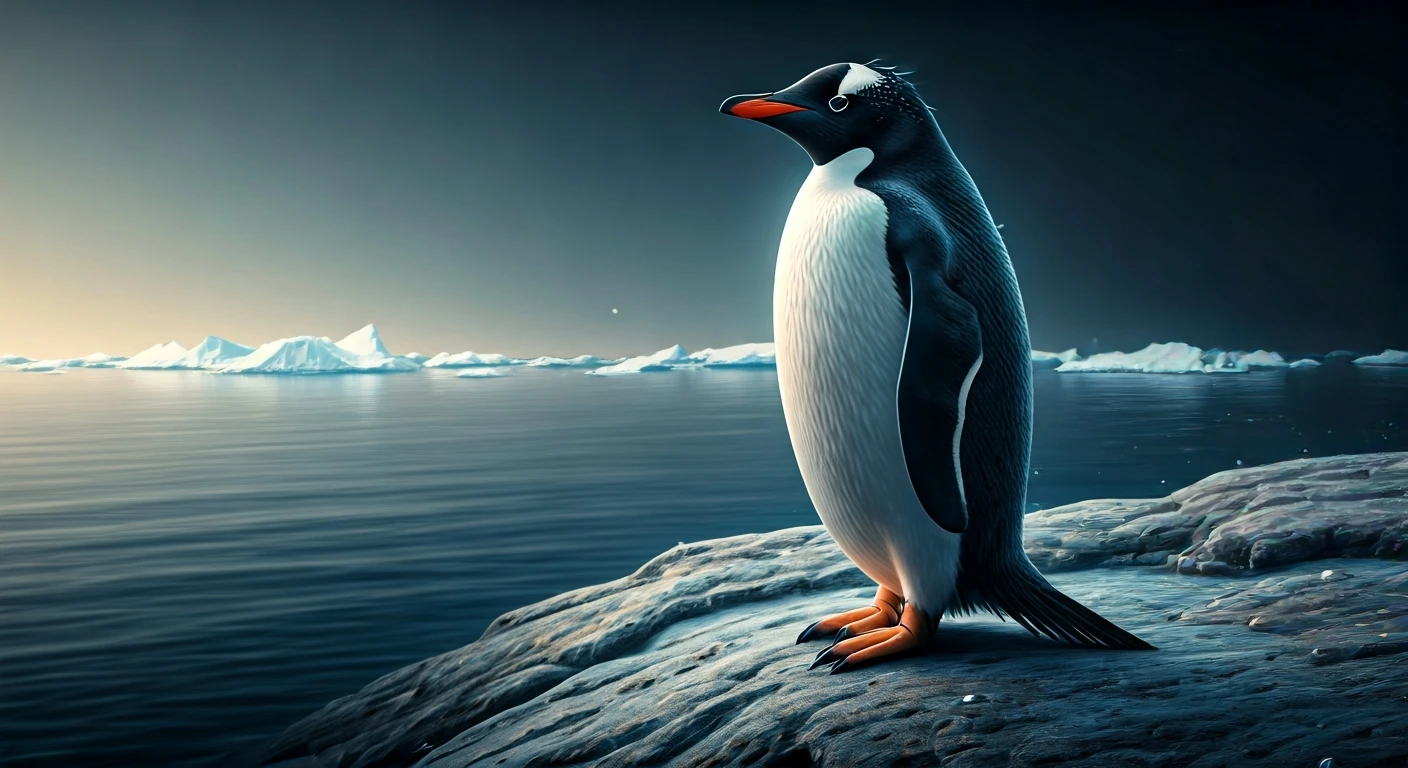
A penguin's iconic black and white plumage serves a critical survival purpose, known as countershading. This natural coloration acts as an ingenious form of camouflage, offering protection from predators both above and below. When viewed from the dark depths of the ocean by predators like leopard seals, the penguin's white underside seamlessly merges with the bright, sunlit surface of the water. Conversely, when observed from the sky by avian hunters, the penguin's black back blends into the shadows of the deep ocean. This dual-action camouflage renders the penguin virtually invisible from either direction, significantly enhancing its chances of evading detection and attack.
Pebble Proposals Economy
In certain penguin species, such as Gentoos and Adélies, a simple pebble holds immense social and reproductive significance. Due to the scarcity of suitable nesting locations on the icy landscape, smooth stones are vital for elevating nests and protecting eggs from the frigid ground. This has fostered a unique "pebble economy" where male penguins embark on dedicated searches for the most aesthetically pleasing stones to present as a gesture of courtship to prospective female mates. The desire for prime nesting materials also fuels a notable level of "crime" within colonies, with opportunistic bachelors frequently attempting to pilfer choice pebbles from unattended nests.
Beyond the Ice Habitats
Contrary to popular perception, not all penguins are exclusively inhabitants of frigid Antarctic landscapes. The Galapagos penguin, for instance, thrives in a tropical climate, living close to the equator. These remarkable birds have developed specific adaptations to cope with the warmer temperatures, including panting like dogs to regulate their body heat. They also seek refuge in the cool waters of the Cromwell Current. This demonstrates that penguins are not merely creatures of the cold but are exceptionally adaptable marine birds capable of establishing viable populations in diverse environments, from the extreme south to equatorial regions.
Human-Sized Ancestors
The penguins we recognize today are significantly smaller than their ancient predecessors. Fossil discoveries, particularly in New Zealand, have revealed the existence of extinct penguin species that were truly colossal. One such species, *Kumimanu biceae*, is estimated to have stood nearly 5 feet 11 inches tall and weighed over 100 kilograms, rivaling human height. These "colossus" penguins roamed the Earth millions of years ago, presenting a dramatically different image of avian evolution and highlighting the incredible scale of life in prehistoric times.