




Unforeseen Atmospheric Phenomenon
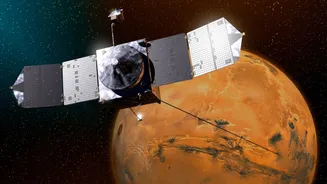
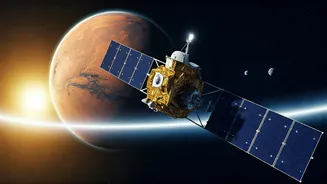
Even as NASA grapples with the silence of its MAVEN spacecraft, which has been meticulously studying Mars since 2014, researchers have unearthed a remarkable
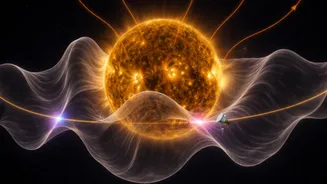
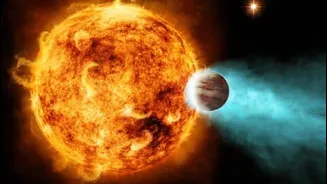
finding within the planet's atmospheric data. This discovery, the Zwan-Wolf effect, was previously only witnessed around planets possessing substantial magnetic fields, such as Earth. Its detection on Mars, which has a significantly weaker and fragmented magnetic environment, is particularly surprising. The effect plays a crucial role in deflecting the solar wind, the continuous flow of charged particles emanating from the sun. On Earth, a powerful internally generated magnetic field creates a vast magnetosphere that acts as a protective shield, diverting these particles. Mars, however, lost its global magnetic field billions of years ago, leaving its upper atmosphere to directly contend with the solar wind. This makes the observation of the Zwan-Wolf effect within Mars' atmosphere a significant scientific revelation, suggesting new physics at play that scientists are eager to explore.
Solar Storm Amplifies Effect
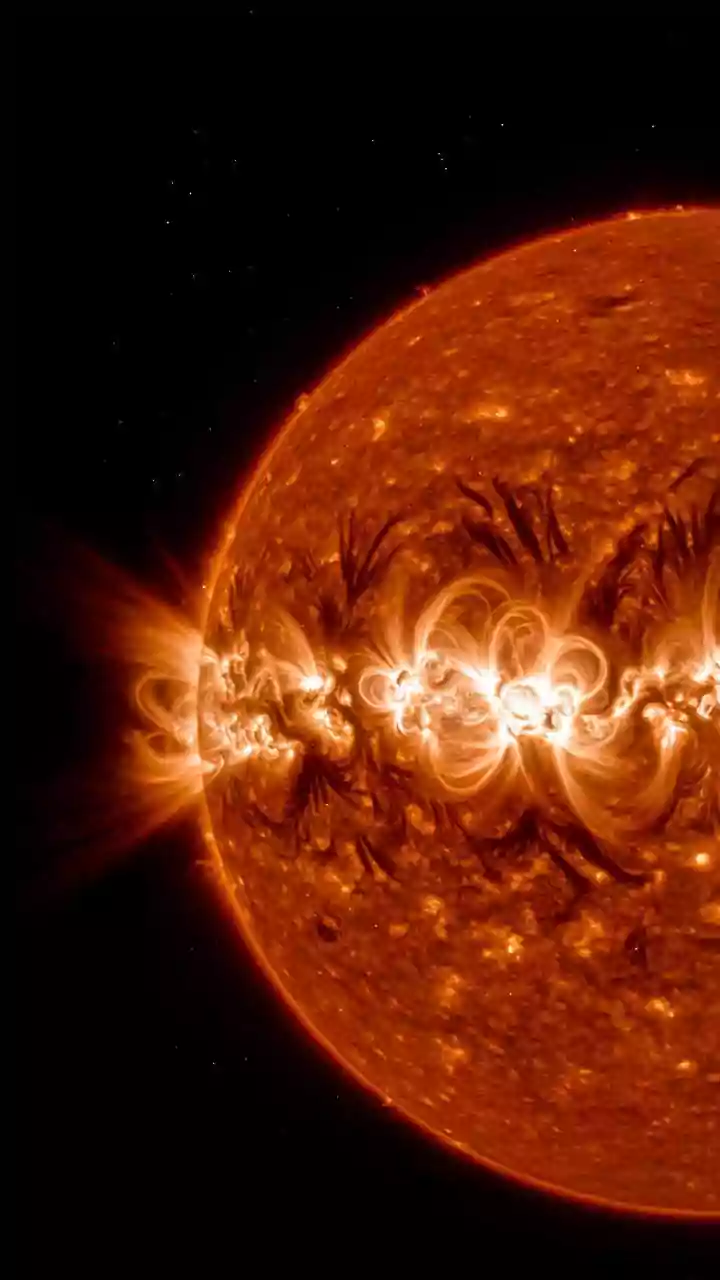
The breakthrough observation occurred following a potent solar storm that impacted Mars in December 2023. Lead researcher Christopher Fowler and his team from West Virginia University were examining data collected by MAVEN in the storm's aftermath. Approximately 12 hours after the solar event struck the Red Planet, MAVEN recorded peculiar disturbances in the upper atmosphere. Their detailed analysis revealed that charged particles were being channeled and compressed along temporary magnetic structures that formed during the solar storm. This behavior, likened to 'toothpaste coming out of a tube,' closely mirrored the Zwan-Wolf effect previously observed around Earth. Fowler described his astonishment upon noticing these 'very interesting wiggles' in the data, admitting he never anticipated detecting this phenomenon in a planetary atmosphere. The intense solar storm appears to have temporarily amplified the Zwan-Wolf effect to a level detectable by MAVEN's instruments, making this significant discovery possible.
Implications for Planetary Science
This discovery holds profound implications for understanding how space weather shapes planetary bodies, especially those lacking robust magnetic shields. Worlds like Venus and Saturn's moon Titan, which also possess weak or negligible magnetic fields, could be better understood through this new lens. The findings suggest that the Zwan-Wolf effect might be a continuous process on Mars, though typically too weak for detection by existing instruments. The intense solar storm merely provided the necessary boost for MAVEN to capture its signature. This adds a novel dimension to our understanding of solar wind interactions and atmospheric dynamics on planets beyond our own. The continued investigation into these newly uncovered physical processes promises to deepen our knowledge of planetary evolution and the diverse conditions that shape worlds across the cosmos.
MAVEN's Uncertain Future
While scientific discoveries continue to emerge from its data, the MAVEN spacecraft itself faces an uncertain future. Having been in operation since 2014, MAVEN lost contact with Earth in December 2025 following a planned communications pause during a solar conjunction. Despite NASA's persistent efforts to reestablish a connection, these attempts have thus far been unsuccessful, and the spacecraft remains silent. In response, the agency has initiated an anomaly review board to thoroughly assess MAVEN's condition and evaluate the possibilities for its recovery. Although the official status of MAVEN as lost has not yet been declared, with officials stating, "We're still looking for it," the situation underscores the challenges and risks inherent in deep space exploration and the critical importance of preserving the integrity of such vital scientific missions.