






The Open Door Explorer
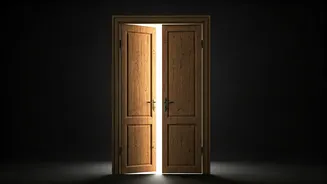
If your initial glance at the illusion registered the door as ajar, it suggests you embrace life with an adventurous spirit. This perspective indicates
a strong inclination towards openness and a comfort with the unknown, viewing new experiences as opportunities rather than threats. People who see the door open often possess a 'main character' aura, readily welcoming change and seeing it as a source of exhilaration. In social contexts, they are the spontaneous ones, likely to agree to impromptu plans or embark on new learning journeys without hesitation. Psychologically, this trait aligns with high 'Openness to Experience' in personality frameworks, where individuals thrive on dynamism, growth, and continuous movement. The core belief is that it's better to attempt something and potentially falter than to remain stagnant.
The Closed Door Guardian
Conversely, perceiving the door as firmly shut points to an individual who cherishes their personal space and values selectivity. This isn't indicative of fear but rather a mindful approach to managing finite resources like time and energy, implying that access to one's inner world is granted deliberately. Those who see the closed door are often seen as anchors, prioritizing well-defined boundaries, thoughtful introspection, and careful planning. Their social circles tend to be small but deeply connected, emphasizing quality over quantity. A closed door, in this sense, represents a sanctuary that facilitates necessary recharge and focus. This outlook often correlates with traits like Conscientiousness or resilient introversion, suggesting a preference for building a robust foundation before undertaking grand ventures. It signifies preparedness rather than avoidance of life's engagements.
Why Your Brain Chooses
The brain's inclination to interpret the ambiguous door image stems from its fundamental drive to resolve uncertainty and make sense of visual input. Employing a process known as 'figure-ground organization,' your subconscious mind quickly prioritizes what it perceives as most relevant to your current needs or state. Seeing the door open might reflect a subconscious need for exploration and engagement with the external world, while perceiving it as closed could signal a need for security and introspection. This cognitive tendency mirrors how we navigate life's complexities, much like in diverse cultural contexts such as India, where individuals constantly balance traditional values with modern changes, choosing to engage with either the vibrant energy of festivals or the serene quietude of personal rituals. Ultimately, neither perception is inherently superior; a balanced life involves knowing when to venture out and when to retreat.