



An Unexpected Discovery
Sometimes, the most remarkable travel experiences stem from delightful accidents. This was precisely the case for a seasoned traveler who, by boarding
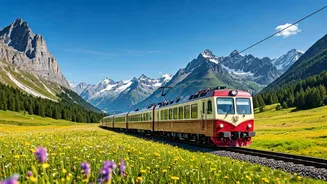
the incorrect train in Europe, stumbled upon the Vigezzina-Centovalli Railway. This less-traveled line gracefully meanders between the northern Italian town of Domodossola and the Swiss city of Locarno, unveiling a landscape of untamed Alpine valleys and villages seemingly untouched by modern haste. The initial two-hour sojourn offered glimpses of ethereal waterfalls cascading down cliffs, the simple elegance of cable cars traversing the terrain, and ancient stone bridges gracefully spanning deep ravines. This serendipitous detour ignited a desire for a more profound exploration, a promise to return and immerse oneself in the unique charm of this picturesque route. The initial journey, though unplanned, revealed a pathway to a slower, more appreciative mode of travel, setting the stage for a dedicated exploration of the "hundred valleys" that lend this region its evocative name.
Choosing the Right Carriage
Returning with a plan to savor the Vigezzina-Centovalli Railway, the traveler embraced the flexibility offered by the approximately 15 daily departures. This allows for a unique hop-on, hop-off experience across its 33 stops, fostering an intimate connection with the diverse locales. The official designation of the railway, Vigezzina-Centovalli, hints at the rich history embedded within this route. The charm is amplified by the eclectic nature of the trains themselves; some retain a vintage allure with compartments reminiscent of bygone eras, while newer models, introduced for the railway's centennial in 2023, boast contemporary designs with expansive windows for optimal viewing and dedicated spaces for bicycles. The chosen departure was aboard the Vigezzo Vision, a striking, trapezoid-shaped train that offered a front-row seat beside the conductor, promising an unobstructed panorama of the ascending Lepontine Alps that straddle the Italian-Swiss border. The journey commenced with a gentle hum, the train embarking on its gradual ascent, navigating through 31 tunnels, the first of which was illuminated by sparks from the overhead wires. Looking back, a rainbow arched over Domodossola's spires, a fleeting yet poetic omen for the journey ahead.
Venturing into Santa Maria Maggiore
After a transit of approximately 45 minutes and passing through eight stations, the train announced its arrival at Santa Maria Maggiore, the highest point on the route at 2,743 feet. This charming village served as the traveler's first planned excursion. As one ambles towards the central piazza, a distinctive visual motif emerges: dark palm prints adorning many of the stone houses. These are not merely decorative but are proud remnants of the annual chimney-sweep festival, a tradition that honors the valley's long-standing heritage in this profession and the many who ventured abroad to practice their trade. A visit to the local museum, housed within a historic stone villa adjacent to a medieval bell tower, provided a poignant insight into the demanding nature of this work, often undertaken by young boys from these very valleys. To deepen the connection with the landscape, rather than returning to the same station, the traveler opted for a scenic half-hour walk along the tracks, traversing meadows and following rivers, until reaching the subsequent stop at Malesco, a village renowned for its characteristic stone-tiled roofs. The train arriving at 2:56 p.m. was a remarkable artifact of railway history: a 1959 model, affectionately known as the ABe 8/8, complete with distinctive cream racing stripes and well-worn, comfortable upholstery.
Crossing Borders and Ascending Heights
The subsequent leg of the journey traced the path of the Melezza River, a vital Alpine waterway connecting the Swiss and Italian valleys. Below, the river churned into rapids, framed by imposing rock faces, while overhead, clouds drifted through beech forests clinging precariously to the mountainsides. Occasionally, primitive shepherd's shelters were visible in clearings, ingeniously linked across the gorge by cable and pulley systems, facilitating the transport of supplies. The international border was crossed just before the diminutive hamlet of Camedo; the subtle shift from light yellow station buildings to a pale terra-cotta hue marked the transition into Switzerland. Disembarking two stops later in Verdasio, a village offering a unique cable-car connection, the adventure continued upwards towards Rasa, a car-free haven perched atop Monte Gridone. Joining a small group of hikers and their spirited Pomeranian, a swift ascent in an eight-person gondola transported the traveler nearly 3,000 feet to a mountain hamlet that seemed suspended in time. Here, narrow footpaths wound between traditional stone houses encircling a centuries-old church, a place accessible only by foot, where communal ovens still bake bread and the gentle chime of church bells provides the primary soundtrack.
Hiking Down and Dining Well
To further appreciate the dramatic Alpine panorama, the decision was made to hike down from Rasa rather than take the cable car back. The trails in the Centovalli, originally designed for shepherds and their mules, presented a rugged challenge for hikers with backpacks. Along the descent, the path was shared with enthusiastic mushroom foragers who proudly displayed their finds, some of which were exceptionally large boletes. Despite the onset of heavy rain, which left the traveler thoroughly soaked and a bit unsteady after the 90-minute trek, the anticipation of a warm meal provided ample motivation. Fortunately, such a repast awaited at the next stop: Intragna. This village, situated at the confluence of the Melezza and Isnoro Rivers, is notable for its striking church tower and an impressive 262-foot-high viaduct, a structure so awe-inspiring that French high-wire artist Philippe Petit famously tightrope-walked across it in 1980. Directly opposite the station, a local establishment offered a delightful tasting menu featuring venison, lake perch, regional Alpine cheeses, and mushrooms foraged from the very woods just traversed. Conveniently located above this culinary haven was an inn, providing a cozy respite after a satisfying dinner, with a comfortable room upstairs prepared for a restful night.
Mediterranean Charm in Locarno
The following morning commenced with the arrival of a modern, Swiss-made Stadler train, demonstrating remarkable punctuality. Although the final 1.5 miles of the route were concealed within a tunnel, emerging into Locarno revealed a brilliant, sunlit cityscape. Locarno, known for its promenade along Lake Maggiore lined with distinctive Chusan palm trees, exudes the most Mediterranean ambiance among Swiss cities. The perfect way to absorb this atmosphere was with a lemon gelato, enjoyed while observing the leisurely stroll of locals and visitors alike along the lakefront. The accommodation for the night was at the Hotel Belvedere Locarno, a historic property nestled on a hillside within a 15th-century aristocratic manor. While navigating the route to the hotel, a sign for a funicular caught the eye. This charming mode of transport, a boxy blue cable car, offered a unique, almost cinematic ascent uphill, powered by straining cables—a fitting and elegant conclusion to the journey, reminiscent of a scene from a Wes Anderson film.