


Weighty Matters
When selecting a watermelon, pay close attention to its heft. A fruit that feels surprisingly heavy for its dimensions is a strong indicator of good hydration,
as watermelons are composed of approximately 90% water. Conversely, a watermelon that seems too light relative to its size might be less juicy and not fully ripened. This initial tactile assessment is a fundamental step in discerning a quality melon.
Surface Scrutiny
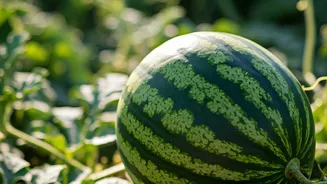
Examine the exterior of the watermelon with care. A healthy specimen will boast a firm and smooth rind, free from any greasiness or excessive shine, which could hint at artificial polishing or chemical treatments. Be vigilant and steer clear of any melons exhibiting bruises, punctures, deep fissures, or any visible damage. Such imperfections can signal contamination or subpar handling, compromising the fruit's integrity and safety for consumption.
Field Spot Focus
The field spot, the area where the watermelon rested on the ground during its growth, is a highly reliable indicator of ripeness and natural development. A desirable field spot will present a creamy, light yellow, or even a pale orange hue. If this spot appears predominantly white or a pale green, it suggests that the watermelon might have been harvested prematurely, potentially before it achieved its full, natural sweetness and flavour profile.
Tampering Clues
Be aware of specific indicators that might suggest a watermelon has been artificially enhanced. Look closely for small, needle-like puncture marks, particularly near the stem or blossom end, which could be evidence of chemical injection. Also, watch for unusual scarring, breaks, or cracks on one side of the melon, or any areas that feel unusually soft or spongy, indicating a weakened rind. The presence of these signs warrants caution and it's advisable to avoid such fruits.
Inside Insights
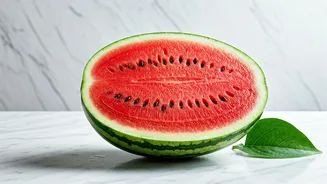
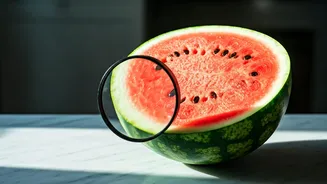
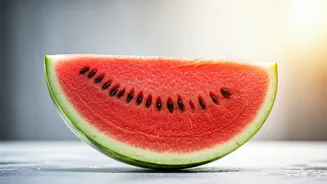
Once a watermelon is cut, its internal characteristics can offer further clues. A naturally ripened watermelon typically won't display a perfectly uniform red colour; expect subtle variations in shade. A glaringly bright, almost artificial red could be a red flag for added colourants. Similarly, examine the seeds: naturally grown watermelons usually have matte black or dark brown seeds. Glossy or unnaturally coloured seeds might indicate artificial intervention. For an at-home check, rub a cut surface with a cotton ball; if it remains white, it's likely natural. If it turns pink or red, artificial colouring might be present.