







Neuron-Powered Computing
An Australian startup, Cortical Labs, is pioneering a remarkable approach to computing by developing data centers that run on biological hardware. Their
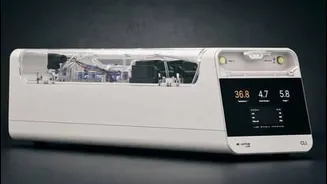
experimental product, the CL1, is a sophisticated 'body-in-the-box' system featuring a silicon chip adorned with approximately 200,000 lab-cultivated human neurons. These neurons, originally derived from human blood cells, are meticulously grown to mimic the intricate neural networks found in the human brain. The CL1 operates by responding to electrical stimuli from the chip, establishing connections that mirror natural brain activity. This system has demonstrated an impressive capacity for learning and adaptation, and is equipped with life-support mechanisms designed to sustain the neurons for up to six months, creating an environment conducive to their continued function and development within the computational framework.
Global Data Center Expansion
Cortical Labs is embarking on an ambitious expansion, partnering with data center specialists DayOne to establish these unique facilities. Plans are underway to launch two distinct data centers, one in Australia and another in Singapore, both powered by the innovative CL1 units. The Melbourne facility is slated to house 120 CL1 units, while the joint venture in Singapore is projected to accommodate a much larger number, potentially reaching 1,000 units, though this will be implemented in stages. A crucial initial validation phase will involve deploying 20 CL1 units at the Yong Loo Lin School of Medicine at the National University of Singapore, underscoring the rigorous testing and development process before full-scale deployment.
Energy Efficiency Revolution
The implications of this bio-computing approach for the industrial sector are profound, especially as organizations grapple with the escalating demand for AI processing power and the associated energy costs. The CL1's neural architecture offers a compelling alternative to traditional computing methods, consuming significantly less energy. Cortical Labs reports that its system requires only a fraction of the power consumed by conventional AI chips, so little, in fact, that it's comparable to the energy used by a handheld calculator. This dramatic reduction in energy consumption, coupled with the ability to learn and adapt demonstrated by playing games like Doom and Pong, positions these CL1 units as a viable, energy-conscious solution for future AI workloads and beyond.